[]
您当前的选择
资产 资产
您的报价 0

您的选择

清除选择
商品已加入购物车
{"event":"pageview","page_type1":"undetected","page_type2":"_assets_search_override","language":"cn","user_logged":"false","user_type":"ecommerce","nl_subscriber":"false"}
{"event":"ecommerce_event","event_name":"view_item","event_category":"browse_catalog","ecommerce":{"items":[{"item_id":"UIG1580021","item_category":"photo","item_category2":"no_copyright","item_category3":"standard","item_category5":"not_balown","item_list_name":"search_results","item_name":"infrared_view_of_the_lagoon_nebula_2010","item_variant":"undefined"},{"item_id":"UIG867327","item_category":"photo","item_category2":"no_copyright","item_category3":"standard","item_category5":"not_balown","item_list_name":"search_results","item_name":"swirling_dust_clouds_and_bright_newborn_stars_dominate_the_view_in_this_image_of_the_lagoon_nebula_f","item_variant":"undefined"},{"item_id":"UIG867247","item_category":"photo","item_category2":"no_copyright","item_category3":"standard","item_category5":"not_balown","item_list_name":"search_results","item_name":"this_colorful_picture_is_a_mosaic_of_the_lagoon_nebula_taken_by_nasa_s_wise_also_known_as_messier_8_","item_variant":"undefined"},{"item_id":"UIG867328","item_category2":"no_copyright","item_category3":"standard","item_category5":"not_balown","item_list_name":"search_results","item_name":"swirling_dust_clouds_and_bright_newborn_stars_dominate_the_view_in_this_image_of_the_lagoon_nebula_f","item_variant":"undefined"},{"item_id":"UIG867246","item_category":"photo","item_category2":"no_copyright","item_category3":"standard","item_category5":"not_balown","item_list_name":"search_results","item_name":"this_colorful_picture_is_a_mosaic_of_the_lagoon_nebula_taken_by_nasa_s_wise_also_known_as_messier_8_","item_variant":"undefined"},{"item_id":"REU8351898","item_category":"photo","item_category2":"no_copyright","item_category3":"standard","item_category4":"mike_blake","item_category5":"not_balown","item_list_name":"search_results","item_name":"canucks_mark_messier_stopped_by_panthers_sean_burke_1999_01_09_photo","item_variant":"undefined"},{"item_id":"REU7975077","item_category":"photo","item_category2":"no_copyright","item_category3":"standard","item_category4":"gary_c_caskey","item_category5":"not_balown","item_list_name":"search_results","item_name":"avalanche_messier_scores_third_period_goal_over_sharks_2002_05_04_photo","item_variant":"undefined"},{"item_id":"PIX4637870","item_category":"photo","item_category2":"no_copyright","item_category3":"standard","item_category5":"not_balown","item_list_name":"search_results","item_name":"the_milky_way_looking_towards_the_galactic_centre_the_milky_way_looking_towards_the_galactic_centre_","item_variant":"undefined"},{"item_id":"PIX4619692","item_category":"photo","item_category2":"no_copyright","item_category3":"standard","item_category5":"not_balown","item_list_name":"search_results","item_name":"centre_de_la_nebula_de_la_lagoon_m8_dans_le_sagittarius_in_the_heart_of_the_lagoon_nebula_centre_de_","item_variant":"undefined"},{"item_id":"PIX4619687","item_category":"photo","item_category2":"no_copyright","item_category3":"standard","item_category5":"not_balown","item_list_name":"search_results","item_name":"coeur_de_la_nebula_de_la_lagoon_dans_le_sagittarius_hst_this_nasa_hubble_space_telescope_hst_image_r","item_variant":"undefined"},{"item_id":"REU7561507","item_category":"photo","item_category2":"no_copyright","item_category3":"standard","item_category4":"reuters_staff","item_category5":"not_balown","item_list_name":"search_results","item_name":"combo_of_vivendi_and_seagram_chief_executive_officers_2000_06_19_photo","item_variant":"undefined"},{"item_id":"PIX4619680","item_category":"photo","item_category2":"no_copyright","item_category3":"standard","item_category5":"not_balown","item_list_name":"search_results","item_name":"heart_of_the_nebula_of_the_lagoon_m8_in_sagittarius_seen_by_hst_this_nasa_hubble_space_telescope_hst","item_variant":"undefined"},{"item_id":"PIX4568688","item_category":"photo","item_category2":"no_copyright","item_category3":"standard","item_category4":"jerry_lodriguss","item_category5":"not_balown","item_list_name":"search_results","item_name":"open_cluster_of_pleiades_the_pleiades_star_cluster_the_pleiades_cluster_is_a_cluster_of_about_500_yo","item_variant":"undefined"}]}}
{"event":"custom_event","event_name":"view_search_result","event_category":"browse_catalog","keyword":"messier 8","search_type":"standard","search_bridgeman_artists":"false","search_mode":"automatic","search_zero_result":"false","search_results":13,"search_results_page_number":1}

Messier 8' 图片和/或视频结果 page 1 of 1

主要过滤器
购买印刷品选项
免版税选项
电子商务选项
路透社业绩
媒体类型
方向
颜色
权利类型
权利
更多过滤器
布里奇曼艺术家
布里奇曼摄影师
世纪
镜头滤镜
视频原始格式
视频分辨率
视频分类
Filter group
Filter colors
按以下排序:
每页
Filter group
权利类型
媒体类型
无版权
Filter colors

显示选项

View
Image Size

[2, 无限[找到'Messier 8'的图片,13

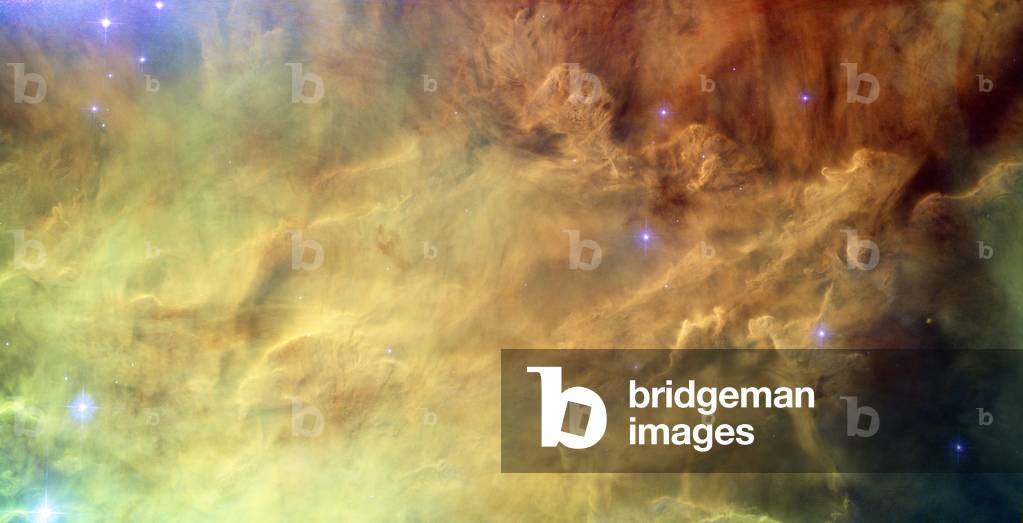
Infrared view of the Lagoon Nebula, 2010
CANUCKS MARK MESSIER STOPPED BY PANTHERS SEAN BURKE, 1999-01-09 (photo)
权限
  • Permission required for non-editorial use (inc book covers and in-context promotional use in documentaries). Please contact us
图片限制
  • Content within this photograph may require additional clearances (eg: trademark and personality rights) depending on Licensee's specific use of material, which may include book and magazine cover use.
内容合作伙伴限制
  • Minimum fee applies to this image;Only available to clients invoiced in Australia, Belgium, Brazil, Bulgaria, Canada, China, Cyprus, Czech Republic, Estonia, Finland, France, French Southern Territories, Greece, Hong Kong, Hungary, India, Ireland, Israel, Italy, Lebanon, Luxembourg, Mexico, the Netherlands, New Zealand, Portugal, Qatar, Republic of Korea, Romania, Russian Federation, Singapore, South Africa, Spain, Sweden, Switzerland, Taiwan, Turkey, United Arab Emirates, United Kingdom and United States
AVALANCHE MESSIER SCORES THIRD PERIOD GOAL OVER SHARKS, 2002-05-04 (photo)
权限
  • Permission required for non-editorial use (inc book covers and in-context promotional use in documentaries). Please contact us
图片限制
  • Content within this photograph may require additional clearances (eg: trademark and personality rights) depending on Licensee's specific use of material, which may include book and magazine cover use.
内容合作伙伴限制
  • Minimum fee applies to this image;Only available to clients invoiced in Australia, Belgium, Brazil, Bulgaria, Canada, China, Cyprus, Czech Republic, Estonia, Finland, France, French Southern Territories, Greece, Hong Kong, Hungary, India, Ireland, Israel, Italy, Lebanon, Luxembourg, Mexico, the Netherlands, New Zealand, Portugal, Qatar, Republic of Korea, Romania, Russian Federation, Singapore, South Africa, Spain, Sweden, Switzerland, Taiwan, Turkey, United Arab Emirates, United Kingdom and United States
The Milky Way, looking towards the Galactic Centre - The Milky Way, looking towards the Galactic Centre - The bright point at the bottom left is Jupiter Planet The Milky Way is best seen on winter nights (May to August) from the southern hemisphere. This wide-angle picture shows a broad span of the southern Milky Way and is a photograph made using colour film in a conventional camera. The camera which was pointed towards the centre of our Galaxy, in the direction of the constellation of Sagittarius. The Galactic centre itself is totally hidden at visible wavelengths by the band of dust which divides the Milky Way along much of its length. The dust lane is only visible because it blots out background stars. Embedded in the dust are many star-forming regions, seen as bright red emission nebulae. The brightest, left of the centre of the picture, is Messier 8, the Lagoon Nebula, which is visible to the unaided eye. The bright 'star' at lower left is the planet Jupiter
Centre de la nebula de la Lagoon (M8) dans le Sagittarius - In the heart of the Lagoon Nebula - Centre de la nebula de la Lagoon (M8) vue par le telescope Hubble (HST). This close - up shot of the centre of the Lagoon Nebula (Messier 8) clearly shows the delicate structures formed when the powerful radiation of young stars interacts with the hydrogen cloud they formed from. This image was created from exposures taken with the Wide Field Channel of the Advanced Camera for Surveys on Hubble. Light from glowing hydrogen (through the F658N filter) is coloured red. Light from ionised nitrogen (through the F660N filter) is coloured green and light through a yellow filter (F550M) is coloured blue. The exposure times through each filter are 1560 s, 1600 s and 400 s respectively. The blue - white flare at the upper - left of the image is scattered light from a bright star just outside the field of view. The field of view is about 3.3 by 1.7 arcminutes
Coeur de la nebula de la Lagoon dans le sagittarius/HST - This NASA Hubble Space Telescope (HST) image reveals a pair of one - half light - year long interstellar “” twisters”” in the heart of the Lagoon Nebula (Messier 8) which lies 5,000 light - years away in the direction of the constellation Sagittarius. The central hot O type star, Herschel 36 (lower right), is the primary source of the ionizing radiation for the brightest region in the nebula, called the Hourglass. Other hot stars, also present in the nebula, are ionizing the extended optical nebulosity. The ionizing radiation induces photo - evaporation of the surfaces of the clouds and drives away violent stellar winds tearing into the cool clouds. Analogous to the spectacular phenomena of Earth tornadoes, the large difference in temperature between the hot surface and cold interior of the clouds, combined with the pressure of starlight, may produce strong horizontal shear to twist the clouds into their tornado - like appearance. These color - coded images are the combination of individual exposures taken in July and September, 1995 with Hubble's Wide Field and Planetary Camera 2 (WFPC2) through three narrow - band filters (red light - - ionized sulphur atoms, blue light - - double ionized oxygen atoms, green light - - ionized hydrogen)
COMBO OF VIVENDI AND SEAGRAM CHIEF EXECUTIVE OFFICERS, 2000-06-19 (photo)
权限
  • Permission required for non-editorial use (inc book covers and in-context promotional use in documentaries). Please contact us
图片限制
  • Content within this photograph may require additional clearances (eg: trademark and personality rights) depending on Licensee's specific use of material, which may include book and magazine cover use.
内容合作伙伴限制
  • Minimum fee applies to this image;Only available to clients invoiced in Australia, Belgium, Brazil, Bulgaria, Canada, China, Cyprus, Czech Republic, Estonia, Finland, France, French Southern Territories, Greece, Hong Kong, Hungary, India, Ireland, Israel, Italy, Lebanon, Luxembourg, Mexico, the Netherlands, New Zealand, Portugal, Qatar, Republic of Korea, Romania, Russian Federation, Singapore, South Africa, Spain, Sweden, Switzerland, Taiwan, Turkey, United Arab Emirates, United Kingdom and United States
Heart of the Nebula of the Lagoon (M8) in Sagittarius seen by HST - This NASA Hubble Space Telescope (HST) image reveals a pair of one - half light - year long interstellar “” twisters”” - - eerie funnels and twisted - rope structures (upper left) - - in the heart of the Lagoon Nebula (Messier 8) which lies 5,000 years - - away in the direction of the constellation Sagittarius. The central hot O type star, Herschel 36 (upper left in photo), is the primary source of the ionizing radiation for the brightest region in the nebula, called the Hourglass. Other hot stars, also present in the nebula, are ionizing the extended optical nebulosity. The ionizing radiation induces photo - evaporation of the surfaces of the clouds (seen as a blue “” mist”” at the right of the image), and drives away violent stellar winds tearing into the cool clouds.Analogous to the spectacular phenomena of Earth tornadoes, the large difference in temperature between the hot surface and cold interior of the clouds, combined with the pressure of starlight, may produce strong horizontal shear to twist the clouds into their tornado - like appearance. This Hubble picture reveals a variety of small scale structures in the interstellar medium, small dark clouds called Bok globules, bow shocks around stars, ionized wisps, rings, knots and jets. The Lagoon Nebula and nebulae in other galaxies are sites where new stars are being born from dusty molecular clouds. These regions are the “” space laboratories”” for the astronomers to study how stars form and the interactions between the winds from stars and the gas nearby. By studying the wealth of data revealed by HST, astronomers will understand better how stars form in the nebulae. These color - coded images are the combination of individual exposures taken in July and September, 1995 with Hubble's Wide Field and Planetary Camera 2 (WFPC2) through three narrow - band filters (red light - - ionized sulphur atoms, blue light - - double ionized oxygen atoms,
Open Cluster of Pleiades - The Pleiades star cluster - The Pleiades cluster is a cluster of about 500 young stars nees 150 million years ago. Visible in the constellation Taurus, this cluster is 440 years from the Earth. Object number 45 in Messier's catalog is the Pleiades, also know as the Seven Sisters for the seven stars that can be easily seen with excellent eyesight.The Pleiades is a relatively nearby open cluster, which according to new data from the Hipparcos satellite is located at a distance of 370 light years. The cluster is surrounded by blue nebulosity illuminated by the light reflected from the nearby stars. Astro - Physic's 130EDT F/8 Triplet Refractor working at f/6 two 20 minute exposures