图像Telephony
{"event":"pageview","page_type1":"catalog","page_type2":"image_page","language":"cn","user_logged":"false","user_type":"ecommerce","nl_subscriber":"false"}
{"event":"ecommerce_event","event_name":"view_item","event_category":"browse_catalog","ecommerce":{"items":[{"item_id":"UIS5064546","item_brand":"other","item_category":"object","item_category2":"no_copyright","item_category3":"standard","item_category5":"not_balown","item_list_name":"search_results","item_name":"telephony","item_variant":"undefined"}]}}
通过上传图片搜索我们的馆藏。
拖放图片
点击浏览您的设备
寻找您的完美匹配顶部结果为精确匹配,其余则为从我们的图库中精选的视觉相似图片。
查看我们的AI搜索技巧
搜索特定字段
| 领域 |
搜索词 |
示例 |
| 资产标题 | 标题: | 标题:小马 |
| 资产标题与关键词 | ~ | ~小马 |
| 资产描述文本 | 描述: | 描述:伦敦 |
| 机构前缀 | 前缀:或 $ | 前缀:LAL 或 $LAL |
| 资产ID | imageid: 或 # | imageid:250297 或 imageid:[2500 至 4000] 或 #1551 |
| 机构名称 | coll: | coll:历史 |
| 中型 | 媒介: | 媒介:油 |
| 世纪 | 世纪: | 世纪:20世纪 |
| 关键词 | 千瓦: | kw:狗 |
| 艺术家名称 | 艺术家:还是? | 艺术家:莫奈或莫奈? |
| 艺术家国籍 | 夜: | nat:法语 |
| 创作者ID | creatorid: | creatorid:37 |
| 位置 | 地点:or @ | 地点:埃克塞特或@埃克塞特 |
| 分类 | 类: | 类别:57 或 #57。未分类资产请使用 # 标记 |
| 年 | 年: | 年份:1850 或 年份:[1700 至 1800] |
Metadata Block (Hidden)
联系我们获取更多帮助
高分辨率文件尺寸
搜索更多高分辨率图片或视频
Telephony
图片描述
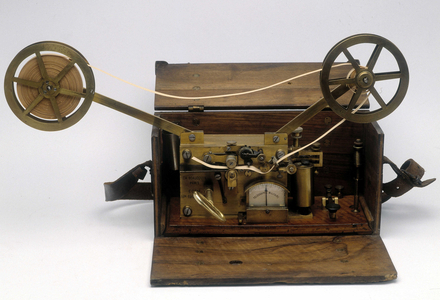
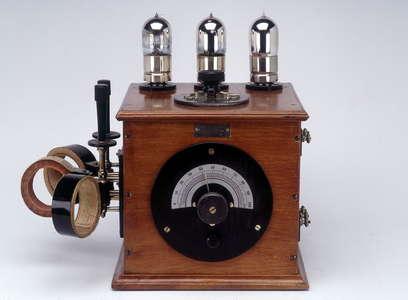
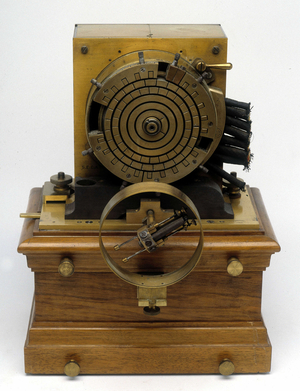
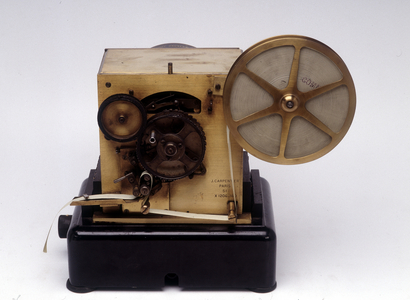
Telephony. Telephone Answering Machines (Repondeur telephonique) Poulsen's Telegraphone, 1903. Patented in 1898 by the Danish electrical engineer and inventor Valdemar Poulsen (1869-1942), the Telegraphone was the first telephone answering machine and laid the foundations of magnetic recording. Poulsen discovered that he could record sound by speaking into a microphone attached to a magnet that was moved slowly across a thin wire. As the wire became magnetised, a trail of sound patterns was recorded. However, poor sound quality prevented the Telegraphone from achieving commercial success and Poulsen became disheartened. In the 1930s the Germans adapted his invention for military use, exchanging the wire for magnetic coated plastic tape. This simultaneously improved sound quality and enabled reuse. After World War II, the machine was adopted by the entertainment industry and experienced great popularity. ©SSPL/Science Museum
Read More
图片来源
SSPL/UIG / Bridgeman Images
Not available to clients invoiced in the UK

 商品已加入购物车