[]
Ihre AuswahlIhre aktuelle Auswahl
asset(s) Assets
Ihr Preis 0

Ihre Auswahl

Auswahl aufheben
Asset zum Warenkorb hinzugefügt
{"event":"pageview","page_type1":"undetected","page_type2":"_assets_search_override","language":"de","user_logged":"false","user_type":"ecommerce","nl_subscriber":"false"}
{"event":"ecommerce_event","event_name":"view_item","event_category":"browse_catalog","ecommerce":{"items":[{"item_id":"UIS5099417","item_category":"object","item_category2":"no_copyright","item_category3":"standard","item_category5":"not_balown","item_list_name":"search_results","item_name":"light_bulb_1900_1960","item_variant":"undefined"},{"item_id":"LLM5212360","item_category":"illustration","item_category2":"out_of_copyright","item_category3":"standard","item_category4":"sullivan_edmund_joseph_1869_1933_after","item_category5":"not_balown","item_list_name":"search_results","item_name":"illustration_for_sartor_resartus_litho","item_variant":"undefined"},{"item_id":"UIS5099415","item_category":"object","item_category2":"no_copyright","item_category3":"standard","item_category5":"not_balown","item_list_name":"search_results","item_name":"carbon_filament_lamp_1890_1920","item_variant":"undefined"},{"item_id":"NHM1456136","item_category":"photo","item_category2":"no_copyright","item_category3":"standard","item_category5":"not_balown","item_list_name":"search_results","item_name":"feather_detail_b_w_photo","item_variant":"undefined"},{"item_id":"NHM1456134","item_category":"photo","item_category2":"no_copyright","item_category3":"standard","item_category5":"not_balown","item_list_name":"search_results","item_name":"feather_detail_b_w_photo","item_variant":"undefined"},{"item_id":"STC1275218","item_category":"illustration","item_category2":"out_of_copyright","item_category3":"standard","item_category4":"bury_mrs_edward_fl_1831_34_after","item_category5":"not_balown","item_list_name":"search_results","item_name":"crinum_declinatum_plate_43_from_a_selection_of_hexandrian_plants_published_r_havell_london_1831_34_h","item_variant":"undefined"},{"item_id":"NHM1456138","item_category":"photo","item_category2":"no_copyright","item_category3":"standard","item_category5":"not_balown","item_list_name":"search_results","item_name":"taraxacum_officinale_b_w_photo","item_variant":"undefined"},{"item_id":"STM620807","item_category":"object","item_category2":"in_copyright","item_category3":"standard","item_category4":"zynsky_toots_b_1951","item_category5":"not_balown","item_list_name":"search_results","item_name":"maretta_mizimah_ii_2004_filet_de_verre","item_variant":"undefined"},{"item_id":"UIG3524606","item_category2":"no_copyright","item_category3":"standard","item_category5":"not_balown","item_list_name":"search_results","item_name":"galatheid_crabs_and_shrimp_graze_on_bacterial_filaments","item_variant":"undefined"},{"item_id":"NHM1456135","item_category":"photo","item_category2":"no_copyright","item_category3":"standard","item_category5":"not_balown","item_list_name":"search_results","item_name":"feather_detail_b_w_photo","item_variant":"undefined"},{"item_id":"LLM5206755","item_category":"illustration","item_category2":"out_of_copyright","item_category3":"standard","item_category4":"english_school_20th_century","item_category5":"not_balown","item_list_name":"search_results","item_name":"a_sea_slug_which_changes_colour_as_its_food_varies_chromolitho","item_variant":"undefined"},{"item_id":"UIG5307183","item_category":"photo","item_category2":"no_copyright","item_category3":"standard","item_category5":"not_balown","item_list_name":"search_results","item_name":"a_plasma_globe_or_plasma_lamp_also_called_plasma_ball_dome_sphere_tube_or_orb_depending_on_shape_is_","item_variant":"undefined"},{"item_id":"NHM1456129","item_category":"photo","item_category2":"no_copyright","item_category3":"standard","item_category5":"not_balown","item_list_name":"search_results","item_name":"feather_detail_b_w_photo","item_variant":"undefined"},{"item_id":"STC1275220","item_category":"illustration","item_category2":"out_of_copyright","item_category3":"standard","item_category4":"bury_mrs_edward_fl_1831_34_after","item_category5":"not_balown","item_list_name":"search_results","item_name":"pancratium_speciosum_plate_47_from_a_selection_of_hexandrian_plants_published_r_havell_london_1831_1","item_variant":"undefined"},{"item_id":"UIG528825","item_category":"photo","item_category2":"no_copyright","item_category3":"standard","item_category5":"not_balown","item_list_name":"search_results","item_name":"gev_gamma_ray_emission_regions_magenta_in_w44_supernova_remnant_features_clearly_align_with_filament","item_variant":"undefined"},{"item_id":"UIG5307180","item_category":"photo","item_category2":"no_copyright","item_category3":"standard","item_category5":"not_balown","item_list_name":"search_results","item_name":"a_plasma_globe_or_plasma_lamp_also_called_plasma_ball_dome_sphere_tube_or_orb_depending_on_shape_is_","item_variant":"undefined"},{"item_id":"UIG5307184","item_category":"photo","item_category2":"no_copyright","item_category3":"standard","item_category5":"not_balown","item_list_name":"search_results","item_name":"a_plasma_globe_or_plasma_lamp_also_called_plasma_ball_dome_sphere_tube_or_orb_depending_on_shape_is_","item_variant":"undefined"},{"item_id":"DGA3934489","item_category2":"out_of_copyright","item_category3":"standard","item_category5":"not_balown","item_list_name":"search_results","item_name":"stylized_mask_of_bearded_man_wood_and_straw_filaments_teke_population_congo_africa_20th_century","item_variant":"undefined"},{"item_id":"UIG5306483","item_category":"photo","item_category2":"no_copyright","item_category3":"standard","item_category5":"not_balown","item_list_name":"search_results","item_name":"a_plasma_globe_or_plasma_lamp_also_called_plasma_ball_dome_sphere_tube_or_orb_depending_on_shape_is_","item_variant":"undefined"},{"item_id":"UDK844766","item_category":"photo","item_category2":"no_copyright","item_category3":"standard","item_category5":"not_balown","item_list_name":"search_results","item_name":"brown_and_white_mottled_feather_mid_section_close_up","item_variant":"undefined"},{"item_id":"UDK844763","item_category":"photo","item_category2":"no_copyright","item_category3":"standard","item_category5":"not_balown","item_list_name":"search_results","item_name":"shaft_and_barbs_of_elongated_golden_brown_feather_mid_section_close_up","item_variant":"undefined"},{"item_id":"UIG5307182","item_category":"photo","item_category2":"no_copyright","item_category3":"standard","item_category5":"not_balown","item_list_name":"search_results","item_name":"a_plasma_globe_or_plasma_lamp_also_called_plasma_ball_dome_sphere_tube_or_orb_depending_on_shape_is_","item_variant":"undefined"},{"item_id":"NHM1454043","item_category":"illustration","item_category2":"no_copyright","item_category3":"standard","item_category5":"not_balown","item_list_name":"search_results","item_name":"sinosauropteryx_litho","item_variant":"undefined"},{"item_id":"UDK844821","item_category":"photo","item_category2":"no_copyright","item_category3":"standard","item_category5":"not_balown","item_list_name":"search_results","item_name":"grey_feather_side_view","item_variant":"undefined"},{"item_id":"MEP849787","item_category":"object","item_category2":"out_of_copyright","item_category3":"standard","item_category4":"etruscan","item_category5":"not_balown","item_list_name":"search_results","item_name":"alabastron_late_6th_century_bc_4th_century_bc_patterned_glass_on_a_core_brittle_filaments_applied_mu","item_variant":"undefined"},{"item_id":"PIX4626697","item_category":"photo","item_category2":"no_copyright","item_category3":"standard","item_category4":"stefan_seip","item_category5":"not_balown","item_list_name":"search_results","item_name":"le_soleil_en_h_alpha_21_06_2004_the_sun_june_21_2004_le_soleil_vu_le_21_juin_2004_the_image_shows_su","item_variant":"undefined"},{"item_id":"PIX4609732","item_category":"photo","item_category2":"no_copyright","item_category3":"standard","item_category5":"not_balown","item_list_name":"search_results","item_name":"elliptical_galaxy_ngc_1275_in_persee_elliptical_galaxy_ngc_1275_in_perseus_view_of_the_giant_ellipti","item_variant":"undefined"},{"item_id":"PIX4582989","item_category":"photo","item_category2":"no_copyright","item_category3":"standard","item_category5":"not_balown","item_list_name":"search_results","item_name":"remains_of_supernova_1e0102_2_7219_the_hubble_space_telescope_photographed_the_remains_of_a_supernov","item_variant":"undefined"},{"item_id":"PIX4611847","item_category":"photo","item_category2":"no_copyright","item_category3":"standard","item_category5":"not_balown","item_list_name":"search_results","item_name":"elliptical_galaxy_ngc_4696_in_centaur_elliptical_galaxy_ngc_4696_image_of_the_elliptical_galaxy_ngc_","item_variant":"undefined"},{"item_id":"PIX4627223","item_category":"photo","item_category2":"no_copyright","item_category3":"standard","item_category5":"not_balown","item_list_name":"search_results","item_name":"le_soleil_vu_by_sdo_on_december_6_2010_the_sun_seen_by_sdo_december_6_2010_le_soleil_vu_en_ultraviol","item_variant":"undefined"},{"item_id":"PIX4583135","item_category":"photo","item_category2":"no_copyright","item_category3":"standard","item_category5":"not_balown","item_list_name":"search_results","item_name":"crab_pulsar_in_nebula_m1_the_crab_pulsar_this_image_from_the_hubble_space_telescope_shows_the_centra","item_variant":"undefined"},{"item_id":"PIX4623110","item_category":"photo","item_category2":"no_copyright","item_category3":"standard","item_category5":"not_balown","item_list_name":"search_results","item_name":"planetary_nebula_ngc_5189_in_the_fly_ngc_5189_a_weird_planetary_nebula_this_nebula_is_located_about_","item_variant":"undefined"},{"item_id":"PIX4627176","item_category":"photo","item_category2":"no_copyright","item_category3":"standard","item_category5":"not_balown","item_list_name":"search_results","item_name":"le_soleil_vu_by_sdo_on_december_6_2010_the_sun_seen_by_sdo_december_6_2010_le_soleil_vu_en_ultraviol","item_variant":"undefined"},{"item_id":"PIX4609990","item_category":"photo","item_category2":"no_copyright","item_category3":"standard","item_category5":"not_balown","item_list_name":"search_results","item_name":"spiral_galaxy_ngc_2082_in_dorado_galaxy_ngc_2082_in_dorado_the_spiral_galaxy_ngc_2082_is_located_abo","item_variant":"undefined"},{"item_id":"PIX4582828","item_category":"photo","item_category2":"no_copyright","item_category3":"standard","item_category5":"not_balown","item_list_name":"search_results","item_name":"remains_of_supernova_des_voiles_detail_pencil_nebula_ngc_2736_the_pencil_nebula_in_vela_detail_of_th","item_variant":"undefined"},{"item_id":"PIX4582769","item_category":"photo","item_category2":"no_copyright","item_category3":"standard","item_category4":"tom_davis","item_category5":"not_balown","item_list_name":"search_results","item_name":"les_dentelles_du_cygne_detail_ngc_6960_the_veil_nebula_ngc_6960_part_of_the_rest_of_the_supernova_of","item_variant":"undefined"},{"item_id":"PIX4583001","item_category":"photo","item_category2":"no_copyright","item_category3":"standard","item_category4":"jerry_lodriguss","item_category5":"not_balown","item_list_name":"search_results","item_name":"remains_of_the_crab_supernova_m1_in_the_taurus_m1_the_crab_nebula_is_a_supernova_remnant_from_a_star","item_variant":"undefined"},{"item_id":"PIX4620798","item_category":"photo","item_category2":"no_copyright","item_category3":"standard","item_category5":"not_balown","item_list_name":"search_results","item_name":"nebula_n159_in_the_great_magellan_cloud_n159_star_forming_region_in_large_magellanic_cloud_lmc_n159_","item_variant":"undefined"},{"item_id":"PIX4626476","item_category":"photo","item_category2":"no_copyright","item_category3":"standard","item_category5":"not_balown","item_list_name":"search_results","item_name":"kepler_is_the_rest_of_a_supernova_that_exploded_about_400_years_ago_located_about_13_000_light_years","item_variant":"undefined"},{"item_id":"PIX4568892","item_category":"photo","item_category2":"no_copyright","item_category3":"standard","item_category5":"not_balown","item_list_name":"search_results","item_name":"open_cluster_of_pleiades_seen_in_infrared_the_pleiades_open_cluster_seen_in_infrared_clouds_of_dust_","item_variant":"undefined"},{"item_id":"UIS5073697","item_category":"photo","item_category2":"no_copyright","item_category3":"standard","item_category5":"not_balown","item_list_name":"search_results","item_name":"valve_production_mullard_ltd_mitcham_1955","item_variant":"undefined"},{"item_id":"PIX4609074","item_category":"photo","item_category2":"no_copyright","item_category3":"standard","item_category5":"not_balown","item_list_name":"search_results","item_name":"stars_in_the_spiral_galaxy_ngc_253_stars_in_galaxy_ngc_253_ngc_253_is_the_brightest_galaxy_of_the_sc","item_variant":"undefined"},{"item_id":"PIX4569048","item_category":"photo","item_category2":"no_copyright","item_category3":"standard","item_category5":"not_balown","item_list_name":"search_results","item_name":"cluster_of_stars_south_serpent_the_serpens_south_star_cluster_cluster_of_fifty_very_young_stars_35_o","item_variant":"undefined"},{"item_id":"PIX4583555","item_category":"photo","item_category2":"no_copyright","item_category3":"standard","item_category5":"not_balown","item_list_name":"search_results","item_name":"asteroide_p_2010_a2_seen_by_the_space_telescope_hubble_comet_like_asteroid_p_2010_a2_p_2010_a2_is_no","item_variant":"undefined"},{"item_id":"PIX4621141","item_category":"photo","item_category2":"no_copyright","item_category3":"standard","item_category5":"not_balown","item_list_name":"search_results","item_name":"star_formation_in_the_southern_cross_star_formation_in_the_southern_cross_part_of_the_lactee_route_i","item_variant":"undefined"},{"item_id":"UIS5073639","item_category":"photo","item_category2":"no_copyright","item_category3":"standard","item_category5":"not_balown","item_list_name":"search_results","item_name":"valve_production_mullard_ltd_mitcham_1955","item_variant":"undefined"},{"item_id":"UIS5073625","item_category":"photo","item_category2":"no_copyright","item_category3":"standard","item_category5":"not_balown","item_list_name":"search_results","item_name":"valve_production_mullard_ltd_1955_technicians_check_valve_components_in_special_cabinets_designed_to","item_variant":"undefined"},{"item_id":"PIX4583131","item_category":"photo","item_category2":"no_copyright","item_category3":"standard","item_category5":"not_balown","item_list_name":"search_results","item_name":"pulsar_of_crab_in_taurus_seen_in_x_the_crab_nebula_pulsar_pulsar_of_crab_in_taurus_seen_in_x_by_sate","item_variant":"undefined"},{"item_id":"PIX4582633","item_category":"photo","item_category2":"no_copyright","item_category3":"standard","item_category5":"not_balown","item_list_name":"search_results","item_name":"swan_lace_detail_this_delicate_hubble_space_telescope_image_shows_a_tiny_portion_of_the_cygnus_loop_","item_variant":"undefined"},{"item_id":"PIX4622272","item_category":"photo","item_category2":"no_copyright","item_category3":"standard","item_category5":"not_balown","item_list_name":"search_results","item_name":"nebula_ic_1396_in_cephee_infrared_view_18_12_2003_the_large_composite_image_on_the_left_is_a_product","item_variant":"undefined"},{"item_id":"PIX4569094","item_category":"photo","item_category2":"no_copyright","item_category3":"standard","item_category5":"not_balown","item_list_name":"search_results","item_name":"open_cluster_westerlund_2_in_carene_open_cluster_westerlund_2_in_carina_the_open_cluster_westerlund_","item_variant":"undefined"},{"item_id":"UIS5100903","item_category":"object","item_category2":"no_copyright","item_category3":"standard","item_category5":"not_balown","item_list_name":"search_results","item_name":"pair_of_nylon_enkalon_micromesh_stockings_by_lewis_separates_c_1955","item_variant":"undefined"},{"item_id":"PIX4618229","item_category":"photo","item_category2":"no_copyright","item_category3":"standard","item_category5":"not_balown","item_list_name":"search_results","item_name":"detail_of_the_tarantula_nebula_ngc_2070_in_the_dorado_central_region_of_the_tarantula_nebula_the_tar","item_variant":"undefined"},{"item_id":"PIX4611440","item_category":"photo","item_category2":"no_copyright","item_category3":"standard","item_category5":"not_balown","item_list_name":"search_results","item_name":"m87_elliptical_galaxy_in_virgo_m87_elliptical_galaxy_in_virgo_the_m87_galaxy_ngc_4486_is_54_million_","item_variant":"undefined"},{"item_id":"PIX4582891","item_category":"photo","item_category2":"no_copyright","item_category3":"standard","item_category5":"not_balown","item_list_name":"search_results","item_name":"remains_of_supernova_n49_dans_la_dorade_hst_resembling_the_puffs_of_smoke_and_sparks_from_a_summer_f","item_variant":"undefined"},{"item_id":"PIX4583010","item_category":"photo","item_category2":"no_copyright","item_category3":"standard","item_category5":"not_balown","item_list_name":"search_results","item_name":"remnants_of_the_crab_supernova_m1_in_the_taurus_this_is_a_mosaic_image_one_of_the_largest_ever_taken","item_variant":"undefined"},{"item_id":"PIX4621115","item_category":"photo","item_category2":"no_copyright","item_category3":"standard","item_category5":"not_balown","item_list_name":"search_results","item_name":"star_formation_in_the_dr21_region_star_formation_in_the_dr21_region_this_star_formation_region_is_ab","item_variant":"undefined"},{"item_id":"PIX4623785","item_category":"photo","item_category2":"no_copyright","item_category3":"standard","item_category5":"not_balown","item_list_name":"search_results","item_name":"planetary_nebula_of_boomerang_in_centaur_hst_the_boomerang_nebula_is_a_young_planetary_nebula_and_th","item_variant":"undefined"},{"item_id":"PIX4582960","item_category":"photo","item_category2":"no_copyright","item_category3":"standard","item_category5":"not_balown","item_list_name":"search_results","item_name":"remains_of_the_supernova_kepler_in_ophiuchus_nasa_s_three_great_observatories_the_hubble_space_teles","item_variant":"undefined"},{"item_id":"PIX4613873","item_category":"photo","item_category2":"no_copyright","item_category3":"standard","item_category5":"not_balown","item_list_name":"search_results","item_name":"irregular_dwarf_galaxy_i_zwicky_18_irregular_dwarf_galaxy_i_zwicky_18_the_irregular_dwarf_galaxy_i_z","item_variant":"undefined"},{"item_id":"UIS5061183","item_category":"object","item_category2":"no_copyright","item_category3":"standard","item_category5":"not_balown","item_list_name":"search_results","item_name":"spinning_wheels_manual_silk_twister_s_wheel_cross_and_reeler_for_twisting_silk_by_hand_c_1770","item_variant":"undefined"},{"item_id":"MMM7337566","item_category":"photo","item_category2":"in_copyright","item_category3":"standard","item_category4":"hart_alexandra_20th_21st_century","item_category5":"not_balown","item_list_name":"search_results","item_name":"solar_nexus_2014_digital_photo","item_variant":"undefined"},{"item_id":"MMM7337565","item_category":"photo","item_category2":"in_copyright","item_category3":"standard","item_category4":"hart_alexandra_20th_21st_century","item_category5":"not_balown","item_list_name":"search_results","item_name":"ripples_in_a_pond_2014_digital_photo","item_variant":"undefined"},{"item_id":"UIS5104157","item_category":"photo","item_category2":"no_copyright","item_category3":"standard","item_category5":"not_balown","item_list_name":"search_results","item_name":"crab_nebula_c_2000","item_variant":"undefined"},{"item_id":"PRX11868865","item_category":"illustration","item_category2":"out_of_copyright","item_category3":"standard","item_category5":"not_balown","item_list_name":"search_results","item_name":"various_species_of_passion_flower_hand_coloured_litho","item_variant":"undefined"}]}}
{"event":"custom_event","event_name":"view_search_result","event_category":"browse_catalog","keyword":"filamente","search_type":"standard","search_bridgeman_artists":"false","search_mode":"automatic","search_zero_result":"false","search_results":65,"search_results_page_number":1}

'Filamente' Bilder und Clips Suchergebnisse page 1 of 1

Hauptfilter
Option "Kunstdruck kaufen" verfügbar
Royalty-free Optionen
Ecommerce option
Medium
Orientation
Farbbilder
Kategorie
Rechte
Mehr Filter
Bridgeman Artists
Bridgeman Fotografen
Jahrhundert
Footage-Filter
Video Original Format
Video Resolution
Video Category
Filter group
Filter colors
Sortieren nach:
pro Seite
Filter group
Kategorie
Medium
No copyright
Filter colors

Anzeigeoptionen

View
Image Size

Bilder zu 'Filamente' gefunden, 65

Light bulb, 1900-1960
Nutzungsbeschränkungen von unseren Content-Partnern
  • Not available to clients invoiced in the UK
Carbon filament lamp, 1890-1920
Nutzungsbeschränkungen von unseren Content-Partnern
  • Not available to clients invoiced in the UK
Feather detail (b/w photo)
Zusätzliche Genehmigungen
  • Permission required for non-editorial use (inc book and magazine covers). Please contact us
Feather detail (b/w photo)
Zusätzliche Genehmigungen
  • Permission required for non-editorial use (inc book and magazine covers). Please contact us
Taraxacum officinale (b/w photo)
Zusätzliche Genehmigungen
  • Permission required for non-editorial use (inc book and magazine covers). Please contact us
Maretta Mizimah II, 2004 (filet-de-verre)
Urheberrecht
  • Urheberrechtlich Geschützt
Galatheid crabs and shrimp graze on bacterial filaments
Feather detail (b/w photo)
Zusätzliche Genehmigungen
  • Permission required for non-editorial use (inc book and magazine covers). Please contact us
Feather detail (b/w photo)
Zusätzliche Genehmigungen
  • Permission required for non-editorial use (inc book and magazine covers). Please contact us
Stylized mask of bearded man, wood and straw filaments, Teke population, Congo, Africa, 20th century
Zusätzliche Genehmigungen
  • Permission required for any use in perpetuity - Please contact us;Permission required for certain ebook uses - Please contact us;Permission required for certain film, TV and streaming uses - Please contact us;Permission required for immersive exhibition use - Please contact us
Brown and white mottled feather, mid section, close up
Nutzungsbeschränkungen von unseren Content-Partnern
  • Not available to clients invoiced in China
Shaft and barbs of elongated, golden brown feather, mid section, close up
Nutzungsbeschränkungen von unseren Content-Partnern
  • Not available to clients invoiced in China
Sinosauropteryx (litho)
Zusätzliche Genehmigungen
  • Permission required for non-editorial use (inc book and magazine covers). Please contact us
Grey feather, side view
Nutzungsbeschränkungen von unseren Content-Partnern
  • Not available to clients invoiced in China
Alabastron, late 6th Century BC - 4th Century BC, patterned glass on a core brittle filaments applied multicolored spiral and worked on the body with an instrument
Zusätzliche Genehmigungen
  • Permission required for non-editorial use (inc book and magazine covers). Please contact us
Bildbeschränkungen
  • Bridgeman Images only provides access to this image. Consent to license this image for any usage that includes Italy as a territory may be required according to the Italian Cultural Heritage Code. In such cases, an additional fee may apply, with the Ministry of Culture charging a potential minimum of €100. Any such clearance must be obtained in advance from the institution where the work is kept. Please contact us for further assistance.
Nutzungsbeschränkungen von unseren Content-Partnern
  • Not available to clients invoiced in Italy
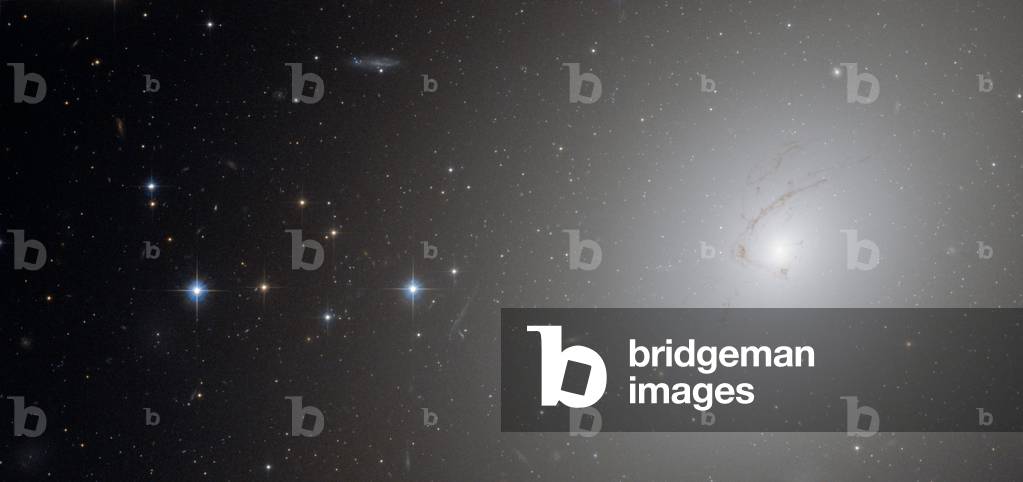
Elliptical galaxy NGC 1275 in Persee - Elliptical galaxy NGC 1275 in Perseus - View of the giant elliptical galaxy NGC 1275 located 230 million years ago - light in the center of the cluster of Persee galaxies. This image obtained by the Hubble Space Telescope in 2006 reveals filamentary structures surrounding the galaxy. These gas filaments would come from the interaction between the cold gas of the center of the galaxy or resides a supermassive black hole and the warmer gas present in the galaxy cluster. This Hubble Space Telescope image of galaxy NGC 1275 reveals the fine, thread - like filamentary structures in the gas surrounding the galaxy. The red filaments are composed of cool gas being suspended by a magnetic field, and are surrounded by the 100 - million - degree Fahrenheit hot gas in the center of the Perseus galaxy cluster. The filaments are dramatic markers of the feedback process through which energy is transferred from the central massive black hole to the surrounding gas. The filaments originate when cool gas is transported from the center of the galaxy by radio bubbles that rise in the hot interstellar gas. At a distance of 230 million light - years, NGC 1275 is one of the closest giant elliptical galaxies and lies at the center of the Perseus cluster of galaxies. The galaxy was photographed in July and August 2006 with the Advanced Camera for Surveys in three color filters
Remains of Supernova 1E0102.2 - 7219 - The Hubble Space Telescope photographed the remains of a supernova, a massive late-life star that exploded. Located 210,000 years of light from Earth, in the galaxy of the Little Magellan Cloud, 1E0102.2 - 7219 is now dissipated into blue filaments visible in the center of the image. At 50 years - light from the, top right, stars are born in a large gas cloud, the star-forming region N76 (Henize 1956). Composite images obtained in October 2003 and July 1995 with the ACS camera and the large field planetary camera
Elliptical galaxy NGC 4696 in Centaur - Elliptical galaxy NGC 4696 - Image of the elliptical galaxy NGC 4696, in Centaur, obtained by the Hubble space telescope. This picture, taken by Hubble's Advanced Camera for Surveys, shows NGC 4696, the largest galaxy in the Centaurus Cluster. The huge dust lane, around 30 000 light - years across, that sweeps across the face of the galaxy makes NGC 4696 look different from most other elliptical galaxies. Viewed at certain wavelengths, strange thin filaments of ionised hydrogen are visible within it. In this picture, these structures are visible as a subtle marbling effect across the galaxy's bright centre
Le Soleil vu by SDO on December 6, 2010 - The Sun seen by SDO. December 6, 2010 - Le Soleil vu en ultraviolet by SDO (Solar Dynamics Observatory) on December 6, 2010. It shows a gas filament of nearly a million miles breaking. A very long solar filament that had been snaking around the Sun erupted on December 6, 2010 with a flourish. Nasa's Solar Dynamics Observatory (SDO) caught the action in dramatic detail in extreme ultraviolet light of Helium. It had been almost a million km long ((about half a solar radius) and a prominent feature on the Sun visible over two weeks ago before it rotated out of view. Filaments are elongated clouds of cooler gases suspended above the Sun by magnetic forces. They are rather unstable and often break away from the Sun
Crab pulsar in nebula M1 - The Crab pulsar: This image from the Hubble space telescope shows the central region of the Crab nebula or resides its pulsar. The pulsar is visible in the center of the image. It is a very dense neutron star from the explosion of a massive supernova star. This star quickly rotates on itself developing a powerful magnetic field, emitting beams of light and radio waves. M1 is located about 6000 light-years in the constellation Taurus.. While many other images of the famous Crab Nebula have focused on the filaments in the outer part of the nebula, this image shows the very heart of the Crab Nebula including the central neutron star - it is the rightmost of the two bright stars near the centre of this image. The rapid motion of the material nearest to the central star is revealed by the subtle rainbow of colours in this time-lapse image, the rainbow effect being due to the movement of material over the time between one image and another
Planetary nebula NGC 5189 in the Fly - NGC 5189, a weird planetary nebula - This nebula is located about 3000 years from Earth in the southern constellation of Fly. Image obtained from the 3.9m telescope of Siding Spring The peculiarity of NGC 5189 lies in its astonishingly complex structure, first noted by Sir John Herschel, who discovered it in 1835. Seen through the telescope it seems to have an 'S' shape, reminiscent of a barred spiral galaxy, hence its popular name. This is seen in the colour photograph as the central greenish part. Deep photographs such as this show many filaments, rather more reminiscent of the Crab nebula, a supernova remnant, than a planetary nebula. Unlike the Crab nebula, NGC 5189 is remarkably symmetrical. Distances to planetary nebulae are notoriously difficult to measure, but this one is estimated to be about 3000 light years away
Le Soleil vu by SDO on December 6, 2010 - The Sun seen by SDO. December 6, 2010 - Le Soleil vu en ultraviolet by SDO (Solar Dynamics Observatory) on December 6, 2010. It shows a gas filament of nearly a million miles breaking. A very long solar filament that had been snaking around the Sun erupted on December 6, 2010 with a flourish. Nasa's Solar Dynamics Observatory (SDO) caught the action in dramatic detail in extreme ultraviolet light of Helium. It had been almost a million km long ((about half a solar radius) and a prominent feature on the Sun visible over two weeks ago before it rotated out of view. Filaments are elongated clouds of cooler gases suspended above the Sun by magnetic forces. They are rather unstable and often break away from the Sun
Spiral Galaxy NGC 2082 in Dorado - Galaxy NGC 2082 in Dorado - The spiral galaxy NGC 2082 is located about 60 million light years away from Earth in the southern constellation of Dorado. Image obtained by the Hubble Space Telescope (HST). The richly textured spiral galaxy NGC 2082 is found about 60 million light - years away in the constellation of Dorado (the Swordfish), deep in the southern sky. As seen here in a very detailed image from the Advanced Camera for Surveys on the NASA/ESA Hubble Space Telescope, filaments of dark dust splay across NGC 2082's luminous curved arms and dense central bulge of stars. Hubble's sharp vision also reveals many of the individual bright blue stars dotting the galaxy's rather ragged spiral arms as well as many much more distant galaxies in the background
Remains of supernova des Voiles - detail - Pencil nebula - NGC 2736, the Pencil nebula in Vela - Detail of the rest of the supernova des Voiles: the nebula of the pencil (NGC 2736). The supernova exploded 12,000 years ago. The rest of the supernova is approximately 815 years away from Earth. Image obtained with Siding Spring's 3.9m telescope. This is an outlying wisp of the Vela supernova remnant (SNR), almost the only sign of the eastern part of this vast bubble of expanding shock wave from a stellar explosion 12,000 years ago. Although clearly detected with radio and X - ray telescopes, the Vela SNR is partially hidden to optical observers. Many fine, tangled filaments are seen in the western part of the nebula, but in the east, most of it is hidden in dust. This is one of the brighter eastern fragments, and its unusual linear appearance in the telescope was remarked on by Sir John Herschel who discovered to nebula in the 1840s. This spindly shape is the source of its popular name
Les Dentelles du Cygne - Detail - NGC 6960 - The Veil Nebula, NGC 6960 - Part of the rest of the supernova of the Dentelles du Swan lies about 1500 years - light from Earth. Ten thousand years ago a star exploded. The supernova remnant is called the Veil Nebula. Here is the west end of the Veil Nebula known as NGC 6960 or the Witch's Broom Nebula. The rampaging gas gains its colors by impacting and exciting existing nearby gas. The supernova remnant lies about 1,400 light - years away towards the constellation of Cygnus. The bright star 52 Cygnus is visible with the unaided eye from a dark location but unrelated to the ancient supernova. The filaments in the right upper portion of the image is commonly called Pickering's Triangle. It was discovered in 1904 by Williamina Fleming of the Harvard Observatory while examining photographic plates of the region. The object was named in honor of her boss, astronomer Edward Charles Pickering
Remains of the Crab Supernova (M1) in the Taurus - M1, the Crab Nebula, is a supernova remnant from a star that exploded in July or August of 1054 AD and was witnessed and described by Chinese astronomers as being six times brighter than Venus. The supernova, located in the constellation of Taurus and about 7,000 light years away from the Earth, shined with the light of 400 million suns, was visible in the daytime for almost a month, and remained visible in the evening sky for more than a year. Today, some 900 years later, we see the remains of the exploded star as a cloud of gaseous debris, illuminated by the remnants of the core of the original star, which is now a rapidly spinning neutron star called a pulsar. The colors in the nebula come from two different sources. The red filaments come from typical hydrogen emission such as in emission nebula like M8. The diffuse blue background has a continuous spectrum composed of synchrotron radiation which is emitted by high energy electrons in a powerful magnetic field. Astro - Physic's 130 EDT f/8 refractor gas - hypersensitized Kodak PJM Single 50 minute exposure November 11, 1996 11:55 pm Chatsworth, N
Nebula N159 in the Great Magellan Cloud - N159 star forming region in Large Magellanic Cloud (LMC): N159 is a star-forming region located in the galaxy of the Great Magellan Cloud. Image obtained by the Hubble Space Telescope (HST) - This shot from the NASA/ESA Hubble Space Telescope shows a maelstrom of glowing gas and dark dust within one of the Milky Way's satellite galaxies, the Large Magellanic Cloud (LMC). This stormy scene shows a stellar nursery known as N159, an HII region over 150 light-years across. N159 contains many hot young stars. These stars are emitting intense ultraviolet light, which causes nearby hydrogen gas to glow, and torrential stellar winds, which are carving out ridges, arcs, and filaments from the surrounding material. At the heart of this cosmic cloud lies the Papillon Nebula, a butterfly-shaped region of nebulosity. This small, dense object is classified as a High-Excitation Blob, and is thought to be tightly linked to the early stages of massive star formation. N159 is located over 160 000 light-years away. It resides just south of the Tarantula Nebula, another massive star-forming complex within the LMC
Kepler is the rest of a supernova that exploded about 400 years ago located about 13,000 light years from Earth in the constellation Ophiuchus. This image obtained from the Hubble space telescope shows the filamentous structures of gases heated in contact with the shock wave. Composite of images obtained in August 2003 and May 2004; cumulative poses of 6 hours 30 minutes - Visible-light images from the Hubble telescope's Advanced Camera for Surveys reveal where the supernova shock wave is slamming into the densest regions of surrounding gas. The bright glowing knots are dense clumps from instabilities that form behind the shock wave. The Hubble data also show thin filaments of gas that look like rippled sheets seen edge-on. These filaments reveal where the shock wave is encountering low-density, more uniform interstellar material. Hubble's image was taken with the Advanced Camera for Surveys (ACS) on August 28/29, 2003 & May 26, 2004 for a total of 6.5 hours: Remains of the supernova Kepler in Ophiuchus - Kepler's supernova remnant
Open cluster of Pleiades seen in infrared - The Pleiades open cluster seen in infrared - Clouds of dust in the Pleiades cluster seen in infrared by the Spitzer space telescope. The Pleiades star cluster contains about 500 stars formed 100 million years ago. It is located 440 light years from Earth, in the constellation Taurus. The Pleiades, located more than 400 light - years away in the Taurus constellation, is a star cluster born when dinosaurs still roamed the Earth, about 100 million years ago. It is significantly younger than our 5 - billion - year - old sun. The brightest members of the cluster, also the highest - mass stars, are known in Greek mythology as two parents, Atlas and Pleione, and their seven daughters, Alcyone, Electra, Maia, Merope, Taygeta, Celaeno and Asterope. There are thousands of additional lower - mass members, including many stars like our sun. Some scientists believe that our sun grew up in a crowded region like the Pleiades, before migrating to its present, more isolated home. The infrared image from Spitzer highlights the filaments, colored yellow, green and red in this view, made up of dust associated with the cloud through which the cluster is traveling. The densest portion of the cloud appears in yellow and red, and the more diffuse outskirts are shown in green hues. One of the parent stars, Atlas, can be seen at the bottom left, while six of the sisters are visible at top. Additional stars in the cluster are sprinkled throughout the picture in blue
Valve production, Mullard Ltd, Mitcham 1955
Nutzungsbeschränkungen von unseren Content-Partnern
  • Not available to clients invoiced in the UK
Stars in the spiral galaxy NGC 253 - Stars in galaxy NGC 253 - NGC 253 is the brightest galaxy of the Sculptor's group, group of galaxies closest to the Local Group. It is about 13 million light years away. Here, the Hubble space telescope photographed the different star populations of this galaxy. A close - up view from Hubble space telescope shows that NGC 253 is ablaze with the light from thousands of young, blue stars. The spiral galaxy is undergoing intense star training. This image, taken with Hubble's Advanced Camera for Surveys, reveals colors and differing intensities of individual stars as well dark filaments of dust and gas interstellar dust intersperced among the stars. NGC 253 is the dominant galaxy in the Sculptor Group of galaxies and resides about 13 million light - years from Earth. This galaxy is part of a detailed survey called the ACS Nearby Galaxy Survey Treasury program (ANGST). The natural - color images were constructed using Hubble observations taken in infrared, visible, and blue light. Data from the Cerro Tololo Inter - American Observatory in Chile were used to fill in small gaps in the Hubble image of NGC 253
Cluster of stars South Serpent - The Serpens South star cluster - Cluster of fifty very young stars (35 of which are still only proto - stars, stars in formation) observed by the Spitzer space telescope on 27 October 2006 in the constellation of the Serpent. Located only 848 years from Earth, this cluster of stars is completely masked by interstellar dust and is only revealed in infrared light. Red filaments in the background are organic molecules, PAH (aromatic polycyclic hydrocarbons composed of carbon atoms and hydrogen. In this image, Nasa's Spitzer Space Telescope spots the Serpens South star cluster, which consists of a relatively dense group of 50 young stars - - 35 of which are protostars, or stellar infants, that are just beginning to form. Stellar members of Serpens South star cluster can be seen as the green, yellow, and orange tinted specks sitting atop the black dust lane running down the center of the image. Like raindrops, stars form when thick patches of cosmic clouds condense. Tints of green in the image represent hot hydrogen gas excited when high - speed jets of gas ejected by infant stars collide with the cool gas in the surrounding cloud. Wisps of red in the background are organic molecules called polycyclic aromatic hydrocarbons (PAHS), which are being excited by stellar radiation from a neighboring star - forming region located to the east of this image, called W40. On Earth PAHS are found on charred barbeque grills and in the sooty automobile exhaust
Star Formation in the Southern Cross - Star Formation in the Southern Cross - Part of the lactee route in the constellation of the Southern Cross seen in infrared by the Herschel space telescope. The hottest dust appears in blue, the coldest ones appear in red, the new stars will be born. Composite images obtained by SPIRE and PACS instruments on September 3, 2009. Some of the coldest and darkest dust in space shines brightly in this infrared image from the Herschel Observatory, a European Space Agency mission with important participation from NASA. The image is a composite of light captured simultaneously by two of Herschel's three instruments - - the photodetector array camera and spectrometer, and its spectral and photometric imaging receiver. The image reveals a cold and turbulent region where material is just beginning to condense into new stars. It is located in the plane of our Milky Way galaxy, 60 degrees from the center. Blue shows warmer material, red the coolest. The red filaments are made up of the coldest material pictured here - - material that is slightly warmer than the coldest temperature theoretically attainable in the universe. Stars form in cold, dense environments. Light captured by the photodetector array camera and spectrometer (PACS) is colored blue (blue represents 70 - micron light). The light detected by the spectral and photometric imaging receiver (SPIRE) is colored red (and shows the combined wavelengths of 250, 350 and 500 microns). The image spans a region 2 by 2 degrees
Valve production, Mullard Ltd , Mitcham, 1955
Nutzungsbeschränkungen von unseren Content-Partnern
  • Not available to clients invoiced in the UK
Valve production, Mullard Ltd ,1955 Technicians check valve components in special cabinets designed to extract dust and particles hazardous to the production
Nutzungsbeschränkungen von unseren Content-Partnern
  • Not available to clients invoiced in the UK
Pulsar of Crab in Taurus seen in X - The Crab nebula pulsar - Pulsar of Crab in Taurus seen in X by satellite Chandra. The pulsar is the white dot in the center of the image. This neutron star generates a powerful magnetic field creating material jets at the poles, as well as a strong stellar wind. This image gives the first clear view of the faint boundary of the Crab Nebula's X - ray - emitting pulsar wind nebula. The nebula is powered by a rapidly rotating, highly magnetized neutron star, or pulsar (white dot near the center). The combination of rapid rotating and strong magnetic field generates an intense electromagnetic field that creates jets of matter and anti - matter moving away from the north and south poles of the pulsar, and an intense wind flowing out in the equatorial direction. The inner X - ray ring is thought to be a shock wave that marks the boundary between the surrounding nebula and the flow of matter and antimatter particles from the pulsar. Energetic electrons and positrons (antielectrons) move outward from this ring to brighten the outer ring and produce an extended X - ray glow. The fingers, loops, and bays in the image all indicate that the magnetic field of the nebula and filaments of cooler matter are controlling the motion of the electrons and positrons. The particles can move rapidly along the magnetic field and travel several light years before radiating away their energy. In contrast, they move much more slowly perpendicular to the magnetic field, and travel only a short distance before losing their energy. This effect can explain the long, thin, fingers and loops, as well as the sharp boundaries of the bays. The conspicuous dark bays on the lower right and left are likely due to the effects of a toroidal magnetic field that is a relic of the progenitor star. Image taken by Chandra X - ray telescope
Swan Lace - detail - This delicate Hubble Space Telescope image shows a tiny portion of the Cygnus loop, a supernova remnant in the constellation of Cygnus, the Swan. Measurements on this super - detailed image of a cosmic veil shows that the original supernova explosion took place only 5000 years ago. The Cygnus loop, also known as the Veil Nebula, is well - known to amateur astronomers as a challenging target for larger telescopes. It has a diameter of about 3 degrees (corresponding to 6 full moons). This spectacular nebula was created when a massive star ended its days in an immense supernova explosion. A bubble of dust and gas was expelled into space and has continued to expand outwards ever since. The Cygnus Loop consists of two main arcs, designated NGC 6992/95 for the Eastern arc and NGC 6960 for the Western arc (also called the Witch's Broom Nebula). The tiny area of the Hubble image is seen in the upper left - hand corner of the nebula, at the outer edge of one of the large filaments, just where the blast wave rams into the surrounding interstellar gas. We are seeing the shock front almost exactly edge - on, thus explaining its wispy, sheet - like appearance. The image is a striking example of how processes that take place hundreds of light years away can sometimes resemble effects we see around us in our daily life. It was obtained with the WFPC2 instrument in November 1997 with an exposure time of 7400 seconds. The image shows light emitted by neutral hydrogen (656.3 nm) and measures 150 x 70 arc - seconds
Nebula IC 1396 in Cephee infrared view - 18/12/2003 The large composite image on the left is a product of combining data from the observator's multiband imaging photometer and the infrared array camera. The thermal emission at 24 microns measured by the photometer (red) is combined with near - infrared emission from the camera at 3.6/4.5 microns (blue) and from 5.8/8.0 microns (green). The colors of the diffuse emission and filaments vary, and are a combination of molecular hydrogen (which tends to be green) and polycyclic aromatic hydrocarbon (brown) emissions. Nasa's Spitzer Space Telescope image of a glowing stellar nursery provides a spectacular contrast to the opaque cloud seen in visible light. The Elephant's Trunk Nebula is an elongated dark globule within the emission nebula IC 1396 in the constellation of Cepheus. Located at a distance of 2,450 light - years, the globule is a condensation of dense gas that is barely surviving the strong ionizing radiation from a nearby massive star. The globule is being compressed by the surrounding ionized gas. The dark globule is seen in silhouette at visible - light wavelengths, backlit by the illumination of a bright star located to the left of the field of view. The Spitzer Space Telescope pierces through the obscuration to reveal the birth of new protostars, or embryonic stars, and previously unseen young stars. The infrared image, was obtained by Spitzer's infrared array camera. The filamentary appearance of the globule results from the sculpting effects of competing physical processes. The winds from a massive star, located to the left of the image, produce a dense circular rim comprising the 'head' of the globule and a swept - back tail of gas
Open cluster Westerlund 2 in Carene - Open cluster Westerlund 2 in Carina - The open cluster Westerlund 2 is located about 20,000 years - light in the southern constellation of Carene, within the nebula Gum 29. About 3000 stars form this cluster. It contains a significant number of massive stars including one of the most massive stars known to date: WR 20a. Image obtained by the Hubble Space Telescope. The sparkling centerpiece of this image taken by the Hubble space telescope is a giant cluster of about 3,000 stars called Westerlund 2, named for Swedish astronomer Bengt Westerlund, who discovered the grouping in the 1960s. The cluster resides in a raucous stellar breeding ground known as Gum 29, located 20,000 light - years away from Earth in the constellation Carina. To capture this image, Hubble's near - infrared Wide Field Camera 3 near - infrared pierced through the dusty veil shrouding the stellar nursery, giving astronomers a clear view of the nebula and the dense concentration of stars in the central cluster. The cluster measures between 6 to 13 light - years across. The giant star cluster is only about 2 million years old and contains some of our galaxy's hottest, brightest, and most massive stars. Some of its heftiest stars unleash torrents of ultraviolet light and hurricane - force winds of charged particles that etch at the enveloping hydrogen gas cloud. The nebula reveals a fantasy landscape of pillars, ridges, and valleys. The pillars, composed of dense gas and thought to be incubators for new stars are a few light - years tall and point to the central star cluster. Other dense regions surround the pillars, including reddish - brown filaments of gas and dust. The brilliant stars sculpt the gaseous terrain of the nebula and help create a successive generation of baby stars. When the stellar winds hit dense walls of gas, the shockwaves may spark a new torrent of star birth along the wall of the cavity. The red dots scattered t
Pair of nylon (Enkalon) micromesh stockings by Lewis separates, c 1955
Nutzungsbeschränkungen von unseren Content-Partnern
  • Not available to clients invoiced in the UK
Detail of the Tarantula Nebula (NGC 2070) in the Dorado - Central region of the Tarantula Nebula - The Tarantula Nebula (or 30 Dorado) is the largest star-forming region of the Magellan Cloud. It is located 170,000 light years ago in the constellation Dorado (southern hemisphere). At the center of this nebula, the open cluster of R136 stars, clusters of young, hot and massive stars, aged just 5 million years. Mosaic of 15 images obtained by the Hubble Space Telescope. The Tarantula is situated 170,000 light - years away in the Large Magellanic Cloud (LMC) in the Southern sky and is clearly visible to the naked eye as a large milky patch. Astronomers believe that this smallish irregular galaxy is currently going through a violent period in its life. It is orbiting around the Milky Way and has had several close encounters with it. It is believed that the interaction with the Milky Way has caused an episode of energetic star formation - part of which is visible as the Tarantula Nebula. Just above the centre of the image there is a huge cluster of very hot stars called R136. The stars in R136 are also among the most massive stars we know. R136 is also a very young cluster, its oldest stars being just”” 5 million years old or so. Its smallest stars, however, are still forming, so astronomers observe R136 to try to understand the early stages of stellar evolution. Near the lower edge of the image we find the star cluster Hodge 301. Hodge 301 is almost 10 times older than R136. Some of the stars in Hodge 301 are so old that they have already exploded as supernovae. The shockwave from this explosion has compressed the gas in the Tarantula into the filaments and sheets that are seen around the cluster.
M87 elliptical galaxy in Virgo - M87 elliptical galaxy in Virgo - The M87 galaxy (NGC 4486) is 54 million years ago - light from Earth, in the heart of the Virgin's cluster. This image is a composite obtained in X-rays, radio and visible. Gas material is ejected from the heart of the galaxy. A supermassive black hole would have caused this jet. This image is a composite of visible (or optical), radio, and X - ray data of the giant elliptical galaxy, M87. M87 lies at a distance of 54 million light years and is the largest galaxy in the Virgo cluster of galaxies. Bright jets moving at close to the speed of light are seen at all wavelengths coming from the massive black hole at the center of the galaxy. It has also been identified with the strong radio source, Virgo A, and is a powerful source of X - rays as it resides near the center of a hot, X - ray emitting cloud that extends over much of the Virgo cluster. The extended radio emission consists of plumes of fast - moving gas from the jets rising into the X - ray emitting cluster medium. Chandra X - ray image in X - rays, M87 also reveals evidence for a series of outbursts from the central supermassive black hole. The loops and bubbles in the hot, X - ray emitting gas are relics of small outbursts from close to the black hole. Other interesting features in M87 are narrow filaments of X - ray emission, which may be due to hot gas trapped by magnetic fields. One of these filaments is over 100,000 light years long, and extends below and to the right of the center of M87 in almost a straight line. The optical data of M87 were obtained with Hubble's Advanced Camera for Surveys in visible and infrared filters
Remains of Supernova N49 dans la Dorade/HST - Resembling the puffs of smoke and sparks from a summer fireworks display in this image from Nasa's Hubble Space Telescope, these delicate filaments are actually sheets of debris from a stellar explosion in a neighboring galaxy. Hubble's target was a supernova remnant within the Large Magellanic Cloud (LMC), a nearby, small companion galaxy to the Milky Way visible from the southern hemisphere. Denoted N 49, or DEM L 190, this remnant is from a massive star that died in a supernova blast whose light would have reached Earth thousands of years ago. This filamentary material will eventually be recycled into building new generations of stars in the LMC. Our own Sun and planets are constructed from similar debris of supernovae that exploded in the Milky Way billions of years ago. This seemingly gentle structure also harbors a very powerful spinning neutron star that may be the central remnant from the initial blast. It is quite common for the core of an exploded supernova star to become a spinning neutron star (also called a pulsar - because of the regular pulses of energy from the rotational spin) after the immediate shedding of the star's outer layers. In the case of N 49, not only is the neutron star spinning at a rate of once every 8 seconds, it also has a super - strong magnetic field a thousand trillion times stronger than Earth's magnetic field. This places this star into the exclusive class of objects called “magnetars.”” On March 5, 1979, this neutron star displayed a historic gamma - ray burst episode that was detected by numerous Earth - orbiting satellites. Gamma rays have a million or more times the energy of visible light photons. The Earth's atmosphere protects us by blocking gamma rays that originate from outer space. The neutron star in N 49 has had several subsequent gamma - ray emissions, and is now recognized as a “” soft gamma - ray repeater.” These objects are a peculiar class of stars producing gamma rays
Remnants of the Crab Supernova (M1) in the Taurus - This is a mosaic image, one of the largest ever taken by Nasa's Hubble Space Telescope of the Crab Nebula, a six - light - year - wide expanding remnant of a star's supernova explosion. Japanese and Chinese astronomers recorded this violent event nearly 1,000 years ago in 1054, as did, almost certainly, Native Americans. The orange filaments are the tattered remains of the star and consist mostly of hydrogen. The rapidly spinning neutron star embedded in the center of the nebula is the dynamo powering the nebula's eerie interior bluish glow. The blue light comes from electrons whirling at nearly the speed of light around magnetic field lines from the neutron star. The neutron star, like a lighthouse, ejects twin beams of radiation that appear to pulse 30 times a second due to the neutron star's rotation. A neutron star is the crushed ultra - dense core of the exploded star. The Crab Nebula derived its name from its appearance in a drawing made by Irish astronomer Lord Rosse in 1844, using a 36 - inch telescope. When viewed by Hubble, as well as by large ground - based telescopes such as the European Southern Observatory's Very Large Telescope, the Crab Nebula takes on a more detailed appearance that yields clues into the spectacular demise of a star, 6,500 light - years away. The newly composed image was assembled from 24 individual Wide Field and Planetary Camera 2 exposures taken in October 1999, January 2000, and December 2000. The colors in the image indicate the different elements that were expelled during the explosion. Blue in the filaments in the outer part of the nebula represents neutral oxygen, green is singly - ionized sulfur, and red indicates doubly - ionized oxygen
Star Formation in the DR21 Region - Star Formation in the DR21 Region - This star formation region is about 6200 years old - light. Hidden in light visible by interstellar dust, this region rises in infrared light. Gas filaments appear in red; they emphasize the presence of aromatic polycyclic hydrocarbons (PAH); they are organic molecules composed of carbon atoms and hydrogen that could be the germs on which the first bricks of life appeared. Composite image in different wavelengths obtained by the Spitzer space telescope; in blue the visible light, in yellow and red the infrared light. Hidden behind a shroud of dust in the constellation Cygnus is a stellar nursery called DR21, which is giving birth to some of the most massive stars in our galaxy. Visible light images reveal no trace of this interstellar cauldron because of heavy dust obscuration. This image from Nasa's Spitzer Space Telescope allow us to peek behind the cosmic veil and pinpoint one of the most massive natal stars yet seen in our Milky Way galaxy. The never - before - seen star is 100,000 times as bright as the Sun. Also revealed for the first time is a powerful outflow of hot gas emanating from this star and bursting through a giant molecular cloud. This colorful image is a large - scale composite mosaic assembled from data collected at a variety of different wavelengths. Views at visible wavelengths appear blue, near - infrared light is depicted as green, and mid - infrared data is portrayed as red. The result is a contrast between structures seen in visible light (blue) and those observed in the infrared (yellow and red). The image covers an area about two times that of a full moon. The red filaments stretching across the Spitzer image denote the presence of polycyclic aromatic hydrocarbons. These organic molecules, comprised of carbon and hydrogen, are excited by surrounding i
Planetary Nebula of Boomerang in Centaur/HST - The Boomerang Nebula is a young planetary nebula and the coldest object found in the Universe so far. This NASA/ESA Hubble Space Telescope image shows a young planetary nebula known (rather curiously) as the Boomerang Nebula. It is in the constellation of Centaurus, 5000 light - years from Earth. Planetary nebulae form around a bright, central star when it expels gas in the last stages of its life. The Boomerang Nebula is one of the University's peculiar places. In 1995, using the 15 - metre ESO SEST Telescope in Chile, astronomers revealed that it is the coldest place in the Universe found so far. With a temperature of - 272 degrees Celsius, it is only 1 degree warmer than absolute zero (the lowest limit for all temperatures). Even the - 270 degrees Celsius glow from the Big Bang is warmer than this nebula. It is the only object found so far that has a temperature lower than the microwave background. Keith Taylor and Mike Scarrott called it the Boomerang Nebula in 1980 after observing it with a large ground - based telescope in Australia. Unable to see the detail that only Hubble can reveal, the astronomers saw merely a slight asymmetry in the nebula's lobes suggesting a curved shape like a boomerang. The high - resolution Hubble images indicate that 'the Bow tie Nebula' would perhaps have been a better name. The Hubble telescope took this image in 1998. It shows faint arcs and ghostly filaments embedded within the diffuse gas of the nebula's smooth 'bow tie' lobes. The diffuse bow - tie shape of this nebula makes it quite different from other observed planetary nebulae, which normally have lobes that look more like 'bubbles' blown in the gas. However, the Boomerang Nebula is so young that it may not have had time to develop these structures. Why planetary nebulae have so many different shapes is still a mystery. The general bow - tie shape of the Boomerang appears to have been created by a very fierce 500,000
Remains of the supernova Kepler in Ophiuchus - Nasa's three Great Observatories - - the Hubble Space Telescope, the Spitzer Space Telescope, and the Chandra X - ray Observatory - joined forces to probe the expanding remains of a supernova, called Kepler's supernova remnant, first seen 400 years ago by sky watchers, including famous astronomer Johannes Kepler. The combined image unveils a bubble - shaped shroud of gas and dust that is 14 light - years wide and is expanding at 4 million miles per hour (2,000 kilometers per second). Observations from each telescope highlight distinct features of the supernova remnant, a fast - moving shell of iron - rich material from the exploded star, surrounded by an expanding shock wave that is sweeping up interstellar gas and dust. Each color in this image represents a different region of the electromagnetic spectrum, from X - rays to infrared light. The X - ray and infrared data cannot be seen with the human eye. By color - coding those data and combining them with Hubble's visible - light view, astronomers are presenting a more complete picture of the supernova remnant. Visible - light images from the Hubble telescope's Advanced Camera for Surveys [colored yellow] reveal where the supernova shock wave is slamming into the densest regions of surrounding gas. The bright glowing knots are dense clumps from instabilities that form behind the shock wave. The Hubble data also show thin filaments of gas that look like rippled sheets seen edge - on. These filaments reveal where the shock wave is encountering lower - density, more uniform interstellar material. The Spitzer telescope shows microscopic dust particles [colored red] that have been heated by the supernova shock wave. The dust re - radiates the shock wave's energy as infrared light. The Spitzer data are brightest in the regions surrounding those seen in detail by the Hubble telescope. The Chandra X - ray data show regions of very hot gas, and extremely high - energy particles
Irregular dwarf galaxy I Zwicky 18 - Irregular dwarf galaxy I Zwicky 18 - The irregular dwarf galaxy I Zwicky 18 is located 59 million years - light in the Great Bear and extends over about 3000 years - light. The two bright white spots are star-forming regions. At the top left, another galaxy is visible. This galaxy could be interacting with I Zwicky 18. This image is the result of observations made by the Hubble Space Telescope in 2005 and 2006. Called I Zwicky 18, this galaxy has a youthful appearance that resembles galaxies typically found only in the early universe. Hubble has now found faint, older stars within this galaxy, suggesting that the galaxy may have formed at the same time as most other galaxies. I Zwicky 18 is classified as a dwarf irregular galaxy and is much smaller than our Milky Way Galaxy. The concentrated bluish - white knots embedded in the heart of the galaxy are two major starburst regions where stars are forming at a furious rate. The wispy blue filaments surrounding the central starburst regions are bubbles of gas that have been blown away by stellar winds and supernovae explosions from a previous generation of hot, young stars. This gas is now heated by intense ultraviolet radiation unleashed by hot, young stars. A companion galaxy lies just above and to the left of I Zwicky 18. The companion may be interacting with I Zwicky 18 by gravitationally tugging on the galaxy. The interaction may have triggered the galaxy's recent star formation that is responsible for the youthful appearance. Besides the bluish - white young stars, white - reddish stars also are visible in both I Zwicky 18 and its companion. These stars may be as old as 10 billion years. The reddish extended objects surrounding I Zwicky 18 and its companion are ancient, fully formed galaxies of different shapes that are much farther away. Hubble data also allowed astronomers for the first time to identify Cephe
Spinning Wheels, Manual Silk twister's wheel, cross and reeler for twisting silk by hand, c 1770
Nutzungsbeschränkungen von unseren Content-Partnern
  • Not available to clients invoiced in the UK
Solar Nexus, 2014 (digital photo)
Nutzungsbeschränkungen von unseren Content-Partnern
  • Not available to clients invoiced in the UK
Urheberrecht
  • Urheberrechtlich Geschützt
Ripples in a Pond, 2014 (digital photo)
Nutzungsbeschränkungen von unseren Content-Partnern
  • Not available to clients invoiced in the UK
Urheberrecht
  • Urheberrechtlich Geschützt
Crab Nebula, c 2000
Nutzungsbeschränkungen von unseren Content-Partnern
  • Not available to clients invoiced in the UK
Various Species of Passion Flower (hand-coloured litho)