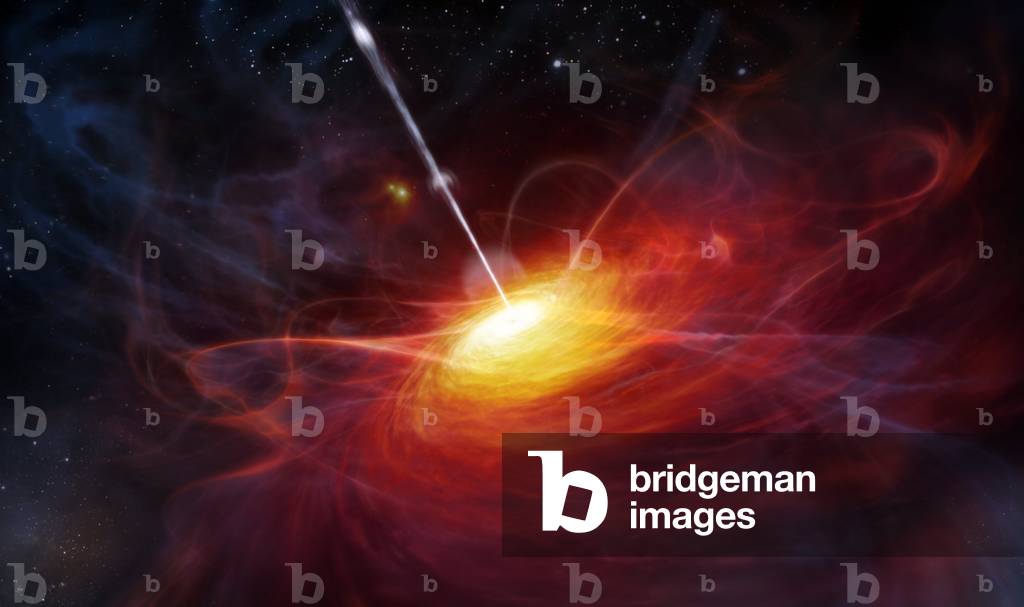
[]
Ihre AuswahlIhre aktuelle Auswahl
asset(s) Assets
Ihr Preis 0

Ihre Auswahl

Auswahl aufheben
Asset zum Warenkorb hinzugefügt
{"event":"pageview","page_type1":"undetected","page_type2":"_assets_search_override","language":"de","user_logged":"false","user_type":"ecommerce","nl_subscriber":"false"}
{"event":"ecommerce_event","event_name":"view_item","event_category":"browse_catalog","ecommerce":{"items":[{"item_id":"PIX6323594","item_category":"photo","item_category2":"no_copyright","item_category3":"standard","item_category5":"not_balown","item_list_name":"search_results","item_name":"the_spiral_galaxy_ngc_2775_or_caldwell_48_photo","item_variant":"undefined"},{"item_id":"PRJ3880787","item_category2":"no_copyright","item_category3":"standard","item_category5":"not_balown","item_list_name":"search_results","item_name":"hofner_galaxie_electric_guitar","item_variant":"undefined"},{"item_id":"CH3576444","item_category":"illustration","item_category2":"in_copyright","item_category3":"standard","item_category4":"dali_salvador_1904_89","item_category5":"not_balown","item_list_name":"search_results","item_name":"gala_galaxie_1961_ballpoint_pen_pencil_on_paper","item_variant":"undefined"},{"item_id":"HST1271863","item_category":"object","item_category2":"in_copyright","item_category3":"standard","item_category4":"moorhead_katrina_b_1971","item_category5":"not_balown","item_list_name":"search_results","item_name":"someone_else_s_sultan_sea_galaxie_2000_styrofoam_packing_material_ceramic_tile_grout","item_variant":"undefined"},{"item_id":"LSE4097738","item_category":"illustration","item_category2":"undetermined_copyright","item_category3":"standard","item_category4":"unknown_artist_20th_century","item_category5":"not_balown","item_list_name":"search_results","item_name":"l_enfant_de_mars_in_galaxie_anticipation_oct_1957","item_variant":"undefined"},{"item_id":"PIX4611786","item_category":"photo","item_category2":"no_copyright","item_category3":"standard","item_category4":"r_jay_gabany","item_category5":"not_balown","item_list_name":"search_results","item_name":"spiral_galaxy_ngc_4651_in_berenice_s_hair_spiral_galaxy_ngc_4651_in_coma_berenices_the_galaxy_ngc_46","item_variant":"undefined"},{"item_id":"CH1767849","item_category":"object","item_category2":"in_copyright","item_category3":"standard","item_category4":"arp_hans_jean_1887_1966","item_category5":"not_balown","item_list_name":"search_results","item_name":"tear_of_the_galaxy_larme_de_galaxie_1962_1970_polished_bronze","item_variant":"undefined"},{"item_id":"PIX4611532","item_category":"photo","item_category2":"no_copyright","item_category3":"standard","item_category4":"r_jay_gabany","item_category5":"not_balown","item_list_name":"search_results","item_name":"spiral_galaxy_ngc_4565_in_berenice_s_hair_spiral_galaxy_ngc_4565_in_coma_berenices_the_galaxy_ngc_45","item_variant":"undefined"},{"item_id":"PIX4611565","item_category":"photo","item_category2":"no_copyright","item_category3":"standard","item_category4":"adam_block","item_category5":"not_balown","item_list_name":"search_results","item_name":"spiral_galaxy_ngc_4565_in_berenice_s_hair_spiral_galaxy_ngc_4565_in_coma_berenices_the_galaxy_ngc_45","item_variant":"undefined"},{"item_id":"SSI2167304","item_category":"photo","item_category2":"no_copyright","item_category3":"standard","item_category5":"not_balown","item_list_name":"search_results","item_name":"side_profile_of_two_cars_galaxie_town_victoria_ford_thunderbird_1959","item_variant":"undefined"},{"item_id":"PIX4612309","item_category":"photo","item_category2":"no_copyright","item_category3":"standard","item_category5":"not_balown","item_list_name":"search_results","item_name":"centaurus_a_elliptical_galaxy_ngc_5128_in_centaurus_the_radio_galaxy_centaurus_a_ngc_5128_the_galaxy","item_variant":"undefined"},{"item_id":"PIX4609405","item_category":"photo","item_category2":"no_copyright","item_category3":"standard","item_category5":"not_balown","item_list_name":"search_results","item_name":"spiral_galaxy_m74_in_pisces_spiral_galaxy_m74_in_pisces_image_of_the_spiral_galaxy_m74_ngc_628_obtai","item_variant":"undefined"},{"item_id":"PIX4613581","item_category":"photo","item_category2":"no_copyright","item_category3":"standard","item_category5":"not_balown","item_list_name":"search_results","item_name":"galaxy_ugc_10214_in_the_dragon_galaxy_ugc_10214_in_draco_the_galaxy_ugc_10214_is_about_420_million_y","item_variant":"undefined"},{"item_id":"PIX4613605","item_category":"photo","item_category2":"no_copyright","item_category3":"standard","item_category5":"not_balown","item_list_name":"search_results","item_name":"galaxy_ugc_10214_in_the_dragon_galaxy_ugc_10214_in_draco_the_galaxy_ugc_10214_is_about_420_million_y","item_variant":"undefined"},{"item_id":"PIX4613476","item_category":"photo","item_category2":"no_copyright","item_category3":"standard","item_category4":"stephane_guisard","item_category5":"not_balown","item_list_name":"search_results","item_name":"the_large_magellanic_cloud_the_large_magellanic_cloud_the_great_magellan_cloud_galaxy_is_about_160_0","item_variant":"undefined"},{"item_id":"PIX5894392","item_category":"photo","item_category2":"no_copyright","item_category3":"standard","item_category5":"not_balown","item_list_name":"search_results","item_name":"first_image_of_a_black_hole_image_de_l_horizon_des_evenements_du_trou_noir_au_centre_de_la_galaxie_m","item_variant":"undefined"},{"item_id":"UTD2874231","item_category":"photo","item_category2":"no_copyright","item_category3":"standard","item_category5":"not_balown","item_list_name":"search_results","item_name":"a_staff_member_of_the_berlin_treptow_observatory_explaining_the_andromeda_galax_to_his_young_audienc","item_variant":"undefined"},{"item_id":"UIG1582712","item_category":"photo","item_category2":"no_copyright","item_category3":"standard","item_category5":"not_balown","item_list_name":"search_results","item_name":"ford_motor_assembly_plant_wayne_michigan_1963_b_w_photo","item_variant":"undefined"},{"item_id":"REU7951630","item_category":"photo","item_category2":"no_copyright","item_category3":"standard","item_category4":"charles_platiau","item_category5":"not_balown","item_list_name":"search_results","item_name":"breeder_cleans_up_his_cow_prior_to_paris_agriculture_show_1997_02_22_photo","item_variant":"undefined"},{"item_id":"PIX4608891","item_category":"photo","item_category2":"no_copyright","item_category3":"standard","item_category4":"sebastian_voltmer","item_category5":"not_balown","item_list_name":"search_results","item_name":"spiral_galaxy_m31_in_andromede_spiral_galaxy_m31_in_andromeda_the_galaxy_of_andromede_is_located_abo","item_variant":"undefined"},{"item_id":"PIX4608687","item_category":"photo","item_category2":"no_copyright","item_category3":"standard","item_category4":"b_s_fletcher","item_category5":"not_balown","item_list_name":"search_results","item_name":"spiral_galaxy_m31_in_andromede_m31_the_great_galaxy_in_andromeda_the_galaxy_of_andromede_is_located_","item_variant":"undefined"},{"item_id":"PIX4574285","item_category":"photo","item_category2":"no_copyright","item_category3":"standard","item_category4":"alex_conu","item_category5":"not_balown","item_list_name":"search_results","item_name":"andromede_galaxy_the_andromeda_galaxy_m31_the_andromede_galaxy_is_located_about_2_3_million_light_ye","item_variant":"undefined"},{"item_id":"PIX4608934","item_category":"photo","item_category2":"no_copyright","item_category3":"standard","item_category5":"not_balown","item_list_name":"search_results","item_name":"andromede_galaxy_the_andromeda_galaxy_m31_the_andromede_galaxy_is_located_about_2_3_million_years_ag","item_variant":"undefined"},{"item_id":"PIX4638053","item_category":"photo","item_category2":"no_copyright","item_category3":"standard","item_category4":"s_numazawa","item_category5":"not_balown","item_list_name":"search_results","item_name":"our_galaxy_the_lactee_way_artist_s_view_our_galaxy_the_milky_way_artwork","item_variant":"undefined"},{"item_id":"PIX4565430","item_category":"photo","item_category2":"no_copyright","item_category3":"standard","item_category5":"not_balown","item_list_name":"search_results","item_name":"central_part_of_the_galaxy_cluster_of_the_virgin_the_virgo_cluster_detail_part_of_the_galaxy_cluster","item_variant":"undefined"},{"item_id":"PIX4638218","item_category":"photo","item_category2":"no_copyright","item_category3":"standard","item_category5":"not_balown","item_list_name":"search_results","item_name":"our_galaxy_artist_s_view_our_galaxy_the_milky_way_artwork_representation_of_our_galaxy_the_lactee_pa","item_variant":"undefined"},{"item_id":"PIX4612262","item_category":"photo","item_category2":"no_copyright","item_category3":"standard","item_category5":"not_balown","item_list_name":"search_results","item_name":"central_region_of_the_elliptical_galaxy_centaurus_a_ngc_5128_central_part_of_the_galaxy_centaurus_a_","item_variant":"undefined"},{"item_id":"PIX4584558","item_category":"photo","item_category2":"no_copyright","item_category3":"standard","item_category4":"p_carril","item_category5":"not_balown","item_list_name":"search_results","item_name":"black_holes_fusion_artist_view_black_holes_collide_artist_view_artist_view_of_a_collision_of_galacti","item_variant":"undefined"},{"item_id":"PIX4609731","item_category":"photo","item_category2":"no_copyright","item_category3":"standard","item_category5":"not_balown","item_list_name":"search_results","item_name":"barree_spiral_galaxy_ngc_1300_in_eridan_ngc_1300_barred_spiral_galaxy_in_eridanus_the_galaxy_ngc_130","item_variant":"undefined"},{"item_id":"XAB152052","item_category":"object","item_category2":"in_copyright","item_category3":"standard","item_category4":"smirnov_rusetsky_boris_1905_1993","item_category5":"balown","item_list_name":"search_results","item_name":"boundless_1979","item_variant":"undefined"},{"item_id":"PIX4610376","item_category":"photo","item_category2":"no_copyright","item_category3":"standard","item_category4":"r_jay_gabany","item_category5":"not_balown","item_list_name":"search_results","item_name":"spiral_galaxy_m81_in_the_great_bear_spiral_galaxy_m81_in_ursa_major_the_spiral_galaxy_m81_is_located","item_variant":"undefined"},{"item_id":"PIX4609870","item_category":"photo","item_category2":"no_copyright","item_category3":"standard","item_category5":"not_balown","item_list_name":"search_results","item_name":"barree_spiral_galaxy_ngc_1365_in_the_furnace_barred_spiral_galaxy_ngc_1365_in_fornax_ngc_1365_is_a_b","item_variant":"undefined"},{"item_id":"PIX4611510","item_category":"photo","item_category2":"no_copyright","item_category3":"standard","item_category4":"stefan_seip","item_category5":"not_balown","item_list_name":"search_results","item_name":"elliptical_galaxy_m89_in_virgo_elliptical_galaxy_m89_in_virgo_m89_ngc_4552_is_an_e0_elliptical_galax","item_variant":"undefined"},{"item_id":"PIX4611406","item_category":"photo","item_category2":"no_copyright","item_category3":"standard","item_category4":"r_gendler","item_category5":"not_balown","item_list_name":"search_results","item_name":"m87_elliptical_galaxy_in_virgo_m87_elliptical_galaxy_in_virgo_the_m87_galaxy_ngc_4486_is_located_abo","item_variant":"undefined"},{"item_id":"UIG1580023","item_category":"photo","item_category2":"no_copyright","item_category3":"standard","item_category5":"not_balown","item_list_name":"search_results","item_name":"centre_of_the_milky_way_galaxy_iv_2010_photo","item_variant":"undefined"},{"item_id":"PIX4593120","item_category":"photo","item_category2":"no_copyright","item_category3":"standard","item_category4":"b_s_fletcher","item_category5":"not_balown","item_list_name":"search_results","item_name":"constellation_pegase_constellation_of_pegasu","item_variant":"undefined"},{"item_id":"PIX4608702","item_category":"photo","item_category2":"no_copyright","item_category3":"standard","item_category4":"b_s_fletcher","item_category5":"not_balown","item_list_name":"search_results","item_name":"spiral_galaxy_m31_in_andromede_m31_the_great_galaxy_in_andromeda_the_galaxy_of_andromede_is_located_","item_variant":"undefined"},{"item_id":"PIX4565322","item_category":"photo","item_category2":"no_copyright","item_category3":"standard","item_category4":"e_mouquet","item_category5":"not_balown","item_list_name":"search_results","item_name":"persee_galaxy_cluster_galaxy_cluster_in_perseus_the_persee_galaxy_cluster_abell_426_contains_at_leas","item_variant":"undefined"},{"item_id":"PIX4611461","item_category":"photo","item_category2":"no_copyright","item_category3":"standard","item_category5":"not_balown","item_list_name":"search_results","item_name":"m87_elliptical_galaxy_in_virgo_m87_elliptical_galaxy_in_virgo_the_m87_galaxy_ngc_4486_is_located_abo","item_variant":"undefined"},{"item_id":"PIX4613246","item_category":"photo","item_category2":"no_copyright","item_category3":"standard","item_category4":"adam_block","item_category5":"not_balown","item_list_name":"search_results","item_name":"spiral_galaxy_ngc_7814_in_pegase_spiral_galaxy_ngc_7814_in_pegasus_spiral_galaxy_seen_from_the_edge_","item_variant":"undefined"},{"item_id":"PIX4638058","item_category":"photo","item_category2":"no_copyright","item_category3":"standard","item_category4":"l_bret","item_category5":"not_balown","item_list_name":"search_results","item_name":"la_voie_lactee_illustration_our_galaxy_the_milky_way_artwork","item_variant":"undefined"},{"item_id":"PIX4611025","item_category":"photo","item_category2":"no_copyright","item_category3":"standard","item_category4":"jim_misti","item_category5":"not_balown","item_list_name":"search_results","item_name":"barree_spiral_galaxy_m109_in_the_great_bear_barred_spiral_galaxy_m109_in_ursa_major_the_barree_spira","item_variant":"undefined"},{"item_id":"PIX4565331","item_category":"photo","item_category2":"no_copyright","item_category3":"standard","item_category4":"jim_misti","item_category5":"not_balown","item_list_name":"search_results","item_name":"persee_galaxy_cluster_galaxy_cluster_in_perseus_the_persee_galaxy_cluster_abell_426_contains_at_leas","item_variant":"undefined"},{"item_id":"PIX4565332","item_category":"photo","item_category2":"no_copyright","item_category3":"standard","item_category4":"r_jay_gabany","item_category5":"not_balown","item_list_name":"search_results","item_name":"persee_galaxy_cluster_perseus_galaxy_cluster_the_persee_galaxy_cluster_abell_426_contains_at_least_5","item_variant":"undefined"},{"item_id":"PIX4565381","item_category":"photo","item_category2":"no_copyright","item_category3":"standard","item_category4":"e_mouquet","item_category5":"not_balown","item_list_name":"search_results","item_name":"central_part_of_the_virgo_cluster_of_galaxies_the_virgin_s_cluster_contains_several_thousand_galaxie","item_variant":"undefined"},{"item_id":"PIX4610854","item_category":"photo","item_category2":"no_copyright","item_category3":"standard","item_category4":"r_gendler","item_category5":"not_balown","item_list_name":"search_results","item_name":"leo_triplet_m65_m66_ngc_3628_spiral_galaxies_leo_triplet_m66_group_m66_with_its_neighbors_m65_and_ng","item_variant":"undefined"},{"item_id":"PIX4611774","item_category":"photo","item_category2":"no_copyright","item_category3":"standard","item_category5":"not_balown","item_list_name":"search_results","item_name":"galaxy_ngc_4650a_in_centaurus_galaxy_ngc_4650a_in_centaurus_the_polar_ring_galaxy_ngc_4650a_is_locat","item_variant":"undefined"},{"item_id":"PIX4614013","item_category":"photo","item_category2":"no_copyright","item_category3":"standard","item_category4":"s_numazawa","item_category5":"not_balown","item_list_name":"search_results","item_name":"classification_of_galaxies_the_hubble_sequence_edwin_hubble_s_galaxy_classification_the_hubble_seque","item_variant":"undefined"},{"item_id":"PIX4608907","item_category":"photo","item_category2":"no_copyright","item_category3":"standard","item_category5":"not_balown","item_list_name":"search_results","item_name":"andromede_galaxy_andromeda_galaxy_the_andromede_galaxy_is_located_about_2_3_million_years_ago_light_","item_variant":"undefined"},{"item_id":"PIX4612176","item_category":"photo","item_category2":"no_copyright","item_category3":"standard","item_category5":"not_balown","item_list_name":"search_results","item_name":"jet_of_the_galaxy_centaurus_a_ngc_5128_seen_in_x_rays_galaxy_centaurus_a_x_ray_jet_view_in_false_col","item_variant":"undefined"},{"item_id":"PIX4611307","item_category":"photo","item_category2":"no_copyright","item_category3":"standard","item_category5":"not_balown","item_list_name":"search_results","item_name":"spiral_galaxy_m100_in_berenice_s_hair_spiral_galaxy_m100_in_coma_berenices_the_spiral_galaxy_m100_is","item_variant":"undefined"},{"item_id":"PIX4636579","item_category":"photo","item_category2":"no_copyright","item_category3":"standard","item_category4":"alex_conu","item_category5":"not_balown","item_list_name":"search_results","item_name":"centre_of_the_milky_way_central_region_center_of_the_milky_way_central_part_of_the_lactee_route_seen","item_variant":"undefined"},{"item_id":"PIX4565268","item_category":"photo","item_category2":"no_copyright","item_category3":"standard","item_category5":"not_balown","item_list_name":"search_results","item_name":"galaxy_clusters_abell_1060_in_hydra_the_hydra_cluster_of_galaxies_abell_1060_the_galaxy_in_the_cente","item_variant":"undefined"},{"item_id":"PIX4634711","item_category":"photo","item_category2":"no_copyright","item_category3":"standard","item_category5":"not_balown","item_list_name":"search_results","item_name":"the_big_rip_the_big_rip_the_big_rip_artist_s_view_of_the_big_rip_theory_a_cosmic_model_of_the_end_of","item_variant":"undefined"},{"item_id":"PIX4565323","item_category":"photo","item_category2":"no_copyright","item_category3":"standard","item_category5":"not_balown","item_list_name":"search_results","item_name":"cluster_of_galaxies_ic_4765_cluster_of_galaxies_ic_4765_in_pavo_cluster_of_galaxies_in_the_southern_","item_variant":"undefined"},{"item_id":"PIX4565382","item_category":"photo","item_category2":"no_copyright","item_category3":"standard","item_category5":"not_balown","item_list_name":"search_results","item_name":"the_cluster_of_galaxies_in_fornax_the_cluster_of_galaxies_in_fornax_the_cluster_of_galaxies_in_the_f","item_variant":"undefined"},{"item_id":"PIX4613187","item_category":"photo","item_category2":"no_copyright","item_category3":"standard","item_category5":"not_balown","item_list_name":"search_results","item_name":"barree_spiral_galaxy_ngc_7479_in_pegase_barred_spiral_galaxy_ngc_7479_in_pegasus_image_obtained_by_t","item_variant":"undefined"},{"item_id":"PIX4565253","item_category":"photo","item_category2":"no_copyright","item_category3":"standard","item_category5":"not_balown","item_list_name":"search_results","item_name":"galaxy_clusters_abell_1060_in_hydra_the_hydra_cluster_of_galaxies_abell_1060_the_galaxy_in_the_cente","item_variant":"undefined"},{"item_id":"PIX4565560","item_category":"photo","item_category2":"no_copyright","item_category3":"standard","item_category5":"not_balown","item_list_name":"search_results","item_name":"galaxy_cluster_abell_s0740_in_centaurus_galaxy_cluster_abell_s0740_in_centaurus_the_hubble_space_tel","item_variant":"undefined"},{"item_id":"PIX4565370","item_category":"photo","item_category2":"no_copyright","item_category3":"standard","item_category5":"not_balown","item_list_name":"search_results","item_name":"the_cluster_of_galaxies_in_fornax_the_cluster_of_galaxies_in_fornax_clusters_of_galaxies_situated_ab","item_variant":"undefined"},{"item_id":"PIX4613977","item_category":"photo","item_category2":"no_copyright","item_category3":"standard","item_category5":"not_balown","item_list_name":"search_results","item_name":"quasar_illustration_artist_s_view_of_the_quasar_ulas_j1120_0641_the_furthest_quasar_discovered_to_da","item_variant":"undefined"},{"item_id":"PIX4611693","item_category":"photo","item_category2":"no_copyright","item_category3":"standard","item_category5":"not_balown","item_list_name":"search_results","item_name":"galaxy_ngc_4631_in_hunting_dogs_spiral_galaxy_ngc_4631_in_canes_venatici_spiral_galaxy_seen_by_the_s","item_variant":"undefined"},{"item_id":"PIX4571983","item_category":"photo","item_category2":"no_copyright","item_category3":"standard","item_category5":"not_balown","item_list_name":"search_results","item_name":"star_mirach_and_ngc_404_in_andromede_star_mirach_and_galaxy_ngc_404_in_andromeda_mirach_beta_androme","item_variant":"undefined"},{"item_id":"PIX4611589","item_category":"photo","item_category2":"no_copyright","item_category3":"standard","item_category4":"adam_block","item_category5":"not_balown","item_list_name":"search_results","item_name":"spiral_galaxy_m58_in_virgo_spiral_galaxy_m58_in_virgo_the_spiral_galaxy_m58_ngc_4579_is_located_abou","item_variant":"undefined"},{"item_id":"PIX4638155","item_category":"photo","item_category2":"no_copyright","item_category3":"standard","item_category4":"dixon_don_b_1951","item_category5":"not_balown","item_list_name":"search_results","item_name":"our_galaxy_the_lactee_way_artist_s_view_our_galaxy_the_lactee_way_artist_s_view","item_variant":"undefined"},{"item_id":"PIX4609237","item_category":"photo","item_category2":"no_copyright","item_category3":"standard","item_category4":"adam_block","item_category5":"not_balown","item_list_name":"search_results","item_name":"spiral_galaxy_ngc_536_in_andromede_hickson_10_group_of_galaxies_in_andromeda_spiral_galaxy_ngc_536_i","item_variant":"undefined"},{"item_id":"PIX4610833","item_category":"photo","item_category2":"no_copyright","item_category3":"standard","item_category4":"jim_misti","item_category5":"not_balown","item_list_name":"search_results","item_name":"spiral_galaxy_m66_in_the_lion_spiral_galaxy_m66_in_leo_m_66_ngc_3627_is_a_spiral_galaxy_located_at_a","item_variant":"undefined"},{"item_id":"PIX4608661","item_category":"photo","item_category2":"no_copyright","item_category3":"standard","item_category4":"jim_misti","item_category5":"not_balown","item_list_name":"search_results","item_name":"elliptical_galaxy_m110_ngc_205_in_andromede_elliptical_galaxy_m110_ngc_205_in_andromeda_the_elliptic","item_variant":"undefined"},{"item_id":"PIX4565684","item_category":"photo","item_category2":"no_copyright","item_category3":"standard","item_category5":"not_balown","item_list_name":"search_results","item_name":"galaxies_cluster_1e_0657_556_dark_matter_in_the_galaxy_cluster_1e_0657_556_composite_view_of_the_gal","item_variant":"undefined"},{"item_id":"PIX4634245","item_category":"photo","item_category2":"no_copyright","item_category3":"standard","item_category5":"not_balown","item_list_name":"search_results","item_name":"from_big_bang_to_today_from_big_bang_to_the_earth_artwork_artist_s_view_showing_the_stages_of_format","item_variant":"undefined"},{"item_id":"PIX4611005","item_category":"photo","item_category2":"no_copyright","item_category3":"standard","item_category4":"adam_block","item_category5":"not_balown","item_list_name":"search_results","item_name":"galaxies_ngc_3718_and_ngc_3729_in_the_great_bear","item_variant":"undefined"},{"item_id":"PIX4565645","item_category":"photo","item_category2":"no_copyright","item_category3":"standard","item_category5":"not_balown","item_list_name":"search_results","item_name":"galaxy_clusters_abell_370_abell_370_cluster_of_galaxies_with_gravitational_arcs_this_cluster_contain","item_variant":"undefined"},{"item_id":"PIX4565399","item_category":"photo","item_category2":"no_copyright","item_category3":"standard","item_category4":"jerry_lodriguss","item_category5":"not_balown","item_list_name":"search_results","item_name":"central_part_of_the_virgin_galaxy_cluster_heart_of_the_virgo_cluster_of_galaxies_the_two_elliptic_ga","item_variant":"undefined"},{"item_id":"PIX4612768","item_category":"photo","item_category2":"no_copyright","item_category3":"standard","item_category4":"adam_block","item_category5":"not_balown","item_list_name":"search_results","item_name":"galaxy_ngc_5701_in_the_virgin_galaxy_ngc_5701_in_virgo_spiral_galaxy_barree_in_the_virgin_barred_spi","item_variant":"undefined"},{"item_id":"PIX4634150","item_category":"photo","item_category2":"no_copyright","item_category3":"standard","item_category4":"dixon_don_b_1951","item_category5":"not_balown","item_list_name":"search_results","item_name":"halo_of_black_matter_around_the_galaxy_halo_of_black_matter_around_the_galaxy","item_variant":"undefined"},{"item_id":"PIX4612792","item_category":"photo","item_category2":"no_copyright","item_category3":"standard","item_category4":"adam_block","item_category5":"not_balown","item_list_name":"search_results","item_name":"spiral_galaxy_ngc_5850_in_virgo_spiral_galaxy_ngc_5850_in_virgo_barree_spiral_galaxy_ngc_5850_with_r","item_variant":"undefined"},{"item_id":"PIX4584563","item_category":"photo","item_category2":"no_copyright","item_category3":"standard","item_category4":"miller_ron_b_1947","item_category5":"not_balown","item_list_name":"search_results","item_name":"black_hole_in_the_center_of_a_galaxy_artist_view_weak_black_hole_artist_view","item_variant":"undefined"},{"item_id":"PIX4610534","item_category":"photo","item_category2":"no_copyright","item_category3":"standard","item_category4":"adam_block","item_category5":"not_balown","item_list_name":"search_results","item_name":"irregular_galaxy_ngc_3239_in_the_lion_irregular_galaxy_ngc_3239_in_leo_the_irregular_galaxy_ngc_3239","item_variant":"undefined"},{"item_id":"PIX4611740","item_category":"photo","item_category2":"no_copyright","item_category3":"standard","item_category4":"jerry_lodriguss","item_category5":"not_balown","item_list_name":"search_results","item_name":"galaxies_ngc_4631_and_ngc_4656_57_in_hunting_dogs_galaxies_ngc_4631_and_ngc_4656_57_the_spiral_galax","item_variant":"undefined"},{"item_id":"PIX4613513","item_category":"photo","item_category2":"no_copyright","item_category3":"standard","item_category5":"not_balown","item_list_name":"search_results","item_name":"the_large_magellanic_cloud_the_large_magellanic_cloud_the_great_magellan_cloud_galaxy_is_about_160_0","item_variant":"undefined"},{"item_id":"PIX4610632","item_category":"photo","item_category2":"no_copyright","item_category3":"standard","item_category4":"r_gendler","item_category5":"not_balown","item_list_name":"search_results","item_name":"galaxies_m95_m96_and_m105_in_the_lion_galaxies_m95_m96_and_m105_in_leo_m95_ngc_3351_at_the_top_left_","item_variant":"undefined"},{"item_id":"PIX4610514","item_category":"photo","item_category2":"no_copyright","item_category3":"standard","item_category4":"jim_misti","item_category5":"not_balown","item_list_name":"search_results","item_name":"galaxies_ngc_3193_ngc_3190_ngc_3187_in_the_lion_galaxies_ngc_3193_ngc_3190_ngc_3187_in_leo_group_of_","item_variant":"undefined"},{"item_id":"PIX4613894","item_category":"photo","item_category2":"no_copyright","item_category3":"standard","item_category4":"d_de_martin","item_category5":"not_balown","item_list_name":"search_results","item_name":"galaxies_maffei_1_and_maffei_2_in_cassiopee_maffei_galaxies_in_cassiopeia_maffei_1_right_is_an_ellip","item_variant":"undefined"},{"item_id":"PIX4611007","item_category":"photo","item_category2":"no_copyright","item_category3":"standard","item_category4":"r_jay_gabany","item_category5":"not_balown","item_list_name":"search_results","item_name":"barree_spiral_galaxy_m109_in_the_great_bear_barred_spiral_galaxy_m109_in_ursa_major_the_barree_spira","item_variant":"undefined"},{"item_id":"PIX4609481","item_category":"photo","item_category2":"no_copyright","item_category3":"standard","item_category5":"not_balown","item_list_name":"search_results","item_name":"galaxy_ngc_891_in_andromede_edge_on_spiral_galaxy_ngc_891_in_andromeda_spiral_galaxy_seen_by_the_sli","item_variant":"undefined"},{"item_id":"PIX4565672","item_category":"photo","item_category2":"no_copyright","item_category3":"standard","item_category5":"not_balown","item_list_name":"search_results","item_name":"galaxy_clusters_abell_370_abell_370_cluster_of_galaxies_with_gravitational_arcs_this_galaxy_cluster_","item_variant":"undefined"},{"item_id":"PIX4611674","item_category":"photo","item_category2":"no_copyright","item_category3":"standard","item_category5":"not_balown","item_list_name":"search_results","item_name":"spiral_galaxy_of_sombrero_m104_in_the_virgin_the_sombrero_galaxy_m104_in_virgo_image_of_the_spiral_g","item_variant":"undefined"},{"item_id":"PIX4612000","item_category":"photo","item_category2":"no_copyright","item_category3":"standard","item_category5":"not_balown","item_list_name":"search_results","item_name":"galaxies_around_ngc_4874_galaxies_around_ngc_4874_ngc_4874_right_middle_is_a_large_elliptical_galaxy","item_variant":"undefined"},{"item_id":"PIX4611136","item_category":"photo","item_category2":"no_copyright","item_category3":"standard","item_category4":"adam_block","item_category5":"not_balown","item_list_name":"search_results","item_name":"group_of_galaxies_hcg_61_in_berenice_s_hair_hickson_61_the_box_the_group_of_galaxies_hcg_61_hickson_","item_variant":"undefined"},{"item_id":"PIX4609014","item_category":"photo","item_category2":"no_copyright","item_category3":"standard","item_category4":"r_gendler","item_category5":"not_balown","item_list_name":"search_results","item_name":"spiral_galaxy_ngc_247_in_the_whale_spiral_galaxy_ngc_247_in_cetus_dwarf_spiral_galaxy_in_the_whale_l","item_variant":"undefined"}]}}
{"event":"custom_event","event_name":"view_search_result","event_category":"browse_catalog","keyword":"galaxie","search_type":"standard","search_bridgeman_artists":"false","search_mode":"automatic","search_zero_result":"false","search_results":2054,"search_results_page_number":1}

'Galaxie' Bilder und Clips Suchergebnisse page 1 of 23

Hauptfilter
Option "Kunstdruck kaufen" verfügbar
Royalty-free Optionen
Ecommerce option
Medium
Orientation
Farbbilder
Kategorie
Rechte
Mehr Filter
Bridgeman Artists
Bridgeman Fotografen
Jahrhundert
Footage-Filter
Video Original Format
Video Resolution
Video Category
Filter group
Filter colors
Sortieren nach:
pro Seite
Filter group
Kategorie
Medium
No copyright
Filter colors

Anzeigeoptionen

View
Image Size
The spiral galaxy NGC 2775 (or Caldwell 48) (photo)
Hofner Galaxie Electric guitar
Bildbeschränkungen
  • Content within this photograph may require additional clearances (eg: trademark and personality rights) depending on Licensee's specific use of material, which may include book and magazine cover use.
Gala Galaxie, 1961 (ballpoint pen & pencil on paper)
Urheberrecht
  • Urheberrechtlich Geschützt
Someone Else's Sultan Sea (Galaxie), 2000 (styrofoam packing material, ceramic tile & grout)
Zusätzliche Genehmigungen
  • Permission required for non-editorial use (inc book and magazine covers). Please contact us
Urheberrecht
  • Urheberrechtlich Geschützt
L'enfant de mars - in "Galaxie Anticipation”, Oct. 1957.
Spiral galaxy NGC 4651 in Berenice's Hair - Spiral galaxy NGC 4651 in Coma Berenices - The galaxy NGC 4651 (Arp 189) is located about 50 million years away - light from Earth. The Umbrella Galaxy (NGC 4651 or Arp 189) exhibits a jet like spear that's strikingly coherent and narrow. The structure was previously reported by Boris Vorontsov Velyaminov in 1959 but never interpreted as a stellar tidal stream. This deep image additionally shows a spectacular crescent shaped shell surrounding the east side of the star system that corresponds to the apocenter of the dwarf galaxy. Interestingly, a possible second arc on the western side of the galaxy can also be seen in this image. This feature is less obvious because it's partially hidden by the galaxy's disk and suggests we are observing a moderately inclined structure projected into the halo of NGC 4651. This image was produced by combining an hour of exposure through the Isaac Newton Telescope, located on the Spanish island of La Palma, with over 13 hours of imagery obtained with the 0.5 meter telescope at the Blackbird Observatory in New Mexico (USA). This galaxy is located at about 50 million light years away
Tear of the Galaxy; Larme de Galaxie, 1962 ; 1970 (polished bronze)
Urheberrecht
  • Urheberrechtlich Geschützt
Side profile of two cars, Galaxie Town Victoria, Ford Thunderbird, 1959
Zusätzliche Genehmigungen
  • Permission required for product and merchandise licensing - Please contact us;Permission required for subscription use - Please contact us
Centaurus A elliptical galaxy (NGC 5128) in Centaurus - The radio galaxy Centaurus A (NGC 5128): The galaxy NGC 5128 is located about 13 million light years away from Earth in the southern constellation of Centaurus. A broad dark band crosses it in the middle, a probable vestige of a collision with a spiral galaxy. This giant galaxy is a powerful radio source known as Centaurus A. It is an active galaxy whose energy comes from a supermassive black hole. - NGC 5128 is the nearest large elliptical galaxies to our sun at about 13 million light years. It is also the nearest of the giant radio galaxies, possessing an active galactic nucleus (AGN) and optically one of the most luminous galaxies in the sky. In 1949, NGC 5128 was found to be a loud source of radio energy, in fact the loudest radio source in its region of the sky (second overall to Cygnus A), earning it the designation Centarus A. As a radio galaxy it releases 1000 times the radio energy of the Milky Way in the form of large bi-directional radio lobes that extend some 800,000 light years into intergalactic space. The source of the radio emission is very compact, about 10 light days across and is believed to be a supermassive black hole in the galaxy's center with a total mass of 200 million to possibly one billion suns. As a radio galaxy, NGC 5128 belongs to the subgroup of galaxies called Active Galaxies, which include Quasars, Seyfert galaxies, Blazars and Radio Galaxies. Active galaxies are distinguished by their prodigious energy output which cannot be explained by their stellar populations and must have another source. Active galaxies have in common an “Active Galactic Nucleus (AGN)”” which is believed responsible for their prodigious energy output. Supermassive black holes are almost certainly the central engines of Active Galactic Nuclei, powering the enormous outflows of energy which characterize this subgroup of bright galaxies. Composite Image from M
Spiral galaxy M74 in Pisces - Spiral galaxy M74 in Pisces - Image of the spiral galaxy M74 (NGC 628) obtained by the Hubble space telescope in 2003 and 2005. This galaxy is about 80,000 light years and is approximately 30 million light years apart. This image shows in detail the arms of this galaxy or nebulae and clusters of young stars appear in numbers. NASA/ESA Hubble Space Telescope image of the nearby spiral galaxy M74 (NGC 628), is a composite of Advanced Camera for Surveys' data taken in 2003 and 2005. A small segment of this image used data from the Canada - France - Hawaii Telescope and the Gemini Observatory to fill in a region that Hubble did not image. M74 is located roughly 32 million light - years away in the direction of the constellation Pisces, the Fish. It is the dominant member of a small group of about half a dozen galaxies, the M74 galaxy group. In its entirety, it is estimated that M74 is home to about 100 billion stars, making it slightly smaller than our Milky Way. Its perfectly symmetrical spiral arms emanate from the central nucleus and are dotted with clusters of young blue stars and glowing pink regions of ionized hydrogen (hydrogen atoms that have lost their electrons). These regions of star formation show an excess of light at ultraviolet wavelengths. Tracing along the spiral arms are winding dust lanes that also begin very near the galaxy's nucleus and follow along the length of the spiral arms
Galaxy UGC 10214 in the Dragon - Galaxy UGC 10214 in Draco - The galaxy UGC 10214 is about 420 million years away - light from Earth. The shape of this galaxy is due to a collision with another galaxy, the small galaxy, blue, visible in the upper left corner of the image. Powerful gravitational forces are responsible for the formation of the tail, consisting of stars of dust and gas, which stretches over nearly 28,000 light years and is composed of recently formed and extremely bright blue stars. In the background, more than 6000 galaxies are visible, some more than 12 billion years apart - light. Image obtained by the Hubble Space Telescope in April 2002. This picture of the galaxy UGC 10214 was taken by the Advanced Camera for Surveys (ACS), which was installed aboard Nasa's Hubble Space Telescope in March during Servicing Mission 3B. Its distorted shape was caused by a small interloper, a very blue, compact galaxy visible in the upper left corner of the more massive Tadpole. The Tadpole resides about 420 million light - years away in the constellation Draco. Seen shining through the Tadpole's disk, the tiny intruder is likely a hit - and - run galaxy that is now leaving the scene of the accident. Strong gravitational forces from the interaction created the long tail of debris, consisting of stars and gas that stretch out more than 280,000 light - years. Numerous young blue stars and star clusters, spawned by the galaxy collision, are seen in the spiral arms, as well as in the long “” tidal”” tail of stars. Each of these clusters represents the formation of up to about a million stars. Their color is blue because they contain very massive stars, which are 10 times hotter and 1 million times brighter than our Sun. Once formed, the star clusters become redder with age as the most massive and bluest stars exhaust their fuel and burn out. These clusters will eventually become old globula
First Image of a Black Hole : Image de l'horizon des evenements du trou noir au centre de la galaxie M87
Ford Motor Assembly Plant, Wayne, Michigan, 1963 (b/w photo)
BREEDER CLEANS UP HIS COW PRIOR TO PARIS AGRICULTURE SHOW, 1997-02-22 (photo)
Zusätzliche Genehmigungen
  • Permission required for non-editorial use (inc book covers and in-context promotional use in documentaries). Please contact us
Bildbeschränkungen
  • Content within this photograph may require additional clearances (eg: trademark and personality rights) depending on Licensee's specific use of material, which may include book and magazine cover use.
Nutzungsbeschränkungen von unseren Content-Partnern
  • Minimum fee applies to this image;Only available to clients invoiced in Australia, Belgium, Brazil, Bulgaria, Canada, China, Cyprus, Czech Republic, Estonia, Finland, France, French Southern Territories, Greece, Hong Kong, Hungary, India, Ireland, Israel, Italy, Lebanon, Luxembourg, Mexico, the Netherlands, New Zealand, Portugal, Qatar, Republic of Korea, Romania, Russian Federation, Singapore, South Africa, Spain, Sweden, Switzerland, Taiwan, Turkey, United Arab Emirates, United Kingdom and United States
Spiral Galaxy M31 in Andromede - Spiral galaxy M31 in Andromeda - The galaxy of Andromede is located about 2 million years ago - light from Earth. Two satellite galaxies accompany him: M32 (NGC 221) at the top, and M110 (NGC 205) at the bottom. Like the lactee path, the Andromede galaxy belongs to the local group, making up about thirty galaxies. M31, the Great Galaxy in Andromeda, is a gigantic collection of more than 300 billion stars and is located about 2 million light years from Earth. Companion dwarf elliptical galaxies M32 and M110 are also visible. M31 and its companions are part of our local group of galaxies, which includes the Milky Way and Magellanic Clouds, and M33. The Andromeda Galaxy is headed towards our Milky Way Galaxy and is expected to collide with it and possibly merge into a gigantic elliptical galaxy in about 3 billion years. Die Andromeda - Galaxie liegt in einer Entfernung von rund 2,5 Millionen Lichtjahren. Der Durchmesser der sichtbaren Scheibe betraegt 150.000 Lj. Zum Vergleich: unsere Milchstrasse hat einen Durchmesser von ca. 100.000 Lj. Nach neuesten Erkenntnissen enthaelt M31 etwa eine Billion Sterne, waehrend die Milchstrasse 100 bis 200 Milliarden Sterne enthaelt. The Andromeda - Galaxy ist umgeben von den beiden elliptischen Galaxien M32 und M110
Spiral galaxy M31 in Andromede - M31, the Great galaxy in Andromeda - The galaxy of Andromede is located about 2 million years ago - light from Earth. Two satellite galaxies accompany it: M32 (NGC 221) in the center left, and M110 (NGC 205) below. Like the lactee path, the Andromede galaxy belongs to the local group, making up about thirty galaxies. M31, the Great galaxy in Andromeda, is a gigantic collection of more than 300 billion stars and is located about 2 million light years from Earth. Companion dwarf elliptical galaxies M32 and M110 are also visible. M31 and its companions are part of our local group of galaxies, which includes the Milky Way and Magellanic Clouds, and M33. The Andromeda Galaxy is headed towards our Milky Way Galaxy and is expected to collide with it and possibly merge into a gigantic elliptical galaxy in about 3 billion years
Andromede Galaxy - The Andromeda Galaxy (M31) - The Andromede galaxy is located about 2.3 million light years away from Earth. Two satellite galaxies accompany it: M32 (NGC 221) at the top left of the nucleus, and M110 (NGC 205) at the bottom. Like the lactee path, the Andromede galaxy belongs to the local group, making up about thirty galaxies. M31, the Great galaxy in Andromeda, is a gigantic collection of more than 300 billion stars and is located about 2 million light years from Earth. Companion dwarf elliptical galaxies M32 and M110 are also visible. M31 and its companions are part of our local group of galaxies, which includes the Milky Way and Magellanic Clouds, and M33. The Andromeda Galaxy is headed towards our Milky Way Galaxy and is expected to collide with it and possibly merge into a gigantic elliptical galaxy in about 3 billion years
Andromede Galaxy - The Andromeda Galaxy (M31) - The Andromede galaxy is located about 2.3 million years ago - light from Earth. Two satellite galaxies accompany it: M32 (NGC 221) at the top left of the nucleus, and M110 (NGC 205) at the bottom. Like the lactee path, the Andromede galaxy belongs to the local group, making up about thirty galaxies. M31, the Great galaxy in Andromeda, is a gigantic collection of more than 300 billion stars and is located about 2 million light years from Earth. Companion dwarf elliptical galaxies M32 and M110 are also visible. M31 and its companions are part of our local group of galaxies, which includes the Milky Way and Magellanic Clouds, and M33. The Andromeda Galaxy is headed towards our Milky Way Galaxy and is expected to collide with it and possibly merge into a gigantic elliptical galaxy in about 3 billion years
Our Galaxy, The Lactee Way - Artist's View - Our Galaxy, the Milky Way. Artwork
Nutzungsbeschränkungen von unseren Content-Partnern
  • Only available to clients invoiced in France
Our galaxy -Artist's view - Our galaxy, the Milky Way - Artwork - Representation of our galaxy, the lactee path, with the position of our Sun. Following observations made in infrared by the Spitzer space telescope, astronomers believe that our galaxy is a spiral galaxy consisting of two main arms (Scutum-Centaurus and Perseus) visible from the extremities of a large central bar. Two smaller arms (Norma and Sagittarius) are located between the main arms. The main arms contain the highest densities in stars, the other two are essentially gas. A new spiral arm, called the arm of the kiloparsec Far-3, runs along the bar of the galaxy. Our sun is close to a small interrupted arm called Orion's arm, located between the arms of Sagittarius and Persee. The Lactee Way was previously thought to have four main arms. Using infrared images from Nasa's Spitzer Space Telescope, scientists have discovered that the Milky Way's elegant spiral structure is dominated by just two arms wrapping off the ends of a central bar of stars. Previously, our galaxy was thought to possess four major arms. This artist's concept illustrates the new view of the Milky Way, along with other findings presented at the 212th American Astronomical Society meeting in St. Louis, Mo. The galaxy's two major arms (Scutum-Centaurus and Perseus) can be seen attached to the ends of a thick central bar, while the two now-demoted minor arms (Norma and Sagittarius) are less distinct and located between the major arms. The major arms consist of the highest densities of both young and old stars; the minor arms are primarily filled with gas and pockets of star-forming activity. The artist's concept also includes a new spiral arm, called the “Far-3 kiloparsec arm,””” discovered via a radio-telescope survey of gas in the Milky Way. This arm is shorter than the two major arms and li
Central region of the elliptical galaxy Centaurus A (NGC 5128) - Central part of the galaxy Centaurus A (NGC 5128) - The galaxy NGC 5128 is located about 13 million years away from Earth in the southern constellation of Centaurus. A broad dark band crosses it in the middle, a probable vestige of a collision with a spiral galaxy. This giant galaxy is a powerful radio source known as Centaurus A. It is an active galaxy whose energy comes from a supermassive black hole. The green dot visible in the dust strip is a supernova, the supernova 1986g. It appears green because the red filter image that made this trichromy image was only taken a year after the event and the supernova had weakened. Image obtained from the 3.9m telescope of Siding Spring, Australia. The nearby radio source Centaurus A (NGC 5128) looks like an elliptical galaxy, crossed by a broad, irregular dust lane. The dark band is probably the remains of a dusty spiral galaxy which is being absorbed by the giant elliptical. One of the nearer galaxies, 13 million light years away, Centaurus A is the most powerful nearby radio source and is also a copious source of X - and gamma rays as well as visible and infrared radiation.The three plates which were combined to make this colour picture have been copied to enhance the fine detail of the dust lane and to suppress the bright background of the elliptical galaxy. This process reveals many tiny red star - forming regions, especially prominent towards the end of the dust lane, and the clumps of young blue stars recently formed from them. The curious green star in the dust lane is because the blue and green - light plates were taken when supernova 1986g had just appeared, while the red - light plate was taken a year later when the supernova had faded
Black Holes Fusion - Artist view - Black holes collide - Artist view - Artist view of a collision of galactic black holes. Galactic black holes merge
Barree spiral galaxy NGC 1300 in Eridan - NGC 1300, barred spiral galaxy in Eridanus - The galaxy NGC 1300 is located about 60 million years ago - light and extends over about 85 000 years - light. Spiral galaxies appear in a variety of guises, but none are more intriguing than the barred variety. As their name suggests, these galaxies are distinguished by a bar, extending (in this case) like two more of less straight assemblies of stars either side of the bright nucleus. Caught up in the bar are two dust lanes, emerging on either side of the nuclear mass. At some distance from the nucleus, the straight, almost structurreless bar and dust lanes abruptly turn at a sharp angle. It is here that the delicately curved arms of the spiral begin, and it is here that star formation is at its most concentrated. Many spirals have such bars, including the Milky Way, where it is a subtle feature, very difficult to detect. NGC 1300, in the southern constellation of Eridanus is among the finest examples. It is about 60 million light years distant and is an outlying member of a well - populated group of galaxies
Boundless, 1979
Urheberrecht
  • Urheberrechtlich Geschützt
Spiral galaxy M81 in the Great Bear - Spiral galaxy M81 in Ursa Major - The spiral galaxy M81 is located 12 million years ago - light from Earth. Its arms are home to star-forming regions while its core is surrounded by much older yellow stars. In the background at the top, an irregular dwarf galaxy, Holmberg IX. This image obtained by a 50 cm amateur telescope, in February 2010 for 23 hours of poses, shows gas filaments whose origin is uncertain. Located about 12 million light - years from our planet, M81 (NGC 3031) together with M82 (NGC 3034), NGC 3077 and NGC 2976 forms one of the most iconic groups of interacting galaxies. The M81 group has also been the subject of many studies searching for and analyzing evidence of strong interactions among its components. In 1965, Halton Arp detected an unusual looping feature near M81 while examining photographic plates produced with the 48 - inch Schmidt on Mount Palomar. Traditionally, ARP's loop has been interpreted as a tail resulting from the tidal interaction between M81 and M82. However, since its discovery that explanation has been doubted by many researchers. Interestingly, the region of the sky containing the M81 group of galaxies is filled with Galactic cirrus and ARP's loop exhibits colors and emission properties similar to those observed in Galactic cirrus clouds. This optical image suggests that the light observed at optical wavelengths is a combination of emissions from: recent star forming regions situated near M81, the extended disk of M81 and scattered light from the same Galactic cirrus that is responsible for the bulk of the far infrared emissions. Although our observations cannot exclude the presence of some material stripped from the disk of M81 (NGC 3031) and/or M82 (NGC 3034) that is chance located in our line of sight to and far behind this intruiging structure, our findings suggest that ARP's Loop is situated between the observer and M81 (
Barree spiral galaxy NGC 1365 in the Furnace - Barred spiral galaxy NGC 1365 in Fornax - NGC 1365 is a barree spiral galaxy that extends over 200,000 years - light. Located 60 million years ago - light, it belongs to the cluster of galaxies of the Furnace. Image obtained by Siding Spring's 3.9m telescope. NGC 1365, the largest spiral in the southern constellation of Fornax, is located at a distance of about 60 million light years. This beautiful galaxy is about as massive as the Milky Way, itself a substantial galaxy. Not much is known about how galaxies take on their beautiful forms, but a good deal is known about their internal organisation. The obvious 'bar' has the nucleus of the galaxy at its hub and is surrounded by masses of cooler stars that appear yellow on colour photographs. The bar itself is also yellowish, and has distinct dust lanes but it terminates abruptly in slender, curved arms that are lit by blue stars and the pink star - forming regions from which they spring
M87 elliptical galaxy in Virgo - M87 elliptical galaxy in Virgo - The M87 galaxy (NGC 4486) is located about 52 million years away - light from Earth, in the heart of the Virgin's cluster. M87 is the brightest radio source of the constellation, it is also called Virgo A. NGC 4486 (M87) is the largest and brightest elliptical galaxy within the northern Virgo Cluster at about 52 million light years from Earth. The galaxy also called Virgo A contains a notable active galactic nucleus that is a strong source of multiwavelength radiation, particularly radio waves. In 1918 astronomer Heber Curtis discovered a jet of matter coming from M87 which extends at least 5000 light - years from the nucleus of M87 and is made up of matter ejected from the galaxy, most likely by a supermassive black hole
Centre of the Milky Way Galaxy IV, 2010 (photo)
Constellation Pegase - Constellation of Pegasu
Spiral galaxy M31 in Andromede - M31, the Great galaxy in Andromeda - The galaxy of Andromede is located about 2 million years ago - light from Earth. Two satellite galaxies accompany it: M32 (NGC 221) in the center left, and M110 (NGC 205) below. Like the lactee path, the Andromede galaxy belongs to the local group, making up about thirty galaxies. M31, the Great galaxy in Andromeda, is a gigantic collection of more than 300 billion stars and is located about 2 million light years from Earth. Companion dwarf elliptical galaxies M32 and M110 are also visible. M31 and its companions are part of our local group of galaxies, which includes the Milky Way and Magellanic Clouds, and M33. The Andromeda Galaxy is headed towards our Milky Way Galaxy and is expected to collide with it and possibly merge into a gigantic elliptical galaxy in about 3 billion years
Persee Galaxy Cluster - Galaxy cluster in Perseus - The Persee galaxy cluster (Abell 426) contains at least 500 galaxies including the large elliptical galaxy NGC 1275. This galaxy (the largest to the lower left of the image) is located about 235 million years ago - light; it is a very strong source of radio wave transmission. Image obtained with a 400 mm telescope through several filters and composite. More than 4 hours of installation. The Perseus galaxy cluster (Abell 426) is a rich cluster containing over 500 members centered on the large elliptical galaxy NGC 1275 (bottom left). Also known as Perseus A, NGC 1275 is an extremely powerful radio source
M87 elliptical galaxy in Virgo - M87 elliptical galaxy in Virgo - The M87 galaxy (NGC 4486) is located about 60 million years ago - light from Earth, in the heart of the Virgin's cluster. M87 is the brightest radio source in the constellation, it is also called Virgo A. Image made with Siding Spring's 3.9m telescope. Messier 87 (NGC 4486) lies near the centre of the nearby cluster of galaxies in Virgo at a distance of about 60 million light years. Although the physical boundaries of elliptical galaxies are not well defined, their mass can be, and by any standards M87 is enormous. It contains several thousand billion stars. Associated with this giant galaxy are large numbers of globular clusters, visible in this photograph as the cloud of slightly fuzzy objects around it. Like all ellipticals, M 87 is composed mainly of old stars and is largely devoid of the materials needed to make new ones. The galaxy is not inert however; high energy X - rays have been detected from an extensive outer halo and the galaxy itself is also known as Virgo A, the strongest radio source in the Virgo cluster. The source for this extreme behavior is probably a massive black hole at the center of the galaxy
Spiral galaxy NGC 7814 in Pegase - Spiral galaxy NGC 7814 in Pegasus - Spiral galaxy seen from the edge. Edge - on galaxy
La voie lactee -Illustration - Our galaxy, the Milky Way Artwork
Persee Galaxy Cluster - Galaxy cluster in Perseus - The Persee galaxy cluster (Abell 426) contains at least 500 galaxies including the large elliptical galaxy NGC 1275. This galaxy (the largest to the bottom left of the image) is located about 235 million years ago - light; it is a very strong source of radio waves known as Perseus A. Perseus galaxy cluster (Abell 426) is a cluster of about 500 galaxies. The biggest (bottom left) is NGC 1275, located 235 million light years away; it is a strong radio source known as Perseus A
Persee Galaxy Cluster - Perseus galaxy cluster - The Persee galaxy cluster (Abell 426) contains at least 500 galaxies including the large elliptical galaxy NGC 1275. This galaxy (the galaxy with pink filaments to the left of the image) is located about 235 million years ago - light; it is a very strong source of radio wave transmission known as Perseus A. In the right center of the image, note the presence of a supernova, SN 2008fg, in a small blue spiral galaxy, NGC 1268. Perseus galaxy cluster (Abell 426) is a cluster of about 500 galaxies. The biggest (left) is NGC 1275, located 235 million light years away; it is a strong radio source known as Perseus A. The gravity exerted by the luminous parts of a galaxy cluster is insufficient to hold the cluster together. Thus, scientists have concluded the missing adhesive must be dark matter and since it's invisible to modern instruments - it can only be inferred. So, when one views the image of the Perseus Galaxy Cluster, ones sees only a small fraction of what's actually there. This image was serendipitously exposed during the brief appearance of a supernova, designated SN2008FG, in one of the small blue spiral galaxies caught in the field of view (center right). It was discovered on August 30, 2008 by the 30 - inch KAIT robotic supernova patrol telescope located at historic Lick Observatory near San Jose, California. The stellar explosion, characterized by its bright blue color, is located near the bottom right edge of the galaxy. This cataclysmic event easily outshines the combined light of its home star system, NGC 1268
Central part of the Virgo cluster of galaxies - The Virgin's cluster contains several thousand galaxies. It is located about 70 million light years away from Earth. To the right are the galaxies M84 (NGC 4374) and M86 (NGC 4406) (to the left) dominate the image. Lower left is the elliptical galaxy M87. Located about 70 million light years away, the Virgo cluster is a gigantic collection of several thousand galaxies that dominate our local part of the universe. Markarian's Chain of galaxies is in the center, including giant elliptical galaxies M86 and M84. M87 is another giant elliptical galaxy at lower left in the photo
Leo Triplet (M65 - M66 - NGC 3628 spiral galaxies) - Leo Triplet (M66 group) - M66, with its neighbors M65 and NGC 3628, forms a remarkable triplet of galaxies, called the Lion Triplet or the M66 Group, located at a distance of about 35 million years - light. All three are spiral galaxies. This trio of galaxies in Leo is located at a distance of about 35 million light years. M66 is at upper left, M65 is below it at lower right, and NGC 3628 is at right. All are normal spiral galaxies, but NGC 3628 is seen edge - on, with a prominent dust lane obscuring the central portion of the galaxy
Galaxy NGC 4650A in Centaurus - Galaxy NGC 4650A in Centaurus - The polar ring galaxy NGC 4650A is located about 130 million years away from Earth. The host galaxy is surrounded by a polar ring shaped like gas and stars. This type of galaxy is rarely observed. This image was obtained by the ANTU telescope of the VLT in 1998. This is a colour photo from the VLT that shows NGC 4650A, a member of the so - called Centaurus chain of galaxies in the southern constellation of that name. NGC 4650A is a complex system that is located at a distance of about 130 million light - years. There are two main components, a lenticular - shaped galaxy (of type S0), surrounded by a knotty extended ring - like distribution of stars, dust and gas, almost perpendicular to each other. The stars in the central, structureless region and the material (stars, gas, and dust) in the outer disk rotate in two different planes that are almost perpendicular to each other. The observed motions indicate the presence of a significant halo of dark matter within the system, although it is still unclear to which of the two components this matter belongs. Because the velocities of stars and gas can be measured in two independent planes, NGC 4650A serves as a prototype for detailed studies of the shape of dark matter halos. The origin of this strange spatial configuration is not known with certainty. It is likely, however, that an encounter between two galaxies may have played a significant role. The photo is based on a series of seven exposures through three different optical filters, obtained under mediocre observing conditions during a small break in the technical work. They have been combined to produce the present photo
Classification of galaxies. The Hubble sequence - Edwin Hubble's galaxy classification - The Hubble sequence is a classification of galaxy types based on morphological criteria developed by astronomer Edwin Hubble in 1936. Artist's view. The Hubble sequence is a morphological classification scheme for galaxies created by the astronomer Edwin Hubble in 1936. Artwork
Andromede Galaxy - Andromeda galaxy - The Andromede galaxy is located about 2.3 million years ago - light from Earth. Two satellite galaxies accompany it: M32 (NGC 221) at the top left of the nucleus, and M110 (NGC 205) at the bottom. Like the lactee path, the Andromede galaxy belongs to the local group, making up about thirty galaxies. M31, the Great galaxy in Andromeda, is a gigantic collection of more than 300 billion stars and is located about 2 million light years from Earth. Companion dwarf elliptical galaxies M32 and M110 are also visible. M31 and its companions are part of our local group of galaxies, which includes the Milky Way and Magellanic Clouds, and M33. The Andromeda Galaxy is headed towards our Milky Way Galaxy and is expected to collide with it and possibly merge into a gigantic elliptical galaxy in about 3 billion years
Jet of the Galaxy Centaurus A (NGC 5128) seen in X-rays - Galaxy Centaurus A X - ray jet - View in false colours of a 30 000-year long jet - light that escapes from the nucleus of the Galaxy Centaurus A where a massive black hole is suspected. The galaxy NGC 5128 is located about 13 million light years away from Earth. Image obtained by the Chandra Space Telescope in May 2000. Chandra space telescope detects a jet emanating from the NGC 5128 core and numerous point - like X - ray sources, all bathed in diffuse X - rays produced by several - million - degree gas that fills the galaxy. It is believed that most of these sources are X - ray binaries in which a neutron star or stellar - sized black hole is accreting matter from a nearby companion star. The Cen A image was created from Chandra observations taken on December 5, 1999 and May 17, 2000
Spiral Galaxy M100 in Berenice's Hair - Spiral galaxy M100 in Coma Berenices - The spiral galaxy M100 is located about 60 million years ago - light from Earth. It belongs to the Virgin's galaxy cluster. Several dwarf elliptic galaxies are visible in this image, one just above M100 probably interacting. This image was obtained by Siding Spring's 3.9m telescope. In this deep image fainter galaxies appear. One seems to be involved with the faint outskirts of the large spiral. The somewhat distorted shape of the dwarf galaxy suggests it could be both influencing and being influenced by M100, and may be the cause of the asymmetry in the spiral arms. Nearby is an even fainter, elongated dwarf galaxy and elsewhere in the picture are several others, all probably members of the Virgo cluster, which spills over into the adjoining constellation of Coma Berenices
Galaxy clusters Abell 1060 in Hydra - The Hydra cluster of galaxies (Abell 1060) - The galaxy in the center is the spiral galaxy NGC 3312. To its right, the brightest elliptical galaxies of this cluster: NGC 3311. The two bright stars are closer and belong to our galaxy. This splendid cluster of galaxies in Hydra is framed by two nearby, cool stars in our own Milky Way. The brightest is about 5th magnitude, visible to the unaided eye only under a dark sky; the second brightest is below naked - eye visibility. In contrast the galaxies appear featureless in all but the largest telescopes. The bluish, elongated galaxy is an edge - on spiral, NGC 3312. It has been distorted by interactions with its neighbours. They in turn have been affected, and the brightest of the two adjacent yellow elliptical galaxies (NGC 3311) has an assymetrical envelope, perhaps as a result of this encounter. It's hard to tell who is jostling who in a crowded group of galaxies such as this. Among the most interesting galaxies in the group are two faint spirals (NGC 3314) that are by chance aligned along the line of sight. They are seen a little to the left of the fainter star and directly below the brighter
The Big Rip - The Big Rip - The Big Rip - Artist's view of the Big Rip Theory, a cosmic model of the end of the universe. The dark energy accelerating the expansion of the universe, would see its density increase to dissolve any form of matter. Artwork illustrating the Big Rip theory, a cosmological model predicting the end of the universe. The dark energy, a form of repulsive gravity, will grow with the expansion of the universe, making the universe expanding faster and faster until the disintegration of all existing matter
Galaxy clusters Abell 1060 in Hydra - The Hydra cluster of galaxies (Abell 1060) - The galaxy in the center is the spiral galaxy NGC 3312. To its right, the brightest elliptical galaxies of this cluster: NGC 3311. The two bright stars are closer and belong to our galaxy. This splendid cluster of galaxies in Hydra is framed by two nearby, cool stars in our own Milky Way. The brightest is about 5th magnitude, visible to the unaided eye only under a dark sky; the second brightest is below naked - eye visibility. In contrast the galaxies appear featureless in all but the largest telescopes. The bluish, elongated galaxy is an edge - on spiral, NGC 3312. It has been distorted by interactions with its neighbours. They in turn have been affected, and the brightest of the two adjacent yellow elliptical galaxies (NGC 3311) has an assymetrical envelope, perhaps as a result of this encounter. It's hard to tell who is jostling who in a crowded group of galaxies such as this. Among the most interesting galaxies in the group are two faint spirals (NGC 3314) that are by chance aligned along the line of sight. They are seen a little to the left of the fainter star and directly below the brighter
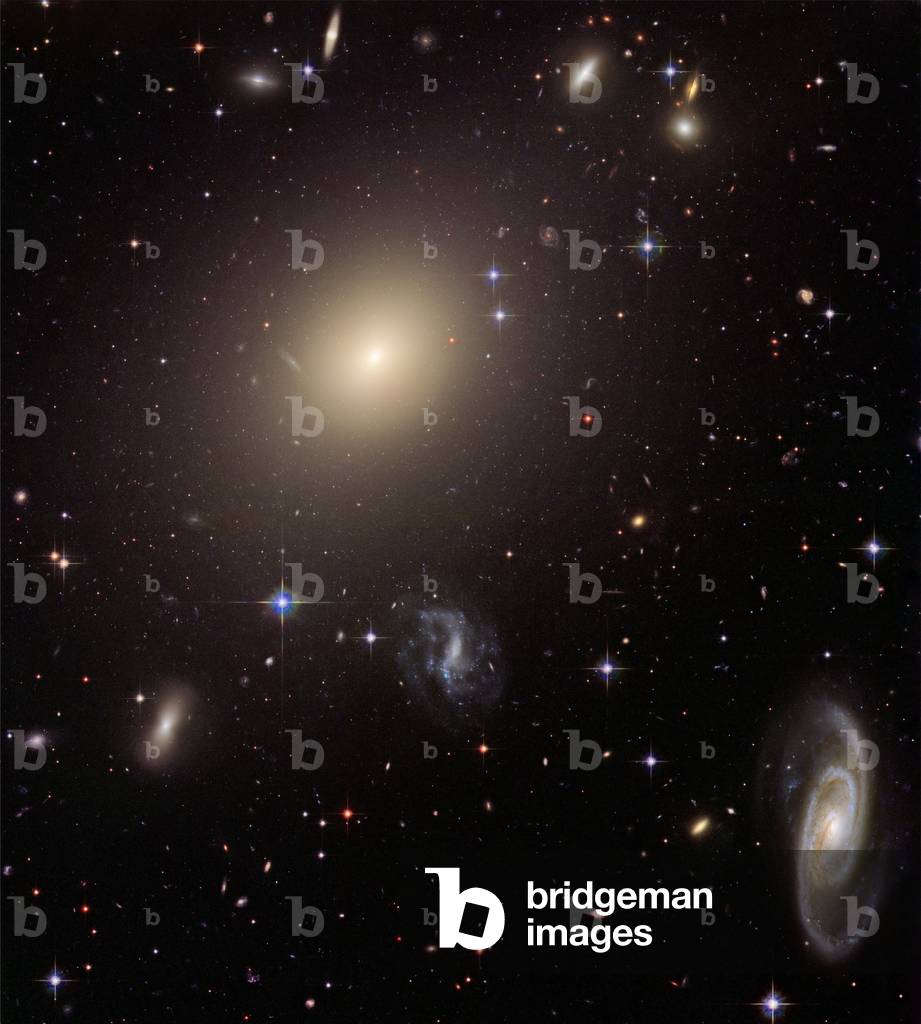
Galaxy Cluster Abell S0740 in Centaurus - Galaxy Cluster Abell S0740 in Centaurus - The Hubble space telescope photographed a cluster of galaxies 450 million years ago - Earth light, Abell S0740. There are galaxies of various shapes alongside the giant elliptical galaxy ESO 325 - G004. Image obtained by the ACS camera in January 2005 and February 2006. Hubble Space Telescope image showing the diverse collection of galaxies in a galaxy cluster Abell S0740, at about 450 million light - years away in the constellation Centaurus. The giant elliptical galaxy ESO 325 - G004 looms large at the club's center
The cluster of galaxies in Fornax - The cluster of galaxies in Fornax - clusters of galaxies situated about 55 million years ago - light. In the center of the image is the barree spiral galaxy NGC 1365; at the bottom right of the image, the interaction galaxy NGC 1316 - 17 (Fornax A), which is one of the strongest known radiosource. Galaxies can be separated by their appearance into two broad groups, spirals and ellipticals. An example of a spiral galaxy, NGC 1365, is seen in center of this picture. In contrast, most of the galaxies in this cluster are ellipticals, which contain little or no gas or evidence of star formation; indeed they are composed millions of rather old, yellowish stars. Unlike many of the stars in spiral systems, those in ellipticals have orbits which are not confined to a narrow plane, so the galaxy can have a shape anywhere between a perfect sphere and an American football. This kind of galaxy is the most common type in the photograph as it is in all of the nearby Universe. The picture also illustrates another distinctive property of ellipticals, their gregarious nature - they congregate in clusters, like this group of galaxies in Fornax, 55 million light years distant. This image also shows us another, less common kind of galaxy. In the lower right corner is NGC 1316 - 17. This is interacting pair of galaxies is one of the strongest nearby radio galaxies, known as Fornax A. Finally, in the opposite corner is a bright yellow (K5) 4.5 magnitude star in the adjoining constellation of Eridanus
Our Galaxy, the Lactee Way -Artist's View - Our Galaxy, the Lactee Way -Artist's View
Nutzungsbeschränkungen von unseren Content-Partnern
  • Only available to clients invoiced in Balkans;Only available to clients invoiced in Europe;Only available to clients invoiced in Norway;Only available to clients invoiced in Switzerland
Spezielle Anweisungen
  • No additional copyright fee required
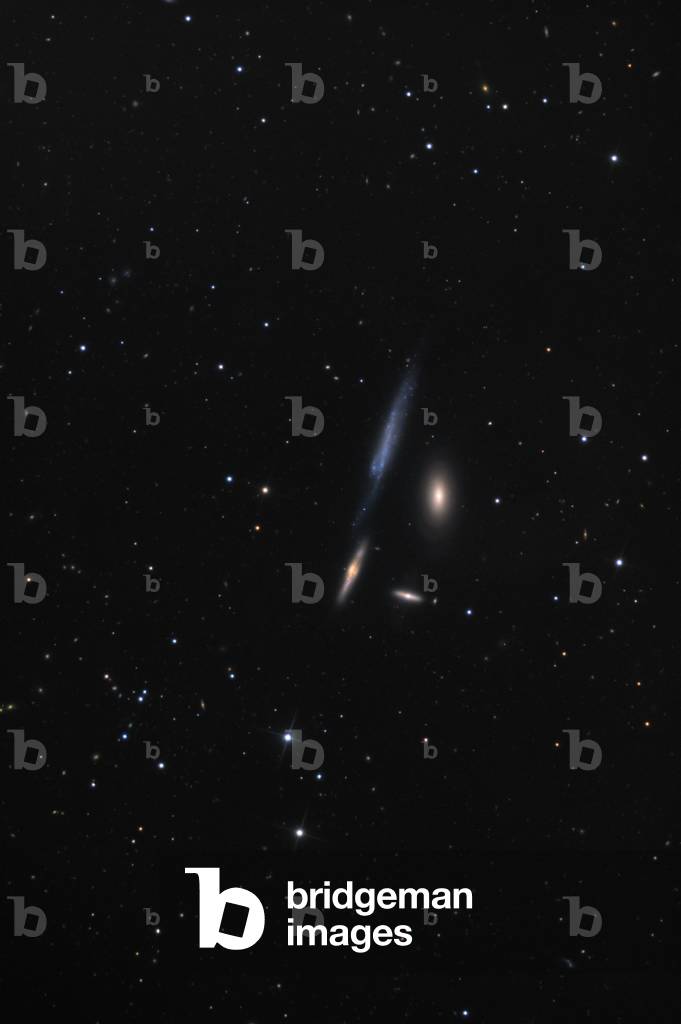
Spiral galaxy NGC 536 in Andromede - Hickson 10 group of galaxies in Andromeda - Spiral galaxy NGC 536 (in the center of the picture). With the galaxies NGC 542 (below left), NGC 531 (above NGC 536) and the lenticular galaxy NGC 529 (right), it forms the galaxy group Hickson 10, located about 220 million light years from Earth. This group of four galaxies is around 220 million light years away. The collection of spiral galaxies in the center of the image include: (from top to bottom) NGC 531, NGC 536 and NGC 542. NGC 529 on the right side of the image is a bright lenticular galaxy
Spiral Galaxy M66 in the Lion - Spiral galaxy M66 in Leo - M 66 (NGC 3627) is a spiral galaxy located at a distance of about 35 million years - light. M66, with its neighbors M65 and NGC 3628, forms a remarkable triplet of galaxies, called the Lion Triplet or the M66 Group. NGC 3627, also known as Messier 66, is a beautiful spiral with a well - developed central bulge. It also displays large - scale dust lanes. The galaxy forms, together with its neighbours M65 and NGC 3628, the so - called “Leo Triplet””; they are located at a distance of about 35 million light - years. M 66 is the largest of the three. Its spiral arms appear distorted and displaced above the main plane of the galaxy. The asymmetric appearance is most likely due to gravitational interaction with its neighbours
Elliptical Galaxy M110 (NGC 205) in Andromede - Elliptical galaxy M110 (NGC 205) in Andromeda - The elliptical galaxy M110, Andromede's satellite galaxy, is about the same distance from us as M31, about 2.9 million years - light. It is of type E6 “special” because it presents some unusual dark structures (probably dust clouds). M110 is the second small companion (along with M32) to our sister galaxy, M31, the Andromeda Nebula. It is classified as type E5 or E6, often with the additional “” p”” for peculiar because of the structure clearly visible in this short exposure image, which is probably due to dust clouds. Because of its small size, it is usually counted as a dwarf spheroidal rather than a normal elliptical
Galaxies cluster 1E 0657 - 556 - Dark matter in the galaxy cluster 1E 0657 - 556 - Composite view of the galaxy cluster 1E 0657 - 556 visible and X-rays. The hot gas that surrounds this galaxy cluster, detects in X-rays by the Chandra satellite, is visible in pink on this image. The galaxy cluster, photographed by the Magellan telescope and the Hubble space telescope, appears in the background. By studying the mass of this cluster, astronomers were able to determine that most of this mass was concentrated not in the hot gas detected by Chandra but in the blue coloured areas here, suggesting the existence of dark matter. This composite image shows the galaxy cluster 1E 0657 - 556, also known as the “” bullet cluster.”” This cluster was formed after the collision of two large clusters of galaxies, the most energetic event known in the universe since the Big Bang. Hot gas detected by Chandra telescope in X - rays is seen as two pink clumps in the image and contains most of the “” normal,””” or baryonic, matter in the two clusters. The bullet - shaped clump on the right is the hot gas from one cluster, which passed through the hot gas from the other larger cluster during the collision. An optical image from Magellan and the Hubble Space Telescope shows the galaxies in orange and white. The blue areas in this image depict where astronomers find most of the mass in the clusters. The concentration of mass is determined by analyzing the effect of so - called gravitational lensing, where light from the distant objects is distorted by intervening matter. Most of the matter in the clusters (blue) is clearly separate from the normal matter (pink), giving direct evidence that nearly all of the matter in the clusters is dark
From Big Bang to Today - From Big Bang to the Earth. Artwork - Artist's view showing the stages of formation of the universe. From left to right, the Big Bang, the first stars, the formation of galaxies, and the universe today. Universe from the beginning (left), the first stars, first galaxies, to the universe seen nowadays
Galaxies NGC 3718 and NGC 3729 in the Great Bear
Galaxy clusters Abell 370 - Abell 370 cluster of galaxies with gravitational arcs - This cluster contains a large number of galaxies, most of which are elliptical. A gravitational arc is visible at the bottom of the image. This is the deformed image of a galaxy farther away behind the cluster. This cluster hosts one of the most prominent gravitational arcs known to date. The light of a very remote object is deformed by the foreground cluster. Abell 370, at the center of the photo, contains a large number of galaxies - most of them are ellipticals. The two brightest red galaxies slightly above the gravitational arc are the most massive in the cluster and give an important contribution to the lensing event. This gravitational arc - in combination with the cluster of galaxies - provides a natural laboratory to study the physics of gravity. The exact shape of the arc allows to estimate the mass of the cluster through the equations of general relativity
Central part of the Virgin galaxy cluster - Heart of the Virgo cluster of galaxies - The two elliptic galaxies are at the center M86 (NGC 4406), right M84 (NGC 4374). Image obtained with a 130 mm bezel. 1h pose M86 and M84 are two giant lenticular galaxies at the heart of the Virgo cluster of galaxies. NGC 4438, a spiral galaxy at the left of the photo, appears to be distorted by an interaction with nearby NGC 4435. Located about 70 million light years away, the Virgo cluster is a gigantic collection of several thousand galaxies that dominate our local part of the universe
Galaxy NGC 5701 in the Virgin - Galaxy NGC 5701 in Virgo - Spiral galaxy barree in the Virgin. Barred spiral galaxy in Virgo
Halo of black matter around the galaxy - Halo of black matter around the galaxy
Nutzungsbeschränkungen von unseren Content-Partnern
  • Only available to clients invoiced in Balkans;Only available to clients invoiced in Europe;Only available to clients invoiced in Norway;Only available to clients invoiced in Switzerland
Spezielle Anweisungen
  • No additional copyright fee required
Black hole in the center of a galaxy - Artist view - Weak Black hole - Artist view
Spezielle Anweisungen
  • No additional copyright fee required
Irregular galaxy NGC 3239 in the Lion - Irregular galaxy NGC 3239 in Leo - The irregular galaxy NGC 3239 is located 25 million light years ago in the constellation Lion. Also visible on this image is the supernova SN 2012a (under the bright star in the center of the image). About 40,000 light - years across, irregular galaxy NGC 3239 lies near the center of this field of galaxies in the galaxy rich constellation Leo. At a distance of only 25 million light - years it dominates the frame, sporting a peculiar arrangement of structures, young blue star clusters and star forming regions, suggesting that NGC 3239 (aka Arp 263) is the result of a galaxy merger. Appearing almost on top of the pretty galaxy is a bright, spiky, foreground star, a nearby member of our own Milky Way galaxy almost directly along our line - of - sight to NGC 3239. Still, NGC 3239 is notable for hosting this year's first confirmed supernova, designated SN 2012A. SN 2012A is just below and right of the bright foreground star. Of course, based on the light - travel time to NGC 3239, the supernova explosion itself occurred 25 million years ago, triggered by the core collapse of a massive star
Galaxies NGC 4631 and NGC 4656 - 57 in Hunting Dogs - Galaxies NGC 4631 and NGC 4656 - 57 - The spiral galaxy NGC 4631 (upper right) is a galaxy seen by the slice that is located at a distance of 30 million years - light. His small companion, the elliptical galaxy NGC 4627, is visible just above it. Below the irregular galaxies NGC 4656 and NGC 4657. Galaxies NGC 4631 (top right) and NGC 4656 (bottom left) are two unusual galaxies in Canes Venatici. A small companion galaxy, NGC 4627, can be seen next to NGC 4631. The galaxies, which are located about 30 million lights years away, get their unusual shapes from gravitational interactions with each other. NGC 6431 and NGC 4627 are also listed in ARP's Atlas of Peculiar Galaxies as Arp 281
Galaxies M95, M96 and M105 in the Lion - Galaxies M95, M96 and M105 in Leo - M95 (NGC 3351), at the top left, is a barred spiral of type SBB, M96 (NGC 3368), on its right, is a spiral galaxy of type Sa. M96 is the brightest member of the Leo I galaxy group, which is also called the M96 group. It also contains the elliptical galaxy M105, at the bottom of the image and a number of weaker galaxies. M95 (NGC 3351, top left), is a barred spiral galaxy, M96 (NGC 3368, right), is a spiral galaxy. With M105 (bottom), they are dominant members of the Leo I galactic group which also includes several fainter galaxies
Galaxies Maffei 1 and Maffei 2 in Cassiopee - Maffei Galaxies in Cassiopeia - Maffei 1 (right) is an elliptical galaxy, Maffei 2 (left) is a barree spiral galaxy. These two galaxies are located about 8 million light years away from Earth. Image obtained by the Oschin telescope of Mount Palomar through several filters and composed. The picture show two galaxies lying at 2.5 degrees northeast of h and Chi Persei the famous Double Cluster in Cassiopeia. Although the galaxies has been obstructed by inner galactic matters, their actual sizes are larger than 10 arc minutes, fairly large - sized neighboring galaxies. The Maffei I (on the right) is an elliptic, and the Maffei II (on the left) is classified as a bared galaxy. The galaxies are estimated about 8 million light years away. They were discovered by the Italian astronomer Paolo Maffei in 1968. Now we know about 20 galaxies belonging to Maffei Group. This image is based on data acquired by the Oschin Telescope at the Mount Palomar Observatory
Galaxy NGC 891 in Andromede - Edge - on spiral galaxy NGC 891 in Andromeda - Spiral galaxy seen by the slice located at a distance of 10 million years - light.. This image obtained with the 2.5m Isaac Newton telescope of La Palma. If we could view the Milky Way from a distance of about 30 million light years it would look something like NGC 891. But galaxies that look like this are quite rare because the chance alignment of the thin disk of a spiral galaxy with our line of sight is unusual. A few degrees either side of its orientation and NGC 891 would be just another highly inclined spiral galaxy. From this unusual vantage point we can see in NGC 891 the surprising narrowness of the obscuring dust lane, a dark, slightly irregular band across the galaxy. We also see that it is yellowish, confirming that it is dust, which absorbs blue light, as in the Milky Way. Also similar to the Milky Way is the prominent central 'bulge' corresponding to the rich star clouds in Sagittarius. However, unlike the Milky Way, NGC 891 is relatively isolated, undisturbed by neighboring galaxies. If this was a distant view the Milky Way, the dust - lane would probably be distorted by interaction with the Magellanic Clouds, which would be prominent in the picture
Galaxy clusters Abell 370 - Abell 370 cluster of galaxies with gravitational arcs - This galaxy cluster is located about 4 billion light years from Earth in the constellation of the Whale. This image obtained by the Hubble Space Telescope shows gravitational arcs among galaxies. These mirages are deformed images of farther galaxies located behind the cluster. The galaxy cluster Abell 370 contains an astounding assortment of several hundred galaxies tied together by the mutual pull of gravity
Spiral galaxy of Sombrero M104 in the Virgin - The Sombrero galaxy (M104) in Virgo - Image of the spiral galaxy M104 (Sombrero galaxy), located about 28 million years ago - light. Image obtained with the 3.9m Anglo - Australian Telescope from Siding Spring. The Sombrero, named after the broad - brimmed Mexican hat it superficially resembles, is probably the most famous galaxy in the sky. The light from this remarkable spiral system is dominated by the billions of old, faint stars that form the vast 'bulge' around its tiny hidden nucleus. Most spirals, including the Milky Way, have clouds of old, faint stars around their nuclei, but in M104 the galaxy's light is dominated by them. This effect is enhanced because disk of the galaxy is seen nearly edge - on and dust in its outer parts is in silhouette as it crosses the picture. The galaxy is about 28 million light years distant
Galaxies around NGC 4874 - Galaxies around NGC 4874 - NGC 4874 (right middle) is a large elliptical galaxy belonging to a cluster of galaxies comprising more than a thousand galaxies situated 330 million years - light in the constellation of Coma Berenices (Berenice's Hair). Image obtained by the Hubble Space Telescope (HST). In this NASA/ESA Hubble Space Telescope image, NGC 4874 is the brightest object, located to the right of the frame and seen as a bright star - like core surrounded by a hazy halo. A few of the other galaxies of the cluster are also visible, looking like flying saucers dancing around NGC 4874. But the really remarkable feature of this image is the point - like objects around NGC 4874, revealed on a closer look: almost all of them are clusters of stars that belong to the galaxy. Each of these globular star clusters contains many hundreds of thousands of stars. Recently, astronomers discovered that a few of these point - like objects are not star clusters but ultra - compact dwarf galaxies, also under the gravitational influence of NGC 4874. Being only about 200 light - years across and mostly made up of old stars, these galaxies resemble brighter and larger versions of globular clusters. They are thought to be the cores of small elliptical galaxies that, due to the violent interactions with other galaxies in the cluster, lost their gas and surrounding stars. This Hubble image also shows many more distant galaxies that do not belong to the cluster, seen as small smudges in the background. While the galaxies in the Coma Cluster are located about 350 million light - years away, these other objects are much further out
Group of galaxies HCG 61 in Berenice's Hair - Hickson 61 - The Box - The group of galaxies HCG 61 (Hickson 61, the box) consists of three interacting galaxies, and one forward galaxy (NGC 4173, the largest in the image) that is not physically associated. From the top and then clockwise, we find the spiral galaxy NGC 4173, the lenticular galaxy NGC 4169, and the spiral galaxies NGC 4174 and NGC 4175. Hickson 61 (HCG 61) is a group of four galaxies located in Coma Berenices. In foreground is NGC 4173 (top left, the largest spiral galaxy) which is closer than the three other galaxies and not associated to them. At right is the brightest galaxy, NGC 4169, a lenticular galaxy. Bottom right is the spiral galaxy NGC 4174 and bottom left, NGC 4175