[]
Your ongoing selection
Asset(s) Assets
Your quote 0

Your selection

Clear selection
Item added to cart
View cart and checkout
{"event":"pageview","page_type1":"undetected","page_type2":"_assets_search_override","language":"en","user_logged":"false","user_type":"ecommerce","nl_subscriber":"false"}
{"event":"ecommerce_event","event_name":"view_item","event_category":"browse_catalog","ecommerce":{"items":[{"item_id":"SRM93001","item_category":"illustration","item_category2":"undetermined_copyright_usa","item_category3":"standard","item_category4":"kandinsky_wassily_1866_1944","item_category5":"not_balown","item_list_name":"search_results","item_name":"composition_no_224_1920_oil_on_canvas","item_variant":"undefined"},{"item_id":"FIA5331080","item_category":"illustration","item_category2":"undetermined_copyright_usa","item_category3":"standard","item_category4":"kandinsky_wassily_1866_1944","item_category5":"not_balown","item_list_name":"search_results","item_name":"composition_n_224_on_the_white_1920_painting","item_variant":"undefined"},{"item_id":"BL7440786","item_category":"illustration","item_category2":"out_of_copyright","item_category3":"standard","item_category4":"alexander_william_1767_1816","item_category5":"not_balown","item_list_name":"search_results","item_name":"wd_961_f_224","item_variant":"undefined"},{"item_id":"PIX4608687","item_category":"photo","item_category2":"no_copyright","item_category3":"standard","item_category4":"b_s_fletcher","item_category5":"not_balown","item_list_name":"search_results","item_name":"spiral_galaxy_m31_in_andromede_m31_the_great_galaxy_in_andromeda_the_galaxy_of_andromede_is_located_","item_variant":"undefined"},{"item_id":"AMO113682","item_category":"object","item_category2":"no_copyright","item_category3":"standard","item_category5":"not_balown","item_list_name":"search_results","item_name":"sasanian_pedestal_bowl_iran_silver","item_variant":"undefined"},{"item_id":"HSC185225","item_category":"illustration","item_category2":"in_copyright","item_category3":"standard","item_category4":"anrep_boris_1885_1969","item_category5":"not_balown","item_list_name":"search_results","item_name":"mosaic_detail_185223_224_185226","item_variant":"undefined"},{"item_id":"PIX4574285","item_category":"photo","item_category2":"no_copyright","item_category3":"standard","item_category4":"alex_conu","item_category5":"not_balown","item_list_name":"search_results","item_name":"andromede_galaxy_the_andromeda_galaxy_m31_the_andromede_galaxy_is_located_about_2_3_million_light_ye","item_variant":"undefined"},{"item_id":"PIX4593120","item_category":"photo","item_category2":"no_copyright","item_category3":"standard","item_category4":"b_s_fletcher","item_category5":"not_balown","item_list_name":"search_results","item_name":"constellation_pegase_constellation_of_pegasu","item_variant":"undefined"},{"item_id":"JLJ4666147","item_category":"object","item_category2":"out_of_copyright","item_category3":"standard","item_category4":"sasanian_school","item_category5":"not_balown","item_list_name":"search_results","item_name":"sassanid_crafts_gold_silver_carafe_decorated_with_three_medallions_with_embossed_roosters_224_661_ad","item_variant":"undefined"},{"item_id":"PIX4608891","item_category":"photo","item_category2":"no_copyright","item_category3":"standard","item_category4":"sebastian_voltmer","item_category5":"not_balown","item_list_name":"search_results","item_name":"spiral_galaxy_m31_in_andromede_spiral_galaxy_m31_in_andromeda_the_galaxy_of_andromede_is_located_abo","item_variant":"undefined"},{"item_id":"PIX4608934","item_category":"photo","item_category2":"no_copyright","item_category3":"standard","item_category5":"not_balown","item_list_name":"search_results","item_name":"andromede_galaxy_the_andromeda_galaxy_m31_the_andromede_galaxy_is_located_about_2_3_million_years_ag","item_variant":"undefined"},{"item_id":"CND238107","item_category":"illustration","item_category2":"out_of_copyright","item_category3":"standard","item_category4":"clouet_16th_century_studio_of","item_category5":"not_balown","item_list_name":"search_results","item_name":"unknown_portrait_of_a_young_lady_probely_diane_bastard_of_france_duchesse_de_montmorency_then_of_ang","item_variant":"undefined"},{"item_id":"DGA515896","item_category":"object","item_category2":"out_of_copyright","item_category3":"standard","item_category4":"a_dagli_orti","item_category5":"not_balown","item_list_name":"search_results","item_name":"colossal_head_of_gordian_iii_224_244_ad","item_variant":"undefined"},{"item_id":"PIX4609049","item_category":"photo","item_category2":"no_copyright","item_category3":"standard","item_category5":"not_balown","item_list_name":"search_results","item_name":"andromede_galaxy_m31_seen_in_x_and_infrared_andromeda_galaxy_infrared_and_x_ray_composite_andromede_","item_variant":"undefined"},{"item_id":"PIX4588869","item_category":"photo","item_category2":"no_copyright","item_category3":"standard","item_category5":"not_balown","item_list_name":"search_results","item_name":"andromede_constellation_andromeda_constellatio","item_variant":"undefined"},{"item_id":"GYS4989391","item_category":"photo","item_category2":"no_copyright","item_category3":"standard","item_category4":"herve_gyssels","item_category5":"not_balown","item_list_name":"search_results","item_name":"indre_loire_n_224_richelieu_parc_du_chateau","item_variant":"undefined"},{"item_id":"BL4075413","item_category":"illustration","item_category2":"out_of_copyright","item_category3":"standard","item_category4":"blackwell_elizabeth_1707_1758","item_category5":"not_balown","item_list_name":"search_results","item_name":"plate_224_from_a_curious_herbal_1737_coloured_engraving","item_variant":"undefined"},{"item_id":"PIX4608885","item_category":"photo","item_category2":"no_copyright","item_category3":"standard","item_category4":"adam_block","item_category5":"not_balown","item_list_name":"search_results","item_name":"center_of_the_andromede_galaxy_m31_central_part_of_the_andromeda_galaxy_m31_the_andromede_galaxy_is_","item_variant":"undefined"},{"item_id":"PIX4608819","item_category":"photo","item_category2":"no_copyright","item_category3":"standard","item_category5":"not_balown","item_list_name":"search_results","item_name":"center_of_the_andromede_galaxy_m31_center_of_the_andromeda_galaxy_the_andromede_galaxy_is_located_ab","item_variant":"undefined"},{"item_id":"PIX4588892","item_category":"photo","item_category2":"no_copyright","item_category3":"standard","item_category5":"not_balown","item_list_name":"search_results","item_name":"constellations_of_andromede_and_cassiopee_andromeda_and_cassiopeia_constellation","item_variant":"undefined"},{"item_id":"PIX4608702","item_category":"photo","item_category2":"no_copyright","item_category3":"standard","item_category4":"b_s_fletcher","item_category5":"not_balown","item_list_name":"search_results","item_name":"spiral_galaxy_m31_in_andromede_m31_the_great_galaxy_in_andromeda_the_galaxy_of_andromede_is_located_","item_variant":"undefined"},{"item_id":"NSW5671264","item_category":"illustration","item_category2":"out_of_copyright","item_category3":"standard","item_category4":"unknown_artist_18th_century","item_category5":"not_balown","item_list_name":"search_results","item_name":"page_224_dendrobium_speciosum_rock_orchid_w_c","item_variant":"undefined"},{"item_id":"PIX4608974","item_category":"photo","item_category2":"no_copyright","item_category3":"standard","item_category5":"not_balown","item_list_name":"search_results","item_name":"andromede_galaxy_m31_infrared_view_by_herschel_herschel_infrared_view_of_the_andromeda_galaxy_androm","item_variant":"undefined"},{"item_id":"PIX4588876","item_category":"photo","item_category2":"no_copyright","item_category3":"standard","item_category4":"vincent_toporenko","item_category5":"not_balown","item_list_name":"search_results","item_name":"andromede_constellation_andromeda_constellatio","item_variant":"undefined"},{"item_id":"PIX4608823","item_category":"photo","item_category2":"no_copyright","item_category3":"standard","item_category5":"not_balown","item_list_name":"search_results","item_name":"center_of_the_andromede_galaxy_m31_center_of_the_andromeda_galaxy_the_andromede_galaxy_is_located_ab","item_variant":"undefined"},{"item_id":"PIX4608907","item_category":"photo","item_category2":"no_copyright","item_category3":"standard","item_category5":"not_balown","item_list_name":"search_results","item_name":"andromede_galaxy_andromeda_galaxy_the_andromede_galaxy_is_located_about_2_3_million_years_ago_light_","item_variant":"undefined"},{"item_id":"PIX4588874","item_category":"photo","item_category2":"no_copyright","item_category3":"standard","item_category4":"b_s_fletcher","item_category5":"not_balown","item_list_name":"search_results","item_name":"andromede_constellation_andromeda_constellatio","item_variant":"undefined"},{"item_id":"PIX4608690","item_category":"photo","item_category2":"no_copyright","item_category3":"standard","item_category4":"jerry_lodriguss","item_category5":"not_balown","item_list_name":"search_results","item_name":"galaxy_of_andromede_m31_and_m33_galaxies_m31_and_m33_galaxy_of_andromede_m31_at_the_bottom_and_galax","item_variant":"undefined"},{"item_id":"PIX4608887","item_category":"photo","item_category2":"no_copyright","item_category3":"standard","item_category5":"not_balown","item_list_name":"search_results","item_name":"detail_of_the_galaxy_of_andromede_and_cepheide_m31_v1_m31_andromeda_galaxy_and_cepheid_m31_v1_the_ga","item_variant":"undefined"},{"item_id":"PIX4608975","item_category":"photo","item_category2":"no_copyright","item_category3":"standard","item_category5":"not_balown","item_list_name":"search_results","item_name":"galaxy_of_andromede_m31_viewed_in_x_by_xmm_xmm_newton_x_view_of_the_andromeda_galaxy_andromede_spira","item_variant":"undefined"},{"item_id":"PIX4608959","item_category":"photo","item_category2":"no_copyright","item_category3":"standard","item_category5":"not_balown","item_list_name":"search_results","item_name":"infrared_view_of_the_andromeda_galaxy_the_spitzer_space_telescope_observed_the_andromede_spiral_gala","item_variant":"undefined"},{"item_id":"PIX4608932","item_category":"photo","item_category2":"no_copyright","item_category3":"standard","item_category5":"not_balown","item_list_name":"search_results","item_name":"andromede_galaxy_detail_the_andromede_galaxy_is_located_about_2_3_million_years_ago_light_from_earth","item_variant":"undefined"},{"item_id":"MEV5045631","item_category":"illustration","item_category2":"out_of_copyright","item_category3":"standard","item_category4":"vinci_leonardo_da_1452_1519","item_category5":"not_balown","item_list_name":"search_results","item_name":"codex_atlanticus_sheet_224_verso_1478_1518_pen_ink","item_variant":"undefined"},{"item_id":"PIX4608773","item_category":"photo","item_category2":"no_copyright","item_category3":"standard","item_category4":"r_gendler","item_category5":"not_balown","item_list_name":"search_results","item_name":"spiral_galaxy_m31_in_andromede_spiral_galaxy_m31_in_andromeda_the_galaxy_of_andromede_is_located_abo","item_variant":"undefined"},{"item_id":"PIX4608941","item_category":"photo","item_category2":"no_copyright","item_category3":"standard","item_category5":"not_balown","item_list_name":"search_results","item_name":"infrared_view_of_the_andromeda_galaxy_composite_of_three_different_wavelengths_24_microns_blue_70_mi","item_variant":"undefined"},{"item_id":"MEV5045630","item_category":"illustration","item_category2":"out_of_copyright","item_category3":"standard","item_category4":"vinci_leonardo_da_1452_1519","item_category5":"not_balown","item_list_name":"search_results","item_name":"codex_atlanticus_sheet_224_recto_1478_1518_pen_ink","item_variant":"undefined"},{"item_id":"PIX4589568","item_category":"photo","item_category2":"no_copyright","item_category3":"standard","item_category4":"b_s_fletcher","item_category5":"not_balown","item_list_name":"search_results","item_name":"constellation_cassiopee_the_constellation_of_cassiopei","item_variant":"undefined"},{"item_id":"PIX4594275","item_category":"photo","item_category2":"no_copyright","item_category3":"standard","item_category5":"not_balown","item_list_name":"search_results","item_name":"triangle_constellation_and_andromede_galaxy_constellation_of_triangulum_with_andromeda_galaxy_the_co","item_variant":"undefined"},{"item_id":"PIX4608926","item_category":"photo","item_category2":"no_copyright","item_category3":"standard","item_category5":"not_balown","item_list_name":"search_results","item_name":"andromede_galaxy_detail_the_andromede_galaxy_is_located_about_2_3_million_years_ago_light_from_earth","item_variant":"undefined"},{"item_id":"PIX4608783","item_category":"photo","item_category2":"no_copyright","item_category3":"standard","item_category4":"r_gendler","item_category5":"not_balown","item_list_name":"search_results","item_name":"spiral_galaxy_m31_in_andromede_spiral_galaxy_m31_in_andromeda_the_galaxy_of_andromede_is_located_abo","item_variant":"undefined"},{"item_id":"PIX4608837","item_category":"photo","item_category2":"no_copyright","item_category3":"standard","item_category4":"r_gendler","item_category5":"not_balown","item_list_name":"search_results","item_name":"center_of_the_andromede_galaxy_m31_center_of_the_andromeda_galaxy_the_andromede_galaxy_is_located_ab","item_variant":"undefined"},{"item_id":"CIN403011","item_category":"illustration","item_category2":"out_of_copyright","item_category3":"standard","item_category4":"persian_school","item_category5":"not_balown","item_list_name":"search_results","item_name":"bowl_with_portrait_medallion_early_sassanian_dynasty_224_651_late_3rd_or_early_4th_century_silver","item_variant":"undefined"},{"item_id":"PIX4588941","item_category":"photo","item_category2":"no_copyright","item_category3":"standard","item_category5":"not_balown","item_list_name":"search_results","item_name":"constellations_of_andromede_and_cassiopee_andromeda_and_cassiopeia_constellations_field_around_the_c","item_variant":"undefined"},{"item_id":"PIX4608847","item_category":"photo","item_category2":"no_copyright","item_category3":"standard","item_category4":"stephane_guisard","item_category5":"not_balown","item_list_name":"search_results","item_name":"spiral_galaxy_m31_in_andromede_spiral_galaxy_m31_in_andromeda_the_galaxy_of_andromede_is_located_abo","item_variant":"undefined"},{"item_id":"DGA768574","item_category2":"out_of_copyright","item_category3":"standard","item_category5":"not_balown","item_list_name":"search_results","item_name":"model_of_set_design_representing_studies_on_sheet_224_r_of_leonardo_da_vinci_s_codex_arundel_1452_15","item_variant":"undefined"},{"item_id":"PIX4608904","item_category":"photo","item_category2":"no_copyright","item_category3":"standard","item_category4":"r_gendler","item_category5":"not_balown","item_list_name":"search_results","item_name":"core_of_the_andromede_galaxy_m31_the_andromede_galaxy_is_located_about_2_million_years_away_light_fr","item_variant":"undefined"},{"item_id":"PIX4608810","item_category":"photo","item_category2":"no_copyright","item_category3":"standard","item_category4":"r_gendler","item_category5":"not_balown","item_list_name":"search_results","item_name":"spiral_galaxy_m31_in_andromede_spiral_galaxy_m31_in_andromeda_the_galaxy_of_andromede_is_located_abo","item_variant":"undefined"},{"item_id":"PIX4608828","item_category":"photo","item_category2":"no_copyright","item_category3":"standard","item_category5":"not_balown","item_list_name":"search_results","item_name":"spiral_galaxy_m31_in_andromede_spiral_galaxy_m31_in_andromeda_the_galaxy_of_andromede_is_located_abo","item_variant":"undefined"},{"item_id":"PIX4608940","item_category":"photo","item_category2":"no_copyright","item_category3":"standard","item_category5":"not_balown","item_list_name":"search_results","item_name":"andromede_galaxy_m31_ultraviolet_view_the_andromeda_galaxy_seen_in_uv_this_ultraviolet_image_is_a_mo","item_variant":"undefined"},{"item_id":"PIX4608789","item_category":"photo","item_category2":"no_copyright","item_category3":"standard","item_category4":"r_gendler","item_category5":"not_balown","item_list_name":"search_results","item_name":"spiral_galaxy_m31_in_andromede_spiral_galaxy_m31_in_andromeda_the_galaxy_of_andromede_is_located_abo","item_variant":"undefined"},{"item_id":"PIX4608859","item_category":"photo","item_category2":"no_copyright","item_category3":"standard","item_category5":"not_balown","item_list_name":"search_results","item_name":"spiral_galaxy_m31_in_andromede_the_andromeda_galaxy_m31_the_andromede_galaxy_is_located_about_2_3_mi","item_variant":"undefined"},{"item_id":"PIX4608890","item_category":"photo","item_category2":"no_copyright","item_category3":"standard","item_category4":"tom_davis","item_category5":"not_balown","item_list_name":"search_results","item_name":"spiral_galaxy_m31_in_andromede_the_andromeda_galaxy_m31_the_andromede_galaxy_is_located_about_2_3_mi","item_variant":"undefined"},{"item_id":"PIX4594320","item_category":"photo","item_category2":"no_copyright","item_category3":"standard","item_category5":"not_balown","item_list_name":"search_results","item_name":"triangle_constellation_and_andromede_galaxy_constellation_of_triangulum_with_andromeda_galaxy_the_co","item_variant":"undefined"},{"item_id":"PIX4608856","item_category":"photo","item_category2":"no_copyright","item_category3":"standard","item_category5":"not_balown","item_list_name":"search_results","item_name":"spiral_galaxy_m31_in_andromede_the_andromeda_galaxy_m31_the_andromede_galaxy_is_located_about_2_3_mi","item_variant":"undefined"},{"item_id":"PIX4608696","item_category":"photo","item_category2":"no_copyright","item_category3":"standard","item_category4":"jerry_lodriguss","item_category5":"not_balown","item_list_name":"search_results","item_name":"spiral_galaxy_m31_in_andromede_spiral_galaxy_m31_in_andromeda_the_galaxy_of_andromede_is_located_abo","item_variant":"undefined"},{"item_id":"PIX4572242","item_category":"photo","item_category2":"no_copyright","item_category3":"standard","item_category5":"not_balown","item_list_name":"search_results","item_name":"star_field_in_the_halo_of_the_andromede_galaxy_deep_field_image_in_the_halo_of_andromeda_galaxy_deep","item_variant":"undefined"},{"item_id":"PIX4608699","item_category":"photo","item_category2":"no_copyright","item_category3":"standard","item_category5":"not_balown","item_list_name":"search_results","item_name":"spiral_galaxy_m31_in_andromede_first_color_photo_the_first_color_image_of_spiral_galaxy_m31_in_andro","item_variant":"undefined"},{"item_id":"PIX4567601","item_category":"photo","item_category2":"no_copyright","item_category3":"standard","item_category4":"r_gendler","item_category5":"not_balown","item_list_name":"search_results","item_name":"ngc_206_star_cluster_in_the_spiral_galaxy_m31_star_cluster_ngc_206_in_the_m31_spiral_galaxy_the_ngc_","item_variant":"undefined"},{"item_id":"PIX4608801","item_category":"photo","item_category2":"no_copyright","item_category3":"standard","item_category4":"r_gendler","item_category5":"not_balown","item_list_name":"search_results","item_name":"spiral_galaxy_m31_in_andromede_spiral_galaxy_m31_in_andromeda_the_galaxy_of_andromede_is_located_abo","item_variant":"undefined"},{"item_id":"PIX4567618","item_category":"photo","item_category2":"no_copyright","item_category3":"standard","item_category4":"jim_misti","item_category5":"not_balown","item_list_name":"search_results","item_name":"ngc_206_star_cluster_in_the_spiral_galaxy_m31_star_cluster_ngc_206_in_the_m31_spiral_galaxy_the_ngc_","item_variant":"undefined"},{"item_id":"CND233424","item_category":"illustration","item_category2":"out_of_copyright","item_category3":"standard","item_category4":"carmontelle_louis_carrogis_1717_1806","item_category5":"not_balown","item_list_name":"search_results","item_name":"la_comtesse_de_brionne_pencil_and_red_chalk_on_paper_1758","item_variant":"undefined"},{"item_id":"GHL1786514","item_category":"photo","item_category2":"out_of_copyright","item_category3":"standard","item_category4":"english_photographer_20th_century","item_category5":"not_balown","item_list_name":"search_results","item_name":"216_224_borough_high_street_front_elevations_1904_b_w_photo","item_variant":"undefined"},{"item_id":"NSW5670099","item_category":"illustration","item_category2":"out_of_copyright","item_category3":"standard","item_category4":"digby_kenelm_henry_1800_80","item_category5":"not_balown","item_list_name":"search_results","item_name":"page_224_dress_of_an_indian_chief_1810_17_w_c_manuscript_text","item_variant":"undefined"},{"item_id":"BRV3509677","item_category":"photo","item_category2":"no_copyright","item_category3":"standard","item_category5":"not_balown","item_list_name":"search_results","item_name":"a_chinese_policeman_1909_b_w_photo_1998_028_1_1_224","item_variant":"undefined"},{"item_id":"NSW5670581","item_category":"illustration","item_category2":"out_of_copyright","item_category3":"standard","item_category4":"lewin_john_william_1770_1819","item_category5":"not_balown","item_list_name":"search_results","item_name":"page_224_isopogon_anemonifolius_c_1803_06_watercolour_pen_ink_and_pencil","item_variant":"undefined"},{"item_id":"BL5942187","item_category":"illustration","item_category2":"out_of_copyright","item_category3":"standard","item_category4":"english_school_19th_century","item_category5":"not_balown","item_list_name":"search_results","item_name":"the_simple_history_of_a_portrait_from_punch_or_the_london_charivari_vol_33_p_224_1857_engraving","item_variant":"undefined"},{"item_id":"PIX4608987","item_category":"photo","item_category2":"no_copyright","item_category3":"standard","item_category5":"not_balown","item_list_name":"search_results","item_name":"andromede_galaxy_m31_infrared_view_the_andromeda_galaxy_seen_in_infrared_this_image_shows_the_differ","item_variant":"undefined"},{"item_id":"PLL3950206","item_category":"photo","item_category2":"out_of_copyright","item_category3":"standard","item_category4":"muybridge_eadweard_1830_1904","item_category5":"not_balown","item_list_name":"search_results","item_name":"plate_224_stooping_and_lifting_water_jar_to_head_1872_85_collotype_on_paper","item_variant":"undefined"},{"item_id":"PIX4608685","item_category":"photo","item_category2":"no_copyright","item_category3":"standard","item_category4":"jerry_lodriguss","item_category5":"not_balown","item_list_name":"search_results","item_name":"spiral_galaxy_m31_in_andromede_spiral_galaxy_m31_in_andromeda_the_galaxy_of_andromede_is_located_abo","item_variant":"undefined"},{"item_id":"PIX4588948","item_category":"photo","item_category2":"no_copyright","item_category3":"standard","item_category5":"not_balown","item_list_name":"search_results","item_name":"constellations_of_andromede_and_cassiopee_andromeda_and_cassiopeia_constellations_field_around_the_c","item_variant":"undefined"},{"item_id":"CCX3474440","item_category":"photo","item_category2":"no_copyright","item_category3":"standard","item_category4":"alastair_carew_cox","item_category5":"not_balown","item_list_name":"search_results","item_name":"foot_of_the_stairwell_hotel_solvay_224_avenue_louise_brussels_1894_1903_photo","item_variant":"undefined"},{"item_id":"CCX3474457","item_category":"photo","item_category2":"no_copyright","item_category3":"standard","item_category4":"alastair_carew_cox","item_category5":"not_balown","item_list_name":"search_results","item_name":"foot_of_the_stairwell_hotel_solvay_224_avenue_louise_brussels_1894_1903_photo","item_variant":"undefined"},{"item_id":"PIX4608836","item_category":"photo","item_category2":"no_copyright","item_category3":"standard","item_category5":"not_balown","item_list_name":"search_results","item_name":"spiral_galaxy_m31_in_andromede_compared_to_the_moon_the_andromeda_galaxy_and_moon_this_image_shows_h","item_variant":"undefined"},{"item_id":"PIX4608960","item_category":"photo","item_category2":"no_copyright","item_category3":"standard","item_category5":"not_balown","item_list_name":"search_results","item_name":"infrared_view_of_the_andromeda_galaxy_infrared_view_of_the_andromeda_galaxy_this_image_shows_the_dif","item_variant":"undefined"},{"item_id":"PIX4608970","item_category":"photo","item_category2":"no_copyright","item_category3":"standard","item_category5":"not_balown","item_list_name":"search_results","item_name":"andromede_galaxy_m31_view_in_ultraviolet_the_andromeda_galaxy_seen_in_uv_this_ultraviolet_image_is_a","item_variant":"undefined"},{"item_id":"PIX4608807","item_category":"photo","item_category2":"no_copyright","item_category3":"standard","item_category4":"d_de_martin","item_category5":"not_balown","item_list_name":"search_results","item_name":"spiral_galaxy_m31_in_andromede_spiral_galaxy_m31_in_andromeda_the_galaxy_of_andromede_is_located_abo","item_variant":"undefined"},{"item_id":"CCX3474464","item_category":"photo","item_category2":"no_copyright","item_category3":"standard","item_category4":"alastair_carew_cox","item_category5":"not_balown","item_list_name":"search_results","item_name":"stair_support_in_iron_hotel_solvay_224_avenue_louise_brussels_1894_1903_photo","item_variant":"undefined"},{"item_id":"LLM460484","item_category":"illustration","item_category2":"out_of_copyright","item_category3":"standard","item_category4":"european_school_19th_century","item_category5":"not_balown","item_list_name":"search_results","item_name":"leo_x","item_variant":"undefined"},{"item_id":"CCX3474442","item_category":"photo","item_category2":"out_of_copyright","item_category3":"standard","item_category4":"horta_victor_1861_1947","item_category5":"not_balown","item_list_name":"search_results","item_name":"staircase_to_top_floor_hotel_solvay_224_avenue_louise_brussels_1894_1903_photo","item_variant":"undefined"},{"item_id":"AND2919799","item_category":"illustration","item_category2":"no_copyright","item_category3":"standard","item_category5":"not_balown","item_list_name":"search_results","item_name":"copy_of_the_chronicle_andrew_of_wyntoun_fol_224_recto_detail_c_1550_ink_on_paper","item_variant":"undefined"},{"item_id":"CCX3474450","item_category":"photo","item_category2":"no_copyright","item_category3":"standard","item_category4":"alastair_carew_cox","item_category5":"not_balown","item_list_name":"search_results","item_name":"salon_wall_decoration_hotel_solvay_224_avenue_louise_brussels_1894_1903_photo","item_variant":"undefined"},{"item_id":"BL5863077","item_category":"illustration","item_category2":"out_of_copyright","item_category3":"standard","item_category4":"italian_school_6th_century","item_category5":"not_balown","item_list_name":"search_results","item_name":"harley_1775_f_224_uncial_from_the_harley_gospels_late_6th_century_vellum","item_variant":"undefined"},{"item_id":"PIX4588956","item_category":"photo","item_category2":"no_copyright","item_category3":"standard","item_category5":"not_balown","item_list_name":"search_results","item_name":"constellations_of_andromede_and_cassiopee_andromeda_and_cassiopeia_constellations_field_around_the_c","item_variant":"undefined"},{"item_id":"BRV3510428","item_category":"photo","item_category2":"no_copyright","item_category3":"standard","item_category5":"not_balown","item_list_name":"search_results","item_name":"hunted_lesser_kudu_c_1910_b_w_photo_2005_078_1_224","item_variant":"undefined"},{"item_id":"CCX3474441","item_category":"photo","item_category2":"no_copyright","item_category3":"standard","item_category4":"alastair_carew_cox","item_category5":"not_balown","item_list_name":"search_results","item_name":"staircase_to_top_floor_hotel_solvay_224_avenue_louise_brussels_1894_1903_photo","item_variant":"undefined"},{"item_id":"CCX3474471","item_category":"photo","item_category2":"no_copyright","item_category3":"standard","item_category4":"alastair_carew_cox","item_category5":"not_balown","item_list_name":"search_results","item_name":"view_through_salon_hotel_solvay_224_avenue_louise_brussels_1894_1903_photo","item_variant":"undefined"},{"item_id":"MEP1267260","item_category":"photo","item_category2":"no_copyright","item_category3":"standard","item_category4":"luca_mozzati","item_category5":"not_balown","item_list_name":"search_results","item_name":"tower_in_the_middle_of_the_city_of_khurra_c_224_3rd_century_firuzabad_iran_mixed_technique","item_variant":"undefined"},{"item_id":"PIX4657492","item_category":"photo","item_category2":"no_copyright","item_category3":"standard","item_category4":"alex_tudorica","item_category5":"not_balown","item_list_name":"search_results","item_name":"paranal_observatory_chile_the_very_large_telescope_vlt_and_its_auxiliary_telescopes_seen_on_august_9","item_variant":"undefined"},{"item_id":"PIX4588898","item_category":"photo","item_category2":"no_copyright","item_category3":"standard","item_category5":"not_balown","item_list_name":"search_results","item_name":"constellations_of_andromede_and_cassiopee_andromeda_and_cassiopeia_constellation","item_variant":"undefined"},{"item_id":"CCX3474439","item_category":"photo","item_category2":"no_copyright","item_category3":"standard","item_category4":"alastair_carew_cox","item_category5":"not_balown","item_list_name":"search_results","item_name":"internal_roof_light_hotel_solvay_224_avenue_louise_brussels_1894_1903_photo","item_variant":"undefined"}]}}
{"event":"custom_event","event_name":"view_search_result","event_category":"browse_catalog","keyword":"224","search_type":"standard","search_bridgeman_artists":"false","search_mode":"automatic","search_zero_result":"false","search_results":549,"search_results_page_number":1}

'224' images and/or videos results page 1 of 7

Main filters
Buy Print option
Royalty-Free Option
Ecommerce option
Reuters Results
Media Type
Orientation
Colour
Rights Type
Rights
More filters
Bridgeman Artists
Bridgeman Photographers
Century
Footage filters
Video Original Format
Video Resolution
Video Category
Filter group
Filter colors
Order By:
per page
Filter group
Rights Type
Media Type
No copyright
Filter colors

Display options

View
Image Size
Composition No. 224, 1920 (oil on canvas)
Copyright
  • Copyright Applies
"Composition N. 224. On the white", 1920 (painting)
WD 961 f.224
Permissions
  • Permission required for non-editorial use (inc book and magazine covers). Please contact us
Spiral galaxy M31 in Andromede - M31, the Great galaxy in Andromeda - The galaxy of Andromede is located about 2 million years ago - light from Earth. Two satellite galaxies accompany it: M32 (NGC 221) in the center left, and M110 (NGC 205) below. Like the lactee path, the Andromede galaxy belongs to the local group, making up about thirty galaxies. M31, the Great galaxy in Andromeda, is a gigantic collection of more than 300 billion stars and is located about 2 million light years from Earth. Companion dwarf elliptical galaxies M32 and M110 are also visible. M31 and its companions are part of our local group of galaxies, which includes the Milky Way and Magellanic Clouds, and M33. The Andromeda Galaxy is headed towards our Milky Way Galaxy and is expected to collide with it and possibly merge into a gigantic elliptical galaxy in about 3 billion years
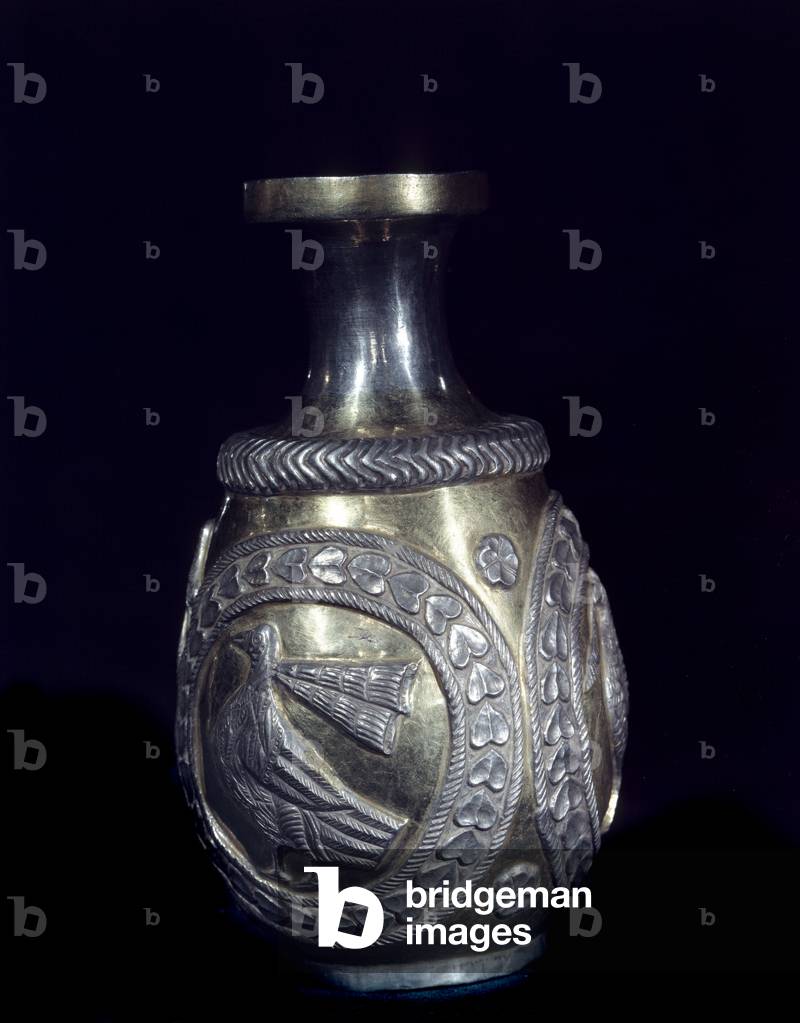
Sasanian Pedestal Bowl, Iran (silver)
Mosaic (detail) (185223-224, 185226)
Copyright
  • Copyright Applies
Andromede Galaxy - The Andromeda Galaxy (M31) - The Andromede galaxy is located about 2.3 million light years away from Earth. Two satellite galaxies accompany it: M32 (NGC 221) at the top left of the nucleus, and M110 (NGC 205) at the bottom. Like the lactee path, the Andromede galaxy belongs to the local group, making up about thirty galaxies. M31, the Great galaxy in Andromeda, is a gigantic collection of more than 300 billion stars and is located about 2 million light years from Earth. Companion dwarf elliptical galaxies M32 and M110 are also visible. M31 and its companions are part of our local group of galaxies, which includes the Milky Way and Magellanic Clouds, and M33. The Andromeda Galaxy is headed towards our Milky Way Galaxy and is expected to collide with it and possibly merge into a gigantic elliptical galaxy in about 3 billion years
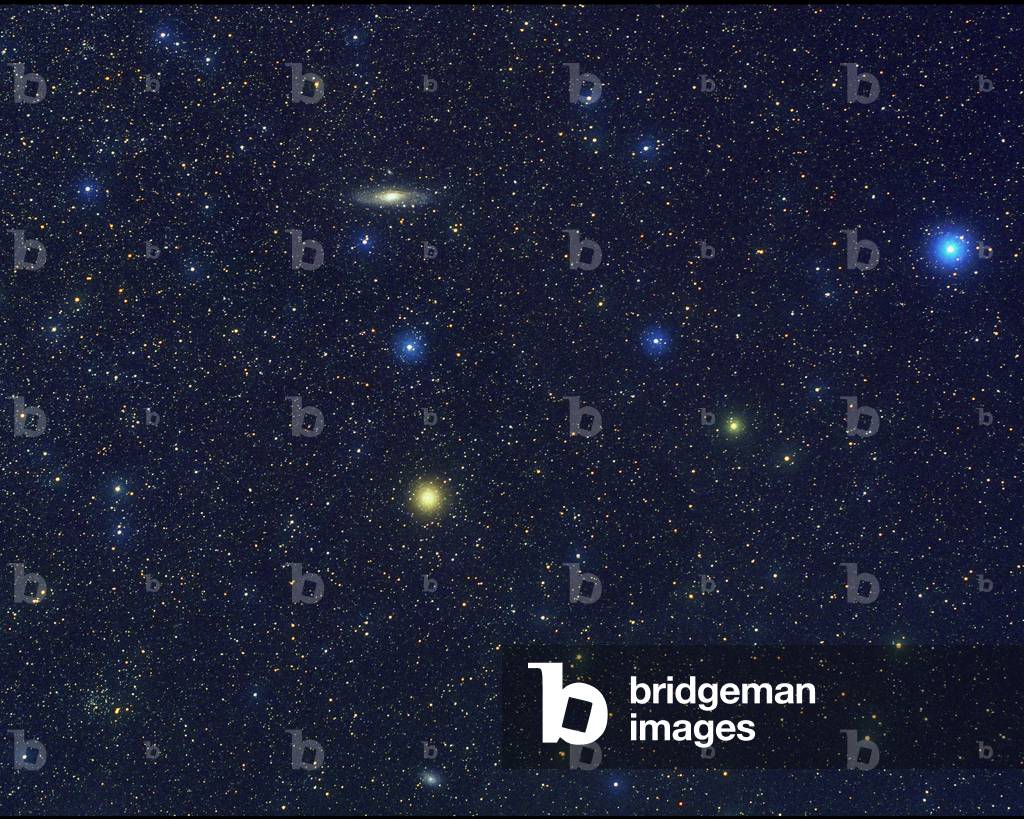
Constellation Pegase - Constellation of Pegasu
Spiral Galaxy M31 in Andromede - Spiral galaxy M31 in Andromeda - The galaxy of Andromede is located about 2 million years ago - light from Earth. Two satellite galaxies accompany him: M32 (NGC 221) at the top, and M110 (NGC 205) at the bottom. Like the lactee path, the Andromede galaxy belongs to the local group, making up about thirty galaxies. M31, the Great Galaxy in Andromeda, is a gigantic collection of more than 300 billion stars and is located about 2 million light years from Earth. Companion dwarf elliptical galaxies M32 and M110 are also visible. M31 and its companions are part of our local group of galaxies, which includes the Milky Way and Magellanic Clouds, and M33. The Andromeda Galaxy is headed towards our Milky Way Galaxy and is expected to collide with it and possibly merge into a gigantic elliptical galaxy in about 3 billion years. Die Andromeda - Galaxie liegt in einer Entfernung von rund 2,5 Millionen Lichtjahren. Der Durchmesser der sichtbaren Scheibe betraegt 150.000 Lj. Zum Vergleich: unsere Milchstrasse hat einen Durchmesser von ca. 100.000 Lj. Nach neuesten Erkenntnissen enthaelt M31 etwa eine Billion Sterne, waehrend die Milchstrasse 100 bis 200 Milliarden Sterne enthaelt. The Andromeda - Galaxy ist umgeben von den beiden elliptischen Galaxien M32 und M110
Andromede Galaxy - The Andromeda Galaxy (M31) - The Andromede galaxy is located about 2.3 million years ago - light from Earth. Two satellite galaxies accompany it: M32 (NGC 221) at the top left of the nucleus, and M110 (NGC 205) at the bottom. Like the lactee path, the Andromede galaxy belongs to the local group, making up about thirty galaxies. M31, the Great galaxy in Andromeda, is a gigantic collection of more than 300 billion stars and is located about 2 million light years from Earth. Companion dwarf elliptical galaxies M32 and M110 are also visible. M31 and its companions are part of our local group of galaxies, which includes the Milky Way and Magellanic Clouds, and M33. The Andromeda Galaxy is headed towards our Milky Way Galaxy and is expected to collide with it and possibly merge into a gigantic elliptical galaxy in about 3 billion years
Colossal head of Gordian III, 224-244 AD
Permissions
  • Permission required for any use in perpetuity - Please contact us;Permission required for certain ebook uses - Please contact us;Permission required for certain film, TV and streaming uses - Please contact us;Permission required for immersive exhibition use - Please contact us
Image Restrictions
  • Bridgeman Images only provides access to this image. Consent to license this image for any usage that includes Italy as a territory may be required according to the Italian Cultural Heritage Code. In such cases, an additional fee may apply, with the Ministry of Culture charging a potential minimum of €100. Any such clearance must be obtained in advance from the institution where the work is kept. Please contact us for further assistance.
Content Partner Restrictions
  • Not available to clients invoiced in Italy
Andromede galaxy (M31) seen in X and infrared - Andromeda galaxy infrared and X - Ray composite - Andromede spiral galaxy seen in X-ray (blue) by the XMM - Newton space telescope and in infrared (orange) by the Herschel space telescope. This mosaic of the Andromeda spiral galaxy highlights explosive stars in its interior, and cooler, dusty stars forming in its many rings. The image is a combination of observations from the Herschel Space Observatory taken in infrared light (seen in orange hues), and the XMM - Newton telescope captured in X - rays (seen in blues). Herschel provides a detailed look at the cool clouds of star birth that line the galaxy's five concentric rings. Massive young stars are heating blankets of dust that surround them, causing them to glow in the longer - wavelength infrared light, known as far - infrared, that Herschel sees. In contrast, XMM - Newton is capturing what happens at the end of the lives of massive stars. It shows the high - energy X - rays that come from, among other objects, supernova explosions and massive dead stars rotating around companions. These X - ray sources are clustered in the center of the galaxy, where the most massive stars tend to form. Andromeda is our Milky Way galaxy's nearest large neighbor. It is located about 2.5 million light - years away and holds up to an estimated trillion stars. Our Milky Way is thought to contain about 200 billion to 400 billion stars
Andromede Constellation - Andromeda constellatio
Indre & Loire N* 224 - Richelieu - Parc du chateau
Plate 224, from 'A Curious Herbal', 1737 (coloured engraving)
Permissions
  • Permission required for non-editorial use (inc book and magazine covers). Please contact us
Center of the Andromede Galaxy (M31) - Central part of the Andromeda galaxy (M31) - The Andromede galaxy is located about 2 million years ago - light from Earth. Like the lactee path, the Andromede galaxy belongs to the local group. This image obtained with a telescope measuring 61 centimetres in diameter shows the central region of the galaxy where a huge mass of stars is orbiting around the nucleus. The central part of M31 where the huge mass of stars are in orbit around its nucleus. Image taken with a 24 - inch telescope on october 13 2009
Center of the Andromede Galaxy (M31) - Center of the Andromeda galaxy - The Andromede galaxy is located about 2 million years ago - light from Earth. Like the lactee path, the Andromede galaxy belongs to the local group. This image obtained from the 2.5m Isaac Newton telescope of La Palma shows the central region of the galaxy where a huge mass of stars is orbiting around the nucleus. This picture covers almost half a degree of sky (about the size of the full moon), but wide angle telescopes show the galaxy to be over three degrees long at its widest. Here we see only the central part of M31, the huge mass of stars that are in orbit around its nucleus. Silhouetted against this starry background are tangled sheets and curtains of dust, very reminiscent of dust clouds we see in our own galaxy. This picture was made from three black and white glass negatives. Some care has been taken to ensure that the colours seen here are realistic
Constellations of Andromede and Cassiopee - Andromeda and Cassiopeia constellation
Spiral galaxy M31 in Andromede - M31, the Great galaxy in Andromeda - The galaxy of Andromede is located about 2 million years ago - light from Earth. Two satellite galaxies accompany it: M32 (NGC 221) in the center left, and M110 (NGC 205) below. Like the lactee path, the Andromede galaxy belongs to the local group, making up about thirty galaxies. M31, the Great galaxy in Andromeda, is a gigantic collection of more than 300 billion stars and is located about 2 million light years from Earth. Companion dwarf elliptical galaxies M32 and M110 are also visible. M31 and its companions are part of our local group of galaxies, which includes the Milky Way and Magellanic Clouds, and M33. The Andromeda Galaxy is headed towards our Milky Way Galaxy and is expected to collide with it and possibly merge into a gigantic elliptical galaxy in about 3 billion years
Andromede Galaxy (M31) infrared view by Herschel - Herschel Infrared view of the Andromeda galaxy - Andromede's spiral galaxy seen in infrared by the Herschel space telescope in December 2010. This is the most detailed image of the Andromeda Galaxy ever taken at far - infrared wavelengths. The Herschel infrared space telescope captured the image during Christmas 2010. The large rings of dust that encircle the centre of the galaxy may be the result of a smaller galaxy having collided with Andromeda some time in the past
Andromede Constellation - Andromeda constellatio
Center of the Andromede Galaxy (M31) - Center of the Andromeda galaxy - The Andromede galaxy is located about 2 million years ago - light from Earth. Like the lactee path, the Andromede galaxy belongs to the local group. This image obtained from the 2.5m Isaac Newton telescope of La Palma shows the nucleus of the galaxy. This nucleus is double, probably the vestige of a collision with another galaxy. At the heart of the nearby spiral galaxy M31 is a tiny, bright nucleus, seen to be slightly elongated on this colour picture. Hubble Space Telescope pictures show the nucleus to be a double structure, possibly the remains of the nucleus of another galaxy which has now been almost completely absorbed in M31. Around the binary nucleus swirls a huge cloud of mostly old, faint stars. This not only reveals the inner nucleus but also shows traces of dust which seem to stream into the bright central part of the galaxy. Studies of the stars around the nucleus strongly suggest that at the heart of M31 there lurks a black hole, accelerating stars close to it to abnormally high velocities. Similar effects are seen in the Milky Way, but in our galaxy the nucleus is hidden at optical wavelengths, so observations are made in the infrared and at radio wavelengths
Andromede Galaxy - Andromeda galaxy - The Andromede galaxy is located about 2.3 million years ago - light from Earth. Two satellite galaxies accompany it: M32 (NGC 221) at the top left of the nucleus, and M110 (NGC 205) at the bottom. Like the lactee path, the Andromede galaxy belongs to the local group, making up about thirty galaxies. M31, the Great galaxy in Andromeda, is a gigantic collection of more than 300 billion stars and is located about 2 million light years from Earth. Companion dwarf elliptical galaxies M32 and M110 are also visible. M31 and its companions are part of our local group of galaxies, which includes the Milky Way and Magellanic Clouds, and M33. The Andromeda Galaxy is headed towards our Milky Way Galaxy and is expected to collide with it and possibly merge into a gigantic elliptical galaxy in about 3 billion years
Andromede Constellation - Andromeda constellatio
Detail of the Galaxy of Andromede and Cepheide M31_V1 - M31, Andromeda Galaxy, and Cepheid M31_V1 - The galaxy of Andromede (M31) is located about 2 million years ago - light from Earth. Here, a detail on the galaxy showing the region around M31_V1, the first cepheide discovered in M31 by Edwin Hubble. M31, the Great galaxy in Andromeda, is a gigantic collection of more than 300 billion stars and is located about 2 million light years from Earth. This image shows a part of the galaxy around M31_V1, the first Cepheid Variable star in M31 discovered by Edwin Hubble
Galaxy of Andromede (M31) viewed in X by XMM - XMM - Newton X view of the Andromeda galaxy - Andromede spiral galaxy seen in X-ray by the XMM space telescope - Newton in December 2010. This image of the Andromeda Galaxy was taken by XMM - Newton during Christmas 2010. It shows hundreds of X - ray sources within Andromeda, many of them clustered around the center, where the stars are densest. Each one is a dying star system. The sources can be shockwaves and debris rolling through space from exploded stars or pairs of stars locked in a gravitational fight to the death, in which one strips the other of precious gas
Infrared view of the Andromeda galaxy - The Spitzer space telescope observed the Andromede spiral galaxy for over 18 hours on August 25, 2004, obtaining 11,000 different poses. Assembled in mosaic the result shows details never seen before. The brightest ring appears to be hole at the bottom right of the image; these are traces of the passage of a satellite galaxy. Nasa's Spitzer Space Telescope has captured stunning infrared views of the famous Andromeda galaxy to reveal insights that were only hinted at in visible light. Spitzer's 24 - micron mosaic is the sharpest image ever taken of the dust in another spiral galaxy. This is possible because Andromeda is a close neighbor to the Milky Way at a mere 2.5 million light - years away. The Spitzer multiband imaging photometer's 24 - micron detector recorded 11,000 separate snapshots to create this new comprehensive picture. Asymmetrical features are seen in the prominent ring of star formation. The ring appears to be split into two pieces, forming the hole to the lower right. These features may have been caused by interactions with satellite galaxies around Andromeda as they plunge through its disk. Spitzer also reveals delicate tracings of spiral arms within this ring that reach into the very center of the galaxy. One sees a scattering of stars within Andromeda, but only select stars that are wrapped in envelopes of dust light up at infrared wavelengths. This is a dramatic contrast to the traditional view at visible wavelengths, which shows the starlight instead of the dust. The center of the galaxy in this view is dominated by a large bulge that overwhelms the inner spirals seen in dust. The dust lanes are faintly visible in places, but only where they can be seen in silhouette against background stars. Exposure date 2004 August 2
Andromede Galaxy - Detail - The Andromede galaxy is located about 2.3 million years ago - light from Earth. On this composite image obtained by the Hubble Space Telescope (HST), one hundred million stars are visible. M31, the Great galaxy in Andromeda, is a gigantic collection of more than 300 billion stars and is located about 2 million light years from Earth. This image, captured with the NASA/ESA Hubble Space Telescope, is the largest and sharpest image ever taken of the Andromeda galaxy - - otherwise known as M31. It is the biggest Hubble image ever released and shows over 100 million stars and thousands of star clusters embedded in a section of the galaxy's pancake - shaped disc stretching across over 40,000 light - years
Codex Atlanticus, sheet 224 verso, 1478-1518 (pen & ink)
Permissions
  • Permission required for all uses - Please contact us
Content Partner Restrictions
  • Minimum fee applies to this image;Not available to clients invoiced in Italy;Not available to clients invoiced in Japan
Spiral Galaxy M31 in Andromede - Spiral galaxy M31 in Andromeda - The galaxy of Andromede is located about 2 million years ago - light from Earth. Two satellite galaxies accompany it: M32 (NGC 221) at the top left, and M110 (NGC 205) outside the image. Like the lactee path, the Andromede galaxy belongs to the local group, making up about thirty galaxies. M31, the Great galaxy in Andromeda, is a gigantic collection of more than 300 billion stars and is located about 2 million light years from Earth. Companion dwarf elliptical galaxy M32 is also visible. M31 and its companions are part of our local group of galaxies, which includes the Milky Way and Magellanic Clouds, and M33. The Andromeda Galaxy is headed towards our Milky Way Galaxy and is expected to collide with it and possibly merge into a gigantic elliptical galaxy in about 3 billion years
Infrared view of the Andromeda galaxy - Composite of three different wavelengths 24 microns (blue), 70 microns (green), and 160 microns (red). Using these three bands, we can know the temperature differences of the dust: the warmest are the brightest at 24 microns and the coldest shine at 160 microns. The blue/white areas contain the hottest dust. View obtained by Spitzer space telescope on 25 August 2004. The multi - wavelength view of Andromeda combines images taken at 24 microns (blue), 70 microns (green), and 160 microns (red). Using all three bands from the multiband imaging photometer allows astronomers to measure the temperature of the dust by its color. The warmest dust is brightest at 24 microns while the coolest is most evident at 160 microns. The blue/white areas have the hottest dust, as seen in the bulge and in the star - forming areas along the arms. The cooler dust floating further out in the ring and arms are in the redder regions. The data were taken on August 25, 2004 by Spitzer space telescope
Codex Atlanticus, sheet 224 recto, 1478-1518 (pen & ink)
Permissions
  • Permission required for all uses - Please contact us
Content Partner Restrictions
  • Minimum fee applies to this image;Not available to clients invoiced in Italy;Not available to clients invoiced in Japan
Constellation Cassiopee - The constellation of Cassiopei
Triangle Constellation and Andromede Galaxy - Constellation of Triangulum with Andromeda galaxy - The constellation Triangle is a small constellation in the northern hemisphere, not far from the Andromede galaxy. Triangulum is one of the 48 constellations noted by Ptolemy and is one of the smallest of the modern star groupings codified in the 1930s. However, the most obvious triangle in this image joins the surrounding trio of yellow - orange stars, Almak, Mirach and Hamal, in which Triangulum is nicely placed. Of course almost any three stars can form a triangle but these two, one inside the other, make quite a distinctive asterism
Andromede Galaxy - Detail - The Andromede galaxy is located about 2.3 million years ago - light from Earth. On this composite image obtained by the Hubble Space Telescope (HST), one hundred million stars are visible. M31, the Great galaxy in Andromeda, is a gigantic collection of more than 300 billion stars and is located about 2 million light years from Earth. This image, captured with the NASA/ESA Hubble Space Telescope, is the largest and sharpest image ever taken of the Andromeda galaxy - - otherwise known as M31. It is the biggest Hubble image ever released and shows over 100 million stars and thousands of star clusters embedded in a section of the galaxy's pancake - shaped disc stretching across over 40 000 light - years. Additional data: The Subaru Telescope (NAOJ), DSS, NOA
Spiral Galaxy M31 in Andromede - Spiral galaxy M31 in Andromeda - The galaxy of Andromede is located about 2.9 million years ago - light from Earth. Two satellite galaxies accompany it: M32 (NGC 221) in the center left, and M110 (NGC 205) below. Like the lactee path, the Andromede galaxy belongs to the local group, making up about thirty galaxies. M31, the Great galaxy in Andromeda, is a gigantic collection of more than 300 billion stars and is located about 2 million light years from Earth. Companion dwarf elliptical galaxies M32 and M110 are also visible. M31 and its companions are part of our local group of galaxies, which includes the Milky Way and Magellanic Clouds, and M33. The Andromeda Galaxy is headed towards our Milky Way Galaxy and is expected to collide with it and possibly merge into a gigantic elliptical galaxy in about 3 billion years
Center of the Andromede Galaxy (M31) - Center of the Andromeda galaxy - The Andromede galaxy is located about 2 million years ago - light from Earth. Two satellite galaxies accompany it: M32 (NGC 221) on the left and M110 (NGC 205) (off-field). Like the lactee path, the Andromede galaxy belongs to the local group, making up about thirty galaxies. Andromeda is the nearest major galaxy to our own Milky Way Galaxy. Our Galaxy is thought to look much like Andromeda. Together these two galaxies dominate the Local Group of galaxies. The diffuse light from Andromeda is caused by the hundreds of billions of stars that compose it. The several distinct stars that surround Andromeda's image are actually stars in our Galaxy that are well in front of the background object. M31 is so distant it takes about two million years for light to reach us from there. Much about M31 remains unknown, including how the center acquired two nuclei
Spiral Galaxy M31 in Andromede - Spiral galaxy M31 in Andromeda - The galaxy of Andromede is located about 2 million years ago - light from Earth. Two satellite galaxies accompany it: M32 (NGC 221) in the center left, and M110 (NGC 205) below. Like the lactee path, the Andromede galaxy belongs to the local group, making up about thirty galaxies. M31, the Great Galaxy in Andromeda, is a gigantic collection of more than 300 billion stars and is located about 2 million light years from Earth. Companion dwarf elliptical galaxies M32 and M110 are also visible. M31 and its companions are part of our local group of galaxies, which includes the Milky Way and Magellanic Clouds, and M33. The Andromeda Galaxy is headed towards our Milky Way Galaxy and is expected to collide with it and possibly merge into a gigantic elliptical galaxy in about 3 billion years
Model of set design representing studies on sheet 224 R of Leonardo da Vinci's Codex Arundel (1452-1519)
Permissions
  • Permission required for any use in perpetuity - Please contact us;Permission required for certain ebook uses - Please contact us;Permission required for certain film, TV and streaming uses - Please contact us;Permission required for immersive exhibition use - Please contact us
Content Partner Restrictions
  • Not available to clients invoiced in Italy
Core of the Andromede Galaxy (M31) - The Andromede Galaxy is located about 2 million years away - light from Earth. View of its dual nucleus obtained by the Hubble Space Telescope (HST). Andromeda is the nearest major galaxy to our own Milky Way Galaxy. Our Galaxy is thought to look much like Andromeda. Together these two galaxies dominate the Local Group of galaxies. M31 is so distant it takes about two million years for light to reach us from there. Much about M31 remains unknown, including how the center acquired two nuclei. Image taken with the Hubble space telescope (HST)
Spiral Galaxy M31 in Andromede - Spiral galaxy M31 in Andromeda - The galaxy of Andromede is located about 2 million years ago - light from Earth. Two satellite galaxies accompany it: M32 (NGC 221) in the center left, and M110 (NGC 205) below. Like the lactee path, the Andromede galaxy belongs to the local group, making up about thirty galaxies. M31, the Great galaxy in Andromeda, is a gigantic collection of more than 300 billion stars and is located about 2 million light years from Earth. Companion dwarf elliptical galaxies M32 and M110 are also visible. M31 and its companions are part of our local group of galaxies, which includes the Milky Way and Magellanic Clouds, and M33. The Andromeda Galaxy is headed towards our Milky Way Galaxy and is expected to collide with it and possibly merge into a gigantic elliptical galaxy in about 3 billion years
Spiral Galaxy M31 in Andromede - Spiral galaxy M31 in Andromeda - The galaxy of Andromede is located about 2 million years ago - light from Earth. Two satellite galaxies accompany it: M32 (NGC 221) at the top center, and M110 (NGC 205) at the bottom. Like the lactee path, the Andromede galaxy belongs to the local group, making up about thirty galaxies. Image obtained with an apochromatic bezel Televue 127is. 22 hours of laying. M31, the Great galaxy in Andromeda, is a gigantic collection of more than 300 billion stars and is located about 2 million light years from Earth. Companion dwarf elliptical galaxies M32 and M110 are also visible. M31 and its companions are part of our local group of galaxies, which includes the Milky Way and Magellanic Clouds, and M33. The Andromeda Galaxy is headed towards our Milky Way Galaxy and is expected to collide with it and possibly merge into a gigantic elliptical galaxy in about 3 billion years
Andromede Galaxy (M31) Ultraviolet View - The Andromeda galaxy seen in UV - This ultraviolet image is a mosaic of 330 images obtained by the SWIFT satellite from May to July 2008. This mosaic of M31 merges 330 individual images taken by the Ultraviolet/Optical Telescope aboard Nasa's Swift spacecraft in 2008. It is the highest - resolution image of the galaxy ever recorded in the ultraviolet. The image shows a region 200,000 light - years wide and 100,000 light - years high (100 arcminutes by 50 arcminutes)
Spiral Galaxy M31 in Andromede - Spiral galaxy M31 in Andromeda - The galaxy of Andromede is located about 2.9 million years ago - light from Earth. Two satellite galaxies accompany it: M32 (NGC 221) in the center left, and M110 (NGC 205) below. Like the lactee path, the Andromede galaxy belongs to the local group, making up about thirty galaxies. M31, the Great galaxy in Andromeda, is a gigantic collection of more than 300 billion stars and is located about 2 million light years from Earth. Companion dwarf elliptical galaxies M32 and M110 are also visible. M31 and its companions are part of our local group of galaxies, which includes the Milky Way and Magellanic Clouds, and M33. The Andromeda Galaxy is headed towards our Milky Way Galaxy and is expected to collide with it and possibly merge into a gigantic elliptical galaxy in about 3 billion years
Spiral Galaxy M31 in Andromede - The Andromeda Galaxy (M31) - The Andromede galaxy is located about 2.3 million years ago - light from Earth. Two satellite galaxies accompany him: M32 (NGC 221) on the left, and M110 (NGC 205) on the bottom right. Like the lactee path, the Andromede galaxy belongs to the local group, making up about thirty galaxies. Andromeda is the nearest major galaxy to our own Milky Way Galaxy. M31 is about 2.3 million light years far from us in the constellation Andromeda. It is the biggest member in our Local Group. Its diameter is more than 150,000 light years, compared to the Milky Way's 100,000 light years. M31 has two satellite galaxies: M110 (NGC 205) the elliptic galaxy at bottom right respect M31 core and M32 (NGC 221), the bright star - like object at left. The bright blue star at top is the 4.5th magnitude naked Andromedae
Spiral Galaxy M31 in Andromede - The Andromeda Galaxy (M31) - The Andromede galaxy is located about 2.3 million years ago - light from Earth. Two satellite galaxies accompany it: M32 (NGC 221) on the left of the nucleus, and M110 (NGC 205) on the bottom. Like the lactee path, the Andromede galaxy belongs to the local group, making up about thirty galaxies. Andromeda is the nearest major galaxy to our own Milky Way Galaxy. M31 is about 2.3 million light years far from us in the constellation Andromeda. It is the biggest member in our Local Group. Its diameter is more than 150,000 light years, compared to the Milky Way's 100,000 light years. M31 has two satellite galaxies: M110 (NGC 205) the elliptic galaxy at bottom and M32 (NGC 221), the bright star - like object at left of the nucleus
Triangle Constellation and Andromede Galaxy - Constellation of Triangulum with Andromeda galaxy - The constellation Triangle is a small constellation in the northern hemisphere, not far from the Andromede galaxy. Triangulum is one of the 48 constellations noted by Ptolemy and is one of the smallest of the modern star groupings codified in the 1930s. However, the most obvious triangle in this image joins the surrounding trio of yellow - orange stars, Almak, Mirach and Hamal, in which Triangulum is nicely placed. Of course almost any three stars can form a triangle but these two, one inside the other, make quite a distinctive asterism
Spiral Galaxy M31 in Andromede - The Andromeda Galaxy (M31) - The Andromede galaxy is located about 2.3 million years ago - light from Earth. Two satellite galaxies accompany him: M32 (NGC 221) on the left, and M110 (NGC 205) on the bottom right. Like the lactee path, the Andromede galaxy belongs to the local group, making up about thirty galaxies. Andromeda is the nearest major galaxy to our own Milky Way Galaxy. M31 is about 2.3 million light years far from us in the constellation Andromeda. It is the biggest member in our Local Group. Its diameter is more than 150,000 light years, compared to the Milky Way's 100,000 light years. M31 has two satellite galaxies: M110 (NGC 205) the elliptic galaxy at bottom right respect M31 core and M32 (NGC 221), the bright star - like object at left. The bright blue star at top is the 4.5th magnitude naked Andromedae
Spiral Galaxy M31 in Andromede - Spiral galaxy M31 in Andromeda - The galaxy of Andromede is located about 2 million years ago - light from Earth. Two satellite galaxies accompany it: M32 (NGC 221) in the center left, and M110 (NGC 205) below. Like the lactee path, the Andromede galaxy belongs to the local group, making up about thirty galaxies. M31, the Great Galaxy in Andromeda, is a gigantic collection of more than 300 billion stars and is located about 3 million light years from Earth. Companion dwarf elliptical galaxies M32 and M110 are also visible. M31 and its companions are part of our local group of galaxies, which includes the Milky Way and Magellanic Clouds, and M33. The Andromeda Galaxy is headed towards our Milky Way Galaxy and is expected to collide with it and possibly merge into a gigantic elliptical galaxy in about 3 billion years
Star field in the halo of the Andromede galaxy - Deep field image in the halo of Andromeda galaxy - Deep field in the halo of the Andromede galaxy obtained by the Hubble space telescope in 2003. 300,000 stars as well as thousands of background galaxies are visible. Astronomers using Nasa's Hubble Space Telescope (HST) have reliably measured the age of the spherical halo of stars surrounding the neighboring Andromeda galaxy (M31). To their surprise, they have discovered that approximately one - third of the stars in Andromeda's halo formed only 6 to 8 billion years ago. That's a far cry from the 11 - to - 13 billion - year age of the stars in the Milky Way's halo. Why the difference in halo ages? Apparently, M31 must have gone through a major “” corporate merger”” with another large galaxy, or a series of mergers with smaller galaxies, billions of years ago. Astronomers cannot yet tell whether this was one tumultuous event or a more continual acquisition of smaller galaxies. The newly discovered younger stars in Andromeda's halo are richer in heavier elements than the stars in our Milky Way's halo, or in most of the small dwarf galaxies that surround the Milky Way. Indeed the level of chemical enrichment seen in these younger stars is characteristic of relatively massive galaxies, containing at least a billion stars. This suggests three possibilities: (1) Collisions destroyed the young disk of M31 and dispersed many of its stars into the halo; (2) a single collision destroyed a relatively massive invading galaxy and dispersed its stars and some of Andromeda's disk stars into the halo; and/or (3) many stars formed during the collision itself. Astronomers say it will take more detailed observations to unravel the acquisition history of these early cataclysmic events. Located only 2.5 million light - years away, the magnificent Andromeda galaxy, visible as a naked - eye spindle of light in the autumn sky has long been considered a near twin to our
Spiral galaxy M31 in Andromede - First color photo - The first color image of spiral galaxy M31 in Andromeda - The galaxy of Andromede is located about 2 million years ago - light from Earth. Two satellite galaxies accompany him: M32 (NGC 221) on the left, and M110 (NGC 205) on the bottom right. Like the lactee path, the Andromede galaxy belongs to the local group, making up about thirty galaxies. This photo is the first color photo of M31. It was obtained on 11 August 1958 at the Schmidt telescope of Mount Palomar. M31 (NGC 224) is the finest and nearest large spiral galaxy in the sky, about 2 million light years away. It has several close companions, the most obvious of which are the compact elliptical galaxy M32 (NGC 221) at lower left centre here, and M110 (NGC 205) at lower right. M 31 is a member of the Local Group of about 30 galaxies that includes the Milky Way and M31 as its most massive members as well as the two Magellanic Clouds. This particular picture is of interest because it was one of the first - ever astronomical colour images and certainly the first of M31. The 120 minute exposure was made in 1958 August 11 with the Palomar 48 - inch Schmidt Telescope (now the Oschin Schmidt) by Mt Wilson and Palomar Observatories' William C. Miller. Miller used the then revolutionary Super Ansco reversal film which had a nominal speed of 100ASA. The original came to D.Malin some years ago for re - mastering, and he has now digitally re - mastered the copy he made at that time. The quality of the picture as a large digital file is quite outstanding, and is as good as any more recent image, indicative of the fine optics of a large Schmidt telescope
Spiral Galaxy M31 in Andromede - Spiral galaxy M31 in Andromeda - The galaxy of Andromede is located about 2 million years ago - light from Earth. Two satellite galaxies accompany it: M32 (NGC 221) at the top left, and M110 (NGC 205) at the bottom. Like the lactee path, the Andromede galaxy belongs to the local group, making up about thirty galaxies. M31, the Great galaxy in Andromeda, is a gigantic collection of more than 300 billion stars and is located about 2 million light years from Earth. Companion dwarf elliptical galaxies M32 and M110 are also visible. M31 and its companions are part of our local group of galaxies, which includes the Milky Way and Magellanic Clouds, and M33. The Andromeda Galaxy is headed towards our Milky Way Galaxy and is expected to collide with it and possibly merge into a gigantic elliptical galaxy in about 3 billion years. Cumulative exposure approximately 90 Hours
La comtesse de Brionne (pencil and red chalk on paper) 1758
Content Partner Restrictions
  • Museum additional fee applies
A Chinese policeman, 1909 (b/w photo) [1998/028/1/1/224]
'The Simple History of a Portrait,' from Punch, or the London Charivari, Vol. 33, p. 224, 1857 (engraving)
Permissions
  • Permission required for non-editorial use (inc book and magazine covers). Please contact us
Andromede Galaxy (M31) infrared view - The Andromeda galaxy seen in infrared - This image shows the difference in infrared radiation between the light emitted by the aged stars (blue) and that emitted by the dust (star-forming zone, yellow and red). This image obtained by the WISE satellite also distinguishes the two Andromede satellite galaxies, M32 (above the nucleus of the Andromede galaxy) and NGC 205 (M110) below. Infrared composite at the following wavelengths: 3.4 and 4.6 microns (blue), 12 microns (green), and 22 microns dust sensitive, red. M31, is captured in full in this new image from Nasa's Wide - field Infrared Survey Explorer, or WISE. The mosaic covers an area equivalent to more than 100 full moons, or five degrees across the sky. WISE used all four of its infrared detectors to capture this picture (3.4 - and 4.6 - micron light is colored blue; 12 - micron light is green; and 22 - micron light is red). Blue highlights mature stars, while yellow and red show dust heated by newborn, massive stars. Andromeda is the closest large galaxy to our Milky Way galaxy, and is located 2.5 million light - years from our sun. It is close enough for telescopes to spy the details of its ringed arms of new stars and hazy blue backbone of older stars. Also seen in the mosaic are two satellite galaxies, known as M32, located just a bit above Andromeda to the left of center, and the fuzzy blue M110, located below the center of the great spiral arms. These satellites are the largest of several that are gravitationally bound to Andromeda. The Andromeda galaxy is larger than our Milky Way and contains more stars, but the Milky Way is thought to perhaps have more mass due to its larger proportion of a mysterious substance called dark matter. Both galaxies belong to our so - called Local Group, a collection of more than 50 galaxies, most of which are tiny dwarf systems. In its quest to map the wh
Spiral Galaxy M31 in Andromede - Spiral galaxy M31 in Andromeda - The galaxy of Andromede is located about 2 million years ago - light from Earth. Two satellite galaxies accompany it: M32 (NGC 221) in the center left, and M110 (NGC 205) below. Like the lactee path, the Andromede galaxy belongs to the local group, making up about thirty galaxies. Image made with an amateur instrument, a 130 mm bezel, several composite images. M31, the Great galaxy in Andromeda, is a gigantic collection of more than 300 billion stars and is located about 2 million light years from Earth. Companion dwarf elliptical galaxies M32 and M110 are also visible. M31 and its companions are part of our local group of galaxies, which includes the Milky Way and Magellanic Clouds, and M33. The Andromeda Galaxy is headed towards our Milky Way Galaxy and is expected to collide with it and possibly merge into a gigantic elliptical galaxy in about 3 billion years
Foot of the stairwell, Hotel Solvay, 224 Avenue Louise, Brussels, 1894-1903 (photo)
Spiral galaxy M31 in Andromede compared to the Moon - The Andromeda galaxy and Moon - This image shows how the galaxy of Andromede is very extended in the sky; visible as a small blurred spot with the naked eye, its surface being shiny, it is difficult to imagine its size. By overlaying a more familiar object like the Moon and bringing it back to the same scale as the field of the M31 photo, the galaxy appears in its true dimensions. The Andromede galaxy is located about 2 million light years away from Earth. Two satellite galaxies accompany it: M32 (NGC 221) at the top center, and M110 (NGC 205) at the bottom. Like the lactee path, the Andromede galaxy belongs to the local group, making up about thirty galaxies. Composite image to show how large is the Andromeda galaxy in our sky
Infrared view of the Andromeda galaxy - Infrared view of the Andromeda galaxy - This image shows the difference in infrared radiation between the light emitted by the aged stars (blue) and that emitted by the dust (star-forming zone, red). By measuring the infrared radiation emitted by a galaxy, more or less important depending on the nature of the stars, the mass of that galaxy can be reduced. According to this method, the mass of stars in the Andromede galaxy would be 110 billion times that of the Sun, which means that this galaxy would have 1 trillion stars (our galaxy had 400 billion). In this image we distinguish the two satellite galaxies of Andromede, M32 at the bottom and NGC 205 (M110) at the top. Infrared composite at the following wavelengths: 3.6 and 4.5 microns: sensitive to star light (blue and green), and 8 micron sensitive to dust in red. 3000 different poses obtained by the Spitzer space telescope in January and August 2005 were required to achieve this complete view of the galaxy. This infrared composite image from Nasa's Spitzer Space Telescope shows the Andromeda galaxy, a neighbor to our Milky Way galaxy. The image highlights the contrast between the galaxy's choppy waves of dust (red) and smooth sea of older stars (blue). Spiral galaxies tend to form new stars in their dusty, clumpy arms, while their cores are populated by older stars.The Spitzer view also shows Andromeda's dust lanes twisting all the way into the center of the galaxy, a region that is crammed full of stars. In visible - light pictures, this central region tends to be dominated by starlight. Astronomers used these new images to measure the total infrared brightness of Andromeda. Because the amount of infrared light given off by stars depends on their masses, the brightness measurements provided a novel method for “” weighing””” the Andromeda galaxy. According to this method, the mass of the stars in
Andromede Galaxy (M31) view in ultraviolet - The Andromeda galaxy seen in UV - This ultraviolet image is a mosaic of 10 images obtained by the GALEX satellite in September and October 2003. Regions of blue stars, young, warm and massive stars are clearly visible in the arms, where the stars are formed; in the center near the core, colder, orange-white, much older stars. The stars visible in the foreground belong to our Lactee Way. The GALEX observation of the large galaxy in Andromeda, Messier 31, was performed during September and October 2003. The image is a mosaic of 10 separate GALEX images combining the Far UV (colored blue) and Near UV detector (colored red) images together to make a color image of the sky almost six full moons across. The Andromeda galaxy is the most massive in the local group of galaxies, which includes our Milky Way, and is the nearest large galaxy to our own. The GALEX image shows blue regions of young, hot, high mass stars tracing out the spiral arms where star formation is occurring, and the central orange - white “” bulge””” of old, cooler stars formed long ago. The red stars in this image are foreground stars in our own Milky Way galaxy
Spiral Galaxy M31 in Andromede - Spiral galaxy M31 in Andromeda - The galaxy of Andromede is located about 2.3 million years ago - light from Earth. Two satellite galaxies accompany him: M32 (NGC 221) on the left, and M110 (NGC 205) on the lower right. Like the lactee path, the Andromede galaxy belongs to the local group, making up about thirty galaxies. Image based on data obtained with the Oschin telescope of Mount Palomar. Andromeda is the nearest major galaxy to our own Milky Way Galaxy. M31 is about 2.3 million light years far from us in the constellation Andromeda. It is the biggest member in our Local Group. Its diameter is more than 150,000 light years, compared to the Milky Way's 100,000 light years. M31 has two satellite galaxies: M110 (NGC 205) the elliptic galaxy at bottom right respect M31 core and M32 (NGC 221), the bright star - like object just below the M31 core. The bright blue star at top is the 4.5th magnitude nu Andromedae. This image is based on data acquired by the Oschin Telescope at the Mount Palomar Observatory
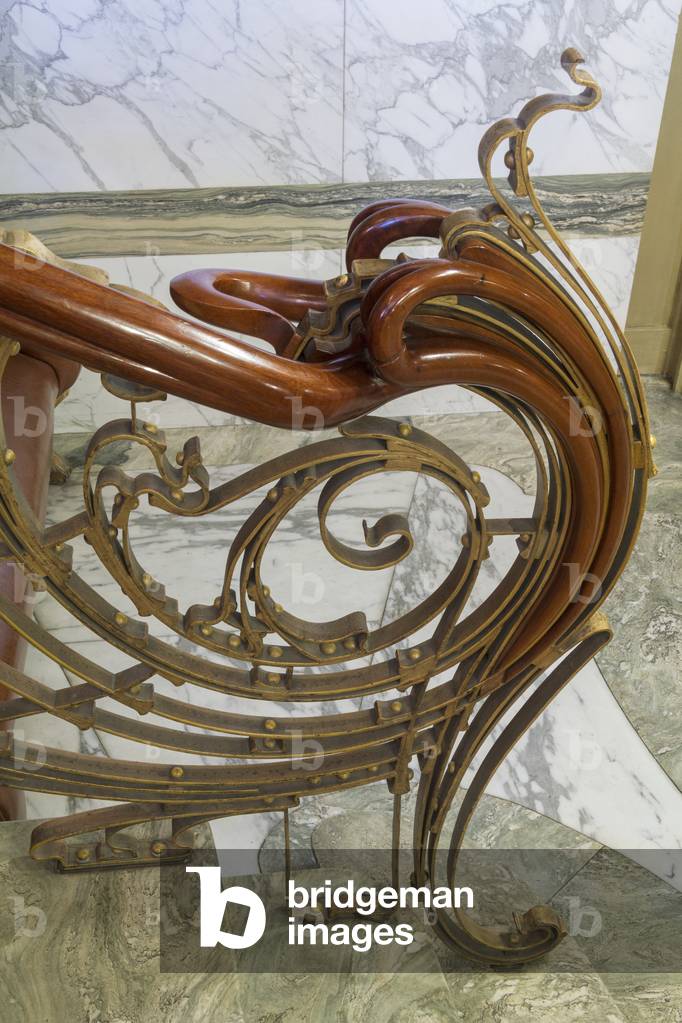
Stair support in iron, Hotel Solvay, 224 Avenue Louise, Brussels, 1894-1903 (photo)
Staircase to top floor, Hotel Solvay, 224 Avenue Louise, Brussels, 1894-1903 (photo)
Copy of the Chronicle Andrew of Wyntoun, Fol 224 recto, detail, c.1550 (ink on paper)
Salon wall decoration, Hotel Solvay, 224 Avenue Louise, Brussels, 1894-1903 (photo)
Harley 1775, f.224, Uncial, from the 'Harley Gospels', late 6th century (vellum)
Permissions
  • Permission required for non-editorial use (inc book and magazine covers). Please contact us
Constellations of Andromede and Cassiopee - Andromeda and Cassiopeia constellations - Field around the constellations of Andromede and Cassiopee. From ancient times the constellation of Andromeda has represented a woman and in Greek mythology Andromeda was the daughter of Cepheus and Cassiopeia, king and boastful queen of the Phoenician kingdom of Ethiopia. As punishment for her mother's arrogance she was chained to a rock as a sacrifece to Cetus, then rescued by Perseus whom she subsequently married. The modern constellation is the 19th largest in the sky and covers about 720 square degrees but is not very obvious. The three brightest stars of Andromeda form a broad arc south of the distinctive 'W' of Cassiopeia, and under a dark sky the elongated shape of M32 is just visible to the unaided eye. This is by far the best - known object in the field. Best seen in the early evening in Novembe
Hunted lesser kudu, c.1910 (b/w photo) [2005/078/1/224]
Staircase to top floor, Hotel Solvay, 224 Avenue Louise, Brussels, 1894-1903 (photo)
View through Salon, Hotel Solvay, 224 Avenue Louise, Brussels, 1894-1903 (photo)
Tower in the middle of the city of Khurra, c. 224, 3rd century, Firuzabad, Iran (mixed technique)
Permissions
  • Permission required for non-editorial use (inc book and magazine covers). Please contact us
Content Partner Restrictions
  • Not available to clients invoiced in Italy
Paranal Observatory, Chile: The Very Large Telescope (VLT) and its auxiliary telescopes seen on August 9, 2014. In the sky the galaxy of Andromede is visible. The four 8m telescopes telescopes, named Antu (Sun), Kueyen (Moon), Melipal (Southern Cross), and Yepun (Venus) form a very versatile observatory. They can be used as a single large telescope that adds (incoherently) the light from all four, in order to achieve the light gathering ability of a single 16m telescope. Also, their light can be combined in a coherent manner in order to achieve a solving power equivalent to the one of a telescope with a diameter as large as the baseline between the units. Of course, all the telescopes can be used individually, which is usually the default mode of operation
Constellations of Andromede and Cassiopee - Andromeda and Cassiopeia constellation
Internal roof light, Hotel Solvay, 224 Avenue Louise, Brussels, 1894-1903 (photo)