[]
Your ongoing selection
Asset(s) Assets
Your quote 0

Your selection

Clear selection
Item added to cart
View cart and checkout
{"event":"pageview","page_type1":"undetected","page_type2":"_assets_search_override","language":"en","user_logged":"false","user_type":"ecommerce","nl_subscriber":"false"}
{"event":"ecommerce_event","event_name":"view_item","event_category":"browse_catalog","ecommerce":{"items":[{"item_id":"CH651763","item_category":"illustration","item_category2":"in_copyright","item_category3":"standard","item_category4":"vasarely_victor_1906_97","item_category5":"not_balown","item_list_name":"search_results","item_name":"centauri_xxii_1965_acrylic_on_canvas","item_variant":"undefined"},{"item_id":"UIS5110177","item_category":"illustration","item_category2":"no_copyright","item_category3":"standard","item_category5":"not_balown","item_list_name":"search_results","item_name":"centauri_alia_species","item_variant":"undefined"},{"item_id":"PIX7223408","item_category":"illustration","item_category2":"no_copyright","item_category3":"standard","item_category4":"miller_ron_b_1947","item_category5":"not_balown","item_list_name":"search_results","item_name":"exoplanet_alpha_centauri_bb","item_variant":"undefined"},{"item_id":"UIS5110170","item_category":"illustration","item_category2":"no_copyright","item_category3":"standard","item_category5":"not_balown","item_list_name":"search_results","item_name":"icon_centauri_ex_licosthene","item_variant":"undefined"},{"item_id":"PIX4608073","item_category":"photo","item_category2":"no_copyright","item_category3":"standard","item_category4":"miller_ron_b_1947","item_category5":"not_balown","item_list_name":"search_results","item_name":"earth_type_exoplanete_around_centauri_proxima_artist_s_impression_of_the_planet_orbiting_proxima_cen","item_variant":"undefined"},{"item_id":"MMM7340385","item_category":"photo","item_category2":"in_copyright","item_category3":"standard","item_category4":"bobillo_ignacio_diaz_20th_21st_century","item_category5":"not_balown","item_list_name":"search_results","item_name":"omega_centauri_2012_digital_photo","item_variant":"undefined"},{"item_id":"PIX4650935","item_category":"illustration","item_category2":"no_copyright","item_category3":"standard","item_category5":"not_balown","item_list_name":"search_results","item_name":"august_24_2016_artist_s_view_of_the_surface_of_planet_proxima_b_orbiting_the_red_dwarf_star_proxima_","item_variant":"undefined"},{"item_id":"PIX6426006","item_category":"photo","item_category2":"no_copyright","item_category3":"standard","item_category4":"miller_ron_b_1947","item_category5":"not_balown","item_list_name":"search_results","item_name":"artist_s_impression_of_the_exoplanete_proxima_centauri","item_variant":"undefined"},{"item_id":"PIX4571865","item_category":"photo","item_category2":"no_copyright","item_category3":"standard","item_category5":"not_balown","item_list_name":"search_results","item_name":"alpha_centauri_alpha_centauri_alpha_centauri_is_a_double_star_alpha_centauri_a_and_b_near_the_sun_4_","item_variant":"undefined"},{"item_id":"PIX4650952","item_category":"illustration","item_category2":"no_copyright","item_category3":"standard","item_category5":"not_balown","item_list_name":"search_results","item_name":"august_24_2016_artist_s_view_of_planet_proxima_b_orbiting_the_red_dwarf_star_proxima_of_centaur_the_","item_variant":"undefined"},{"item_id":"MMM7340386","item_category":"photo","item_category2":"in_copyright","item_category3":"standard","item_category4":"bobillo_ignacio_diaz_20th_21st_century","item_category5":"not_balown","item_list_name":"search_results","item_name":"the_magnificent_omega_centauri_2014_digital_photo","item_variant":"undefined"},{"item_id":"PIX4650931","item_category":"illustration","item_category2":"no_copyright","item_category3":"standard","item_category5":"not_balown","item_list_name":"search_results","item_name":"october_16_2012_alpha_centauri_a_and_b_are_located_4_36_light_years_from_the_sun_these_two_stars_are","item_variant":"undefined"},{"item_id":"UIS5090767","item_category":"illustration","item_category2":"no_copyright","item_category3":"standard","item_category5":"not_balown","item_list_name":"search_results","item_name":"the_constellation_centaurus_featuring_alpha_centauri_1603","item_variant":"undefined"},{"item_id":"PIX4650930","item_category":"illustration","item_category2":"no_copyright","item_category3":"standard","item_category5":"not_balown","item_list_name":"search_results","item_name":"august_24_2016_the_three_stars_that_make_up_the_centaur_alpha_system_are_the_closest_stars_to_the_su","item_variant":"undefined"},{"item_id":"PIX4571830","item_category":"photo","item_category2":"no_copyright","item_category3":"standard","item_category5":"not_balown","item_list_name":"search_results","item_name":"the_three_stars_that_make_up_the_centaur_alpha_system_are_the_closest_stars_to_the_sun_the_image_on_","item_variant":"undefined"},{"item_id":"PIX4650886","item_category":"photo","item_category2":"no_copyright","item_category3":"standard","item_category5":"not_balown","item_list_name":"search_results","item_name":"august_24_2016_the_three_stars_that_make_up_the_centaur_alpha_system_are_the_closest_stars_to_the_su","item_variant":"undefined"},{"item_id":"PIX4608127","item_category":"photo","item_category2":"no_copyright","item_category3":"standard","item_category4":"miller_ron_b_1947","item_category5":"not_balown","item_list_name":"search_results","item_name":"exoplanete_alpha_centauri_bb_artist_s_impression_of_the_planet_orbiting_alpha_centauri_b_artist_s_vi","item_variant":"undefined"},{"item_id":"PIX4640529","item_category":"photo","item_category2":"no_copyright","item_category3":"standard","item_category4":"dixon_don_b_1951","item_category5":"not_balown","item_list_name":"search_results","item_name":"interstellar_ship_artist_s_view_interstellar_ship_diagram_illustration_of_an_interstellar_ship_15_km","item_variant":"undefined"},{"item_id":"PIX4589756","item_category":"photo","item_category2":"no_copyright","item_category3":"standard","item_category4":"christopher_picking","item_category5":"not_balown","item_list_name":"search_results","item_name":"constellations_of_the_centaur_and_the_southern_cross_constellations_centaurus_and_crux_visible_also_","item_variant":"undefined"},{"item_id":"PIX4590258","item_category":"photo","item_category2":"no_copyright","item_category3":"standard","item_category5":"not_balown","item_list_name":"search_results","item_name":"constellation_of_the_southern_cross_the_southern_cross_the_southern_cross_and_the_alpha_and_beta_sta","item_variant":"undefined"},{"item_id":"PIX4590268","item_category":"photo","item_category2":"no_copyright","item_category3":"standard","item_category5":"not_balown","item_list_name":"search_results","item_name":"constellation_of_the_southern_cross_the_southern_cross_the_southern_cross_and_the_alpha_and_beta_sta","item_variant":"undefined"},{"item_id":"UIG867112","item_category2":"no_copyright","item_category3":"standard","item_category5":"not_balown","item_list_name":"search_results","item_name":"a_cluster_brimming_with_millions_of_stars_glistens_like_an_iridescent_opal_in_this_image_from_nasa_s","item_variant":"undefined"},{"item_id":"PIX4589744","item_category":"photo","item_category2":"no_copyright","item_category3":"standard","item_category4":"christopher_picking","item_category5":"not_balown","item_list_name":"search_results","item_name":"constellations_of_the_centaur_and_the_southern_cross_constellations_centaurus_and_crux_visible_also_","item_variant":"undefined"},{"item_id":"PIX4564408","item_category":"photo","item_category2":"no_copyright","item_category3":"standard","item_category4":"tom_davis","item_category5":"not_balown","item_list_name":"search_results","item_name":"centaurus_omega_globular_cluster_omega_globular_cluster_in_centaurus_located_17_000_years_ago_light_","item_variant":"undefined"},{"item_id":"PIX4564418","item_category":"photo","item_category2":"no_copyright","item_category3":"standard","item_category4":"stephane_guisard","item_category5":"not_balown","item_list_name":"search_results","item_name":"centaur_omega_globular_cluster_the_globular_cluster_omega_centauri_ngc_5139_located_17_000_years_ago","item_variant":"undefined"},{"item_id":"PIX4564396","item_category":"photo","item_category2":"no_copyright","item_category3":"standard","item_category4":"stephane_guisard","item_category5":"not_balown","item_list_name":"search_results","item_name":"centaur_omega_globular_cluster_the_globular_cluster_omega_centauri_ngc_5139_located_17_000_years_ago","item_variant":"undefined"},{"item_id":"PIX4571842","item_category":"photo","item_category2":"no_copyright","item_category3":"standard","item_category5":"not_balown","item_list_name":"search_results","item_name":"motion_of_the_star_proxima_of_centauri_the_proper_motion_of_proxima_centauri_proxima_of_centauri_in_","item_variant":"undefined"},{"item_id":"SBL7063058","item_category":"illustration","item_category2":"in_copyright","item_category3":"standard","item_category4":"chirico_giorgio_de_1888_1978","item_category5":"not_balown","item_list_name":"search_results","item_name":"lotta_di_centauri_c_1909_giorgio_de_chirico_oil_on_canvas","item_variant":"undefined"},{"item_id":"PIX4564449","item_category":"photo","item_category2":"no_copyright","item_category3":"standard","item_category5":"not_balown","item_list_name":"search_results","item_name":"centaur_omega_globular_cluster_the_globular_cluster_omega_centauri_ngc_5139_located_17_000_years_ago","item_variant":"undefined"},{"item_id":"PIX4564399","item_category":"photo","item_category2":"no_copyright","item_category3":"standard","item_category4":"w_promper","item_category5":"not_balown","item_list_name":"search_results","item_name":"centaur_omega_globular_cluster_the_globular_cluster_omega_centauri_ngc_5139_located_17_000_years_ago","item_variant":"undefined"},{"item_id":"PIX4564443","item_category":"photo","item_category2":"no_copyright","item_category3":"standard","item_category5":"not_balown","item_list_name":"search_results","item_name":"centaur_omega_globular_cluster_ngc_5139_omega_centauri_globular_cluster_located_17_000_years_ago_lig","item_variant":"undefined"},{"item_id":"PIX4564453","item_category":"photo","item_category2":"no_copyright","item_category3":"standard","item_category5":"not_balown","item_list_name":"search_results","item_name":"centaur_omega_globular_cluster_ngc_5139_omega_centauri_globular_cluster_located_17_000_years_ago_lig","item_variant":"undefined"},{"item_id":"PIX4581418","item_category":"photo","item_category2":"no_copyright","item_category3":"standard","item_category5":"not_balown","item_list_name":"search_results","item_name":"stars_the_southern_cross_alpha_and_beta_of_centaur_southern_cross_and_pointers_star_trails_because_o","item_variant":"undefined"},{"item_id":"PIX4564432","item_category":"photo","item_category2":"no_copyright","item_category3":"standard","item_category4":"r_gendler","item_category5":"not_balown","item_list_name":"search_results","item_name":"centaur_omega_globular_cluster_ngc_5139_omega_centauri_globular_cluster_visible_to_the_naked_eye_in_","item_variant":"undefined"},{"item_id":"PIX4581409","item_category":"photo","item_category2":"no_copyright","item_category3":"standard","item_category5":"not_balown","item_list_name":"search_results","item_name":"stars_the_southern_cross_alpha_and_beta_of_centaur_southern_cross_and_pointers_star_trails_because_o","item_variant":"undefined"},{"item_id":"PIX4571821","item_category":"photo","item_category2":"no_copyright","item_category3":"standard","item_category5":"not_balown","item_list_name":"search_results","item_name":"proxima_star_of_centauri_proxima_centauri_proxima_of_centaur_in_the_center_of_the_image_is_the_close","item_variant":"undefined"},{"item_id":"PIX4590166","item_category":"photo","item_category2":"no_copyright","item_category3":"standard","item_category4":"christopher_picking","item_category5":"not_balown","item_list_name":"search_results","item_name":"constellation_of_the_southern_cross_constellation_crux_the_southern_cross_the_southern_cross_with_be","item_variant":"undefined"},{"item_id":"PIX4571790","item_category":"photo","item_category2":"no_copyright","item_category3":"standard","item_category5":"not_balown","item_list_name":"search_results","item_name":"red_dwarf_star_proxima_of_centauri_proxima_centauri_in_x_ray_proxima_of_centaur_in_the_center_of_the","item_variant":"undefined"},{"item_id":"PIX4589735","item_category":"photo","item_category2":"no_copyright","item_category3":"standard","item_category4":"minoru_yoneto","item_category5":"not_balown","item_list_name":"search_results","item_name":"constellations_of_centaur_and_southern_cross_constellations_centaurus_and_crux_visible_also_the_cons","item_variant":"undefined"},{"item_id":"PIX4592199","item_category":"photo","item_category2":"no_copyright","item_category3":"standard","item_category5":"not_balown","item_list_name":"search_results","item_name":"constellation_of_lupus_and_norma_constellation_of_lupus_and_norma_also_visible_are_the_constellation","item_variant":"undefined"},{"item_id":"PIX4564400","item_category":"photo","item_category2":"no_copyright","item_category3":"standard","item_category5":"not_balown","item_list_name":"search_results","item_name":"centaur_omega_globular_cluster_the_globular_cluster_omega_centauri_ngc_5139_located_17_000_years_ago","item_variant":"undefined"},{"item_id":"PIX4590185","item_category":"photo","item_category2":"no_copyright","item_category3":"standard","item_category4":"christopher_picking","item_category5":"not_balown","item_list_name":"search_results","item_name":"constellation_of_the_southern_cross_the_southern_cross_panorama_the_cross_of_the_south_in_the_center","item_variant":"undefined"},{"item_id":"PIX4589824","item_category":"photo","item_category2":"no_copyright","item_category3":"standard","item_category5":"not_balown","item_list_name":"search_results","item_name":"constellation_of_centaurus_constellation_of_centaurus_also_visible_are_the_constellations_of_the_com","item_variant":"undefined"},{"item_id":"UIG867196","item_category2":"no_copyright","item_category3":"standard","item_category5":"not_balown","item_list_name":"search_results","item_name":"nasa_s_wise_has_captured_an_image_of_omega_centauri_also_known_as_ngc_5139_this_celestial_cluster_of","item_variant":"undefined"},{"item_id":"PIX4564424","item_category":"photo","item_category2":"no_copyright","item_category3":"standard","item_category5":"not_balown","item_list_name":"search_results","item_name":"centaur_omega_globular_cluster_ngc_5139_omega_centauri_globular_cluster_visible_to_the_naked_eye_in_","item_variant":"undefined"},{"item_id":"PIX4564450","item_category":"photo","item_category2":"no_copyright","item_category3":"standard","item_category5":"not_balown","item_list_name":"search_results","item_name":"stars_in_the_globular_cluster_omega_centauri_omega_centauri_seen_by_hubble_space_telescope_located_1","item_variant":"undefined"},{"item_id":"PIX4592323","item_category":"photo","item_category2":"no_copyright","item_category3":"standard","item_category5":"not_balown","item_list_name":"search_results","item_name":"constellations_of_the_fly_and_the_southern_cross_constellations_of_musca_and_the_southern_cross_the_","item_variant":"undefined"},{"item_id":"PIX4608101","item_category":"photo","item_category2":"no_copyright","item_category3":"standard","item_category4":"miller_ron_b_1947","item_category5":"not_balown","item_list_name":"search_results","item_name":"earth_type_exoplanete_around_centauri_proxima_artist_s_impression_of_the_planet_orbiting_proxima_cen","item_variant":"undefined"},{"item_id":"PIX4592189","item_category":"photo","item_category2":"no_copyright","item_category3":"standard","item_category5":"not_balown","item_list_name":"search_results","item_name":"constellation_of_lupus_and_norma_constellation_of_lupus_and_norma_also_visible_are_the_constellation","item_variant":"undefined"},{"item_id":"PIX4634527","item_category":"photo","item_category2":"no_copyright","item_category3":"standard","item_category4":"dixon_don_b_1951","item_category5":"not_balown","item_list_name":"search_results","item_name":"neighbouring_of_our_solar_system_illustration_showing_the_position_of_the_sun_in_our_galaxy_illustra","item_variant":"undefined"},{"item_id":"PIX4589782","item_category":"photo","item_category2":"no_copyright","item_category3":"standard","item_category5":"not_balown","item_list_name":"search_results","item_name":"constellation_of_centaurus_constellation_of_centaurus_also_visible_are_the_constellations_of_the_com","item_variant":"undefined"},{"item_id":"PIX4589724","item_category":"photo","item_category2":"no_copyright","item_category3":"standard","item_category4":"minoru_yoneto","item_category5":"not_balown","item_list_name":"search_results","item_name":"constellations_of_centaur_and_southern_cross_constellations_centaurus_and_crux_visible_also_the_cons","item_variant":"undefined"},{"item_id":"PIX4590052","item_category":"photo","item_category2":"no_copyright","item_category3":"standard","item_category5":"not_balown","item_list_name":"search_results","item_name":"constellation_of_circinus_and_southern_constellations_constellation_of_circinus_and_southern_constel","item_variant":"undefined"},{"item_id":"PIX4592314","item_category":"photo","item_category2":"no_copyright","item_category3":"standard","item_category5":"not_balown","item_list_name":"search_results","item_name":"constellations_of_the_fly_and_the_southern_cross_constellations_of_musca_and_the_southern_cross_the_","item_variant":"undefined"},{"item_id":"PIX4608079","item_category":"photo","item_category2":"no_copyright","item_category3":"standard","item_category4":"miller_ron_b_1947","item_category5":"not_balown","item_list_name":"search_results","item_name":"earth_type_exoplanete_around_centauri_proxima_artist_s_impression_of_the_planet_orbiting_proxima_cen","item_variant":"undefined"},{"item_id":"PIX4590309","item_category":"photo","item_category2":"no_copyright","item_category3":"standard","item_category4":"patrick_lecureuil","item_category5":"not_balown","item_list_name":"search_results","item_name":"the_southern_cross_and_the_coal_bag_constellation_of_the_southern_cross_alpha_of_centaur_is_the_bril","item_variant":"undefined"},{"item_id":"PIX4636233","item_category":"photo","item_category2":"no_copyright","item_category3":"standard","item_category4":"patrick_lecureuil","item_category5":"not_balown","item_list_name":"search_results","item_name":"the_first_light_of_the_dawn_on_the_southern_sky_of_the_reunion_the_southern_sky_from_the_nebula_of_t","item_variant":"undefined"},{"item_id":"PIX4594597","item_category":"photo","item_category2":"no_copyright","item_category3":"standard","item_category5":"not_balown","item_list_name":"search_results","item_name":"the_southern_milky_way_and_south_celestial_pole_the_octant_constellation_houses_the_southern_celesti","item_variant":"undefined"},{"item_id":"PIX4594601","item_category":"photo","item_category2":"no_copyright","item_category3":"standard","item_category5":"not_balown","item_list_name":"search_results","item_name":"the_southern_milky_way_and_south_celestial_pole_the_southern_milky_way_and_south_celestial_pole_the_","item_variant":"undefined"},{"item_id":"PIX4640543","item_category":"photo","item_category2":"no_copyright","item_category3":"standard","item_category4":"dixon_don_b_1951","item_category5":"not_balown","item_list_name":"search_results","item_name":"interstellar_ship_artist_s_view_starship_arrives_alpha_centauri_an_interstellar_ship_arrives_in_orbi","item_variant":"undefined"},{"item_id":"PIX4640540","item_category":"photo","item_category2":"no_copyright","item_category3":"standard","item_category4":"dixon_don_b_1951","item_category5":"not_balown","item_list_name":"search_results","item_name":"interstellar_ship_artist_s_view_starship_arrives_alpha_centauri_an_interstellar_ship_arrives_in_orbi","item_variant":"undefined"},{"item_id":"PIX4564370","item_category":"photo","item_category2":"no_copyright","item_category3":"standard","item_category4":"jerry_lodriguss","item_category5":"not_balown","item_list_name":"search_results","item_name":"centauri_omega_globular_cluster_the_globular_cluster_omega_centauri_ngc_5139_visible_to_the_naked_ey","item_variant":"undefined"},{"item_id":"PIX4564426","item_category":"photo","item_category2":"no_copyright","item_category3":"standard","item_category5":"not_balown","item_list_name":"search_results","item_name":"centaur_omega_globular_cluster_ngc_5139_omega_centauri_globular_cluster_visible_to_the_naked_eye_in_","item_variant":"undefined"},{"item_id":"PIX4622594","item_category":"photo","item_category2":"no_copyright","item_category3":"standard","item_category5":"not_balown","item_list_name":"search_results","item_name":"nebulae_ic_2948_and_2944_in_centaur_the_running_chicken_nebula_nebula_ic_2948_is_a_vast_nebula_locat","item_variant":"undefined"},{"item_id":"CPH3600673","item_category":"illustration","item_category2":"out_of_copyright","item_category3":"standard","item_category4":"tiepolo_giandomenico_giovanni_domenico_1727_1804","item_category5":"not_balown","item_list_name":"search_results","item_name":"centaurs_and_satyrs","item_variant":"undefined"},{"item_id":"CPH3600672","item_category":"illustration","item_category2":"out_of_copyright","item_category3":"standard","item_category4":"tiepolo_giandomenico_giovanni_domenico_1727_1804","item_category5":"not_balown","item_list_name":"search_results","item_name":"centaurs_and_satyrs","item_variant":"undefined"},{"item_id":"CPH3600674","item_category":"illustration","item_category2":"out_of_copyright","item_category3":"standard","item_category4":"tiepolo_giandomenico_giovanni_domenico_1727_1804","item_category5":"not_balown","item_list_name":"search_results","item_name":"scene_with_centaurs_and_female_satyrs","item_variant":"undefined"},{"item_id":"CPH3600677","item_category":"illustration","item_category2":"out_of_copyright","item_category3":"standard","item_category4":"tiepolo_giandomenico_giovanni_domenico_1727_1804","item_category5":"not_balown","item_list_name":"search_results","item_name":"scene_with_centaurs_and_female_satyrs","item_variant":"undefined"},{"item_id":"CPH3600676","item_category":"illustration","item_category2":"out_of_copyright","item_category3":"standard","item_category4":"tiepolo_giandomenico_giovanni_domenico_1727_1804","item_category5":"not_balown","item_list_name":"search_results","item_name":"scene_with_centaurs_and_female_satyrs","item_variant":"undefined"},{"item_id":"CPH3600675","item_category":"illustration","item_category2":"out_of_copyright","item_category3":"standard","item_category4":"tiepolo_giandomenico_giovanni_domenico_1727_1804","item_category5":"not_balown","item_list_name":"search_results","item_name":"scene_with_centaurs_and_female_satyrs","item_variant":"undefined"},{"item_id":"GRL6200547","item_category":"illustration","item_category2":"out_of_copyright","item_category3":"standard","item_category4":"turpin_de_crisse_lancelot_theodore_1782_1859","item_category5":"not_balown","item_list_name":"search_results","item_name":"landscape_with_hunt_of_centaurs_1836_oil_on_canvas","item_variant":"undefined"},{"item_id":"PIX4607486","item_category":"photo","item_category2":"no_copyright","item_category3":"standard","item_category4":"dixon_don_b_1951","item_category5":"not_balown","item_list_name":"search_results","item_name":"interstellar_nuclear_propulsion_ship_artist_s_view_starship_nuclear_pulsed_artist_view_a_spaceship_d","item_variant":"undefined"},{"item_id":"PIX4589985","item_category":"photo","item_category2":"no_copyright","item_category3":"standard","item_category5":"not_balown","item_list_name":"search_results","item_name":"constellation_constellation_of_auriga_the_brightest_star_in_the_constellation_is_capella_auriga_the_","item_variant":"undefined"},{"item_id":"PIX4589034","item_category":"photo","item_category2":"no_copyright","item_category3":"standard","item_category5":"not_balown","item_list_name":"search_results","item_name":"constellations_of_the_altar_the_rule_and_the_telescope_constellations_of_ara_norma_and_telescopium_t","item_variant":"undefined"},{"item_id":"PIX4589984","item_category":"photo","item_category2":"no_copyright","item_category3":"standard","item_category5":"not_balown","item_list_name":"search_results","item_name":"constellation_constellation_of_auriga_the_brightest_star_in_the_constellation_is_capella_auriga_the_","item_variant":"undefined"},{"item_id":"PIX4589021","item_category":"photo","item_category2":"no_copyright","item_category3":"standard","item_category5":"not_balown","item_list_name":"search_results","item_name":"constellation_of_the_altar_constellations_of_ara_norma_and_telescopium_the_altar_is_a_constellation_","item_variant":"undefined"},{"item_id":"PIX4589974","item_category":"photo","item_category2":"no_copyright","item_category3":"standard","item_category5":"not_balown","item_list_name":"search_results","item_name":"constellation_constellation_of_auriga_the_brightest_star_in_the_constellation_is_capella_auriga_the_","item_variant":"undefined"},{"item_id":"PIX4589942","item_category":"photo","item_category2":"no_copyright","item_category3":"standard","item_category5":"not_balown","item_list_name":"search_results","item_name":"constellation_constellation_of_auriga_the_brightest_star_in_the_constellation_is_capella_auriga_the_","item_variant":"undefined"},{"item_id":"PIX4612985","item_category":"photo","item_category2":"no_copyright","item_category3":"standard","item_category5":"not_balown","item_list_name":"search_results","item_name":"colliding_galaxy_ngc_6745_in_lyra_colliding_galaxy_ngc_6745_in_lyra_the_spiral_galaxy_ngc_6745_is_lo","item_variant":"undefined"},{"item_id":"PIX4564614","item_category":"photo","item_category2":"no_copyright","item_category3":"standard","item_category5":"not_balown","item_list_name":"search_results","item_name":"globular_cluster_m107_in_ophiuchus_globular_cluster_m107_in_ophiuchus_the_globular_cluster_m107_ngc_","item_variant":"undefined"},{"item_id":"PIX4635895","item_category":"photo","item_category2":"no_copyright","item_category3":"standard","item_category5":"not_balown","item_list_name":"search_results","item_name":"most_of_the_area_of_the_southern_milky_way_covered_by_this_picture_never_sets_for_those_of_us_who_li","item_variant":"undefined"},{"item_id":"PIX4564944","item_category":"photo","item_category2":"no_copyright","item_category3":"standard","item_category4":"r_gendler","item_category5":"not_balown","item_list_name":"search_results","item_name":"globular_cluster_m22_in_sagittarius_globular_cluster_m22_in_sagittarius_m22_ngc_6656_is_one_of_the_c","item_variant":"undefined"},{"item_id":"FLO7237421","item_category":"illustration","item_category2":"out_of_copyright","item_category3":"standard","item_category4":"cannetti_giovanni_battista_1750_1810","item_category5":"not_balown","item_list_name":"search_results","item_name":"marble_statue_of_a_centaur_and_cupid_1779_engraving","item_variant":"undefined"},{"item_id":"PIX4564283","item_category":"photo","item_category2":"no_copyright","item_category3":"standard","item_category5":"not_balown","item_list_name":"search_results","item_name":"globular_cluster_47_toucan_the_globular_cluster_47_tucanae_ngc_104_the_globular_cluster_47_toucan_or","item_variant":"undefined"},{"item_id":"PIX4564310","item_category":"photo","item_category2":"no_copyright","item_category3":"standard","item_category5":"not_balown","item_list_name":"search_results","item_name":"globular_cluster_47_toucan_the_globular_cluster_47_tucanae_ngc_104_the_globular_cluster_47_toucan_or","item_variant":"undefined"},{"item_id":"PIX4564306","item_category":"photo","item_category2":"no_copyright","item_category3":"standard","item_category5":"not_balown","item_list_name":"search_results","item_name":"globular_cluster_47_toucan_the_globular_cluster_47_tucanae_ngc_104_the_globular_cluster_47_toucan_or","item_variant":"undefined"},{"item_id":"FLO7237402","item_category":"illustration","item_category2":"out_of_copyright","item_category3":"standard","item_category4":"cannetti_giovanni_battista_1750_1810","item_category5":"not_balown","item_list_name":"search_results","item_name":"statue_of_an_old_centaur_furietti_centaur_1779_engraving","item_variant":"undefined"},{"item_id":"FLO7237412","item_category":"illustration","item_category2":"out_of_copyright","item_category3":"standard","item_category4":"cannetti_giovanni_battista_1750_1810","item_category5":"not_balown","item_list_name":"search_results","item_name":"statue_of_a_young_centaur_nessus_with_pedum_and_animal_pelt_1779_engraving","item_variant":"undefined"},{"item_id":"GRL3821986","item_category":"illustration","item_category2":"no_copyright","item_category3":"standard","item_category5":"not_balown","item_list_name":"search_results","item_name":"palermo_the_royal_palace_or_palazzo_dei_normanni_palace_of_the_normans_pisana_tower_the_king_roger_r","item_variant":"undefined"},{"item_id":"XOS11978429","item_category":"photo","item_category2":"no_copyright","item_category3":"standard","item_category5":"balown","item_list_name":"search_results","item_name":"nasa_s_james_webb_space_telescope_recently_imaged_an_extremely_large_and_symmetric_protostellar_jet_","item_variant":"undefined"}]}}
{"event":"custom_event","event_name":"view_search_result","event_category":"browse_catalog","keyword":"centauri","search_type":"standard","search_bridgeman_artists":"false","search_mode":"automatic","search_zero_result":"false","search_results":366,"search_results_page_number":1}

'Centauri' images and/or videos results page 1 of 5

Main filters
Buy Print option
Royalty-Free Option
Ecommerce option
Reuters Results
Media Type
Orientation
Colour
Rights Type
Rights
More filters
Bridgeman Artists
Bridgeman Photographers
Century
Footage filters
Video Original Format
Video Resolution
Video Category
Filter group
Filter colors
Order By:
per page
Filter group
Rights Type
Media Type
No copyright
Filter colors

Display options

View
Image Size
Centauri XXII, 1965 (acrylic on canvas)
Copyright
  • Copyright Applies
Centauri alia species
Content Partner Restrictions
  • Not available to clients invoiced in the UK
Exoplanet Alpha Centauri Bb
Special Instructions
  • No additional copyright fee required
Icon Centauri ex Licosthene
Content Partner Restrictions
  • Not available to clients invoiced in the UK
Earth-type exoplanete around Centauri Proxima - Artist's impression of the planet orbiting Proxima Centauri: Artist's view of Planet Proxima b orbiting around the red dwarf star Proxima of Centauri, the closest star to the solar system. The double star Alpha Centauri AB is visible at the top right of the image. Proxima b is slightly more massive than the Earth, orbit in habitable areas where the temperature would allow the presence of liquid water on its surface. This artist's impression shows a view of the planet Proxima b orbiting the red dwarf star Proxima Centauri, the closest star to the Solar System. The double star Alpha Centauri AB also appears in the image to the upper-right. Proxima b is a little more massive than the Earth and orbits in the habitable zone around Proxima Centauri, where the temperature is suitable for liquid water to exist on its surface
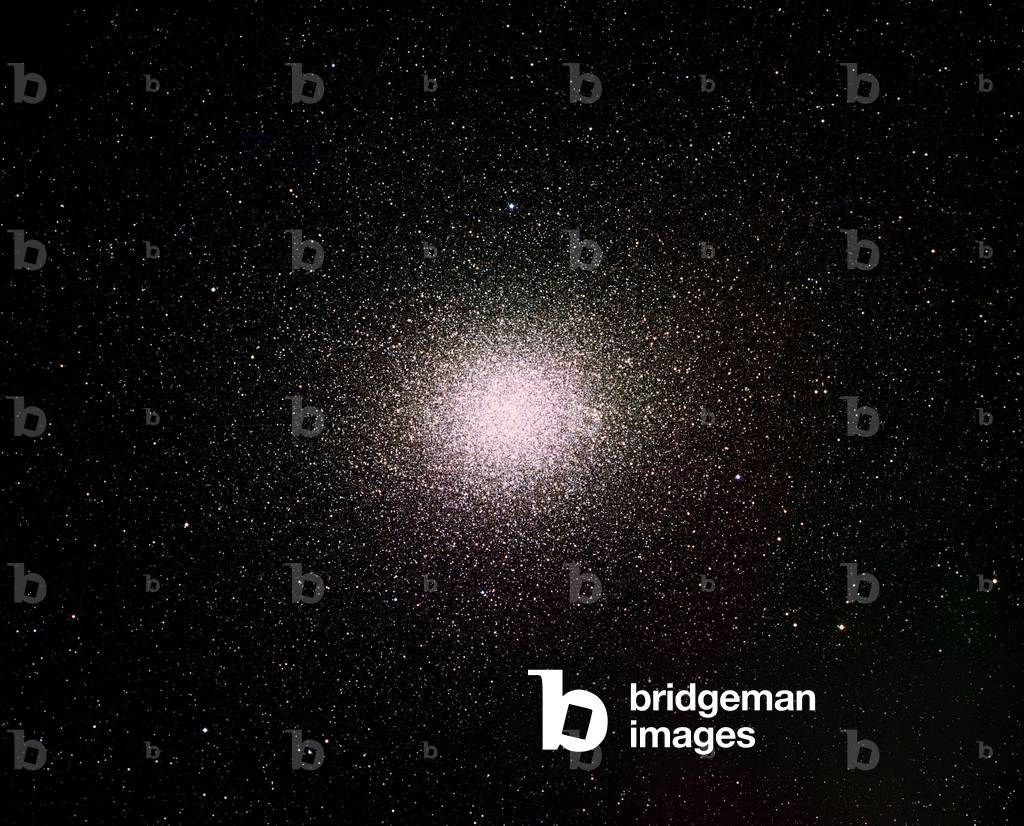
Omega Centauri, 2012 (digital photo)
Content Partner Restrictions
  • Not available to clients invoiced in the UK
Copyright
  • Copyright Applies
August 24, 2016: Artist's view of the surface of Planet Proxima b orbiting the red dwarf star Proxima of Centaur, the closest star to the solar system. The double star Alpha Centauri AB is visible at the top right of the star Proxima. Proxima b is a little more massive than the Earth, orbit in habitable area where the temperature would allow the presence of liquid water on its surface - This artist's impression shows a view of the surface of the planet Proxima b orbiting the red dwarf star Proxima Centauri, the closest star to the Solar System. The double star Alpha Centauri AB also appears in the image to the upper-right of Proxima itself. Proxima b is a little more massive than the Earth and orbits in the habitable zone around Proxima Centauri, where the temperature is suitable for liquid water to exist on its surface
Artist's impression of the Exoplanète Proxima Centauri
Special Instructions
  • No additional copyright fee required
Alpha Centauri - Alpha Centauri - Alpha Centauri is a double star (Alpha Centauri A and B) near the Sun, 4.36 years - light. These two stars are relatively similar to the Sun. Alpha Centauri is a binary star (Alpha Centauri A and B) located at a distance of 4.36 light - years, or 41 million km, in the direction of the southern constellation Centaurus (The Centaur). Alpha Centauri A and Alpha Centauri B, are rather similar to the Sun; their stellar spectral types are “” G2V”” and “” K1V””, respectively. Alpha Centauri A and B orbit each other at a distance of about 3600 million km, or somewhat more than the distance of planet Uranus from the Sun. The orbital period is almost exactly 80 years
August 24, 2016: Artist's view of Planet Proxima b orbiting the red dwarf star Proxima of Centaur, the closest star to the solar system. The double star Alpha Centauri AB is visible between the planet and the star Proxima. Proxima b is a little more massive than Earth, orbit in habitable area or temperature would allow the presence of liquid water on its surface - This artist's impression shows the planet Proxima b orbiting the red dwarf star Proxima Centauri, the closest star to the Solar System. The double star Alpha Centauri AB also appears in the image between the planet and Proxima itself. Proxima b is a little more massive than the Earth and orbits in the habitable zone around Proxima Centauri, where the temperature is suitable for liquid water to exist on its surface
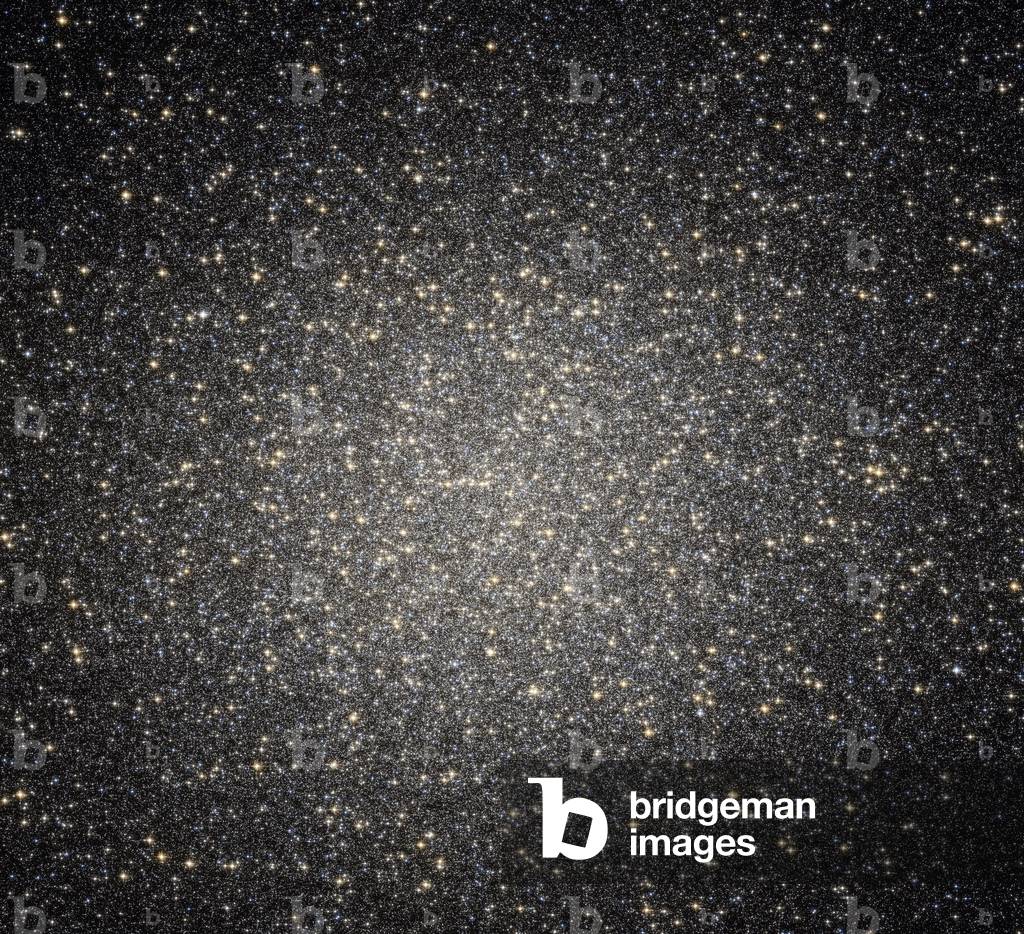
The Magnificent Omega Centauri, 2014 (digital photo)
Content Partner Restrictions
  • Not available to clients invoiced in the UK
Copyright
  • Copyright Applies
The constellation Centaurus, featuring Alpha Centauri, 1603
Content Partner Restrictions
  • Not available to clients invoiced in the UK
August 24, 2016: The three stars that make up the Centaur Alpha system are the closest stars to the Sun. Proxima du Centaur is located at a distance of 4.22 light years from the Sun but is invisible to the naked eye. Alpha Centauri A and B are a little further away, 4.36 light years from the Sun. These two stars are relatively similar to the Sun. Although Proxima of Centauri is distant from the Alpha couple of Centauri, its movement seems to link it to this system and is sometimes called Alpha Centauri C - This image of the sky around the bright star Alpha Centauri AB also shows the much fainter red dwarf star, Proxima Centauri, the closest star to the Solar System. The picture was created from pictures forming part of the Digitized Sky Survey 2. The blue halo around Alpha Centauri AB is an artifact of the photographic process, the star is really pale yellow in colour like the Sun
The three stars that make up the Centaur Alpha System are the closest stars to the Sun. The image on the left shows the double alpha star of the Centauri (Alpha Centauri A and B) overexposed to the red dwarf star Proxima of the Centaurus (indicated by the arrow). Proxima du Centaur is located at a distance of 4.22 years - light from the Sun but is invisible to the naked eye. Alpha Centauri A and B are a little further away, 4.36 years from the Sun. These two stars are relatively similar to the Sun. Although Proxima of Centauri is distant from the Alpha couple of Centauri, its movement seems to link it to this system and is sometimes called Alpha Centauri C. Location of the Alpha Centauri triple stellar system in the sky. The brighter stars (Alpha Centauri A and B) are strongly overexposed, with the outlying member, Proxima lying approx. 2.2* to the south - west (arrow). Smaller areas around the stars are shown in the inserts to the right. The photo has been reproduced from a blue - sensitive photographic plate obtained by the ESO 1 - m Schmidt Telescope, a wide - angle telescope at the La Silla observatory in Chile that has now been decommissioned. The Alpha Centauri triple stellar system is our closest neighbour in space. It is located at a distance of 4.36 light - years, or 41 million km, in the direction of the southern constellation Centaurus (The Centaur). The two main stars in the system, Alpha Centauri A and Alpha Centauri B, are rather similar to the Sun; their stellar spectral types are “” G2V”” and “” K1V””, respectively. The third star is a “” red dwarf”” known as Proxima. It is much cooler and smaller than the other two. Alpha Centauri A and B orbit each other at a distance of about 3600 million km, or somewhat more than the distance of planet Uranus from the Sun. The orbital period is almost exactly 80 years. Their smaller companion, Proxima, is about
August 24, 2016: The three stars that make up the Centaur Alpha system are the closest stars to the Sun. Proxima du Centaur is located at a distance of 4.22 light years from the Sun but is invisible to the naked eye. Alpha Centauri A and B are a little further away, 4.36 light years from the Sun. These two stars are relatively similar to the Sun. Although Proxima of Centauri is distant from the Alpha couple of Centauri, its movement seems to link it to this system and is sometimes called Alpha Centauri C - This image of the sky around the bright star Alpha Centauri AB also shows the much fainter red dwarf star, Proxima Centauri, the closest star to the Solar System. The picture was created from pictures forming part of the Digitized Sky Survey 2. The blue halo around Alpha Centauri AB is an artifact of the photographic process, the star is really pale yellow in colour like the Sun. Proxima Centauri appears as a faint red star towards the lower-right of the picture
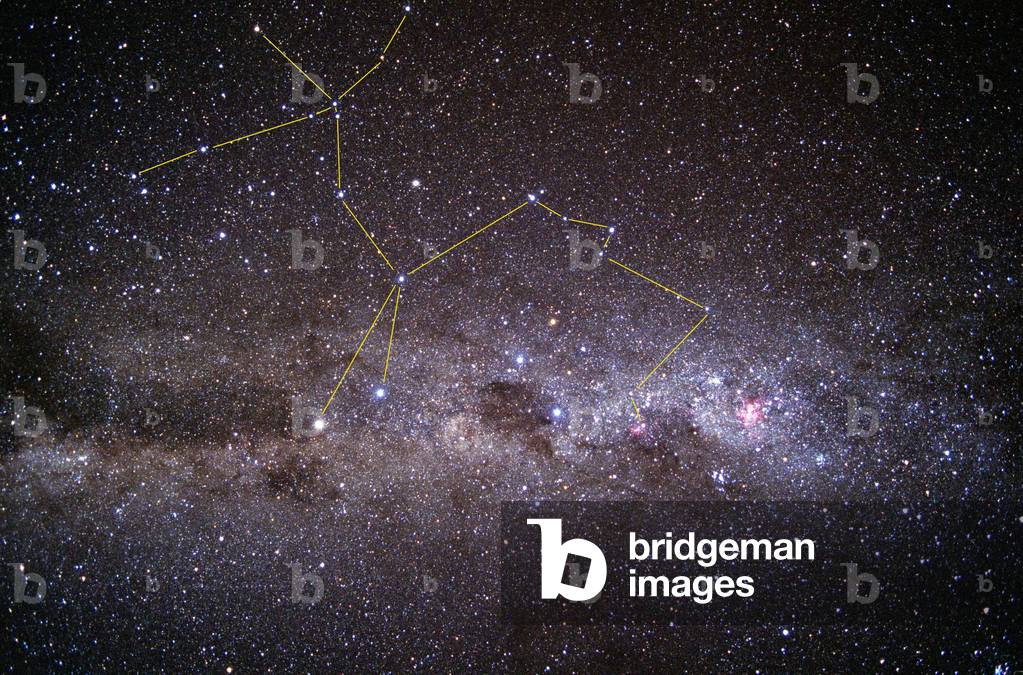
Exoplanete Alpha Centauri Bb - Artist's impression of the planet orbiting Alpha Centauri B: Artist's view of the planet Alpha Centauri Bb, also known as Gliese 559 Bb. Discovered in 2012 its existence is questioned. It would be orbiting the dwarf star Alpha Centauri B at a distance of 4.37 light years in the constellation Centauri. The planet is not in the habitable zone of the star, as it orbits far too close to the star. Alpha Centauri Bb was a proposed exoplanet orbiting the K-type main-sequence star Alpha Centauri B, located 4.37 light-years from Earth in the southern constellation of Centaurus. Its existence was announced in October 2012 but in October 2015, a scientific paper disproved the existence of the planet. Alpha Centauri B dominates the sky. Just above it to the right is a very bright star: Alpha Centauri A. And above that to the right is another star: our sun
Interstellar ship - Artist's view - Interstellar ship diagram: Illustration of an interstellar ship 15 km long, capable of reaching Alpha from the Centaurus. A starship 10 miles long, capable of reaching the nearest star, Alpha Centauri, is depicted in this illustration. To eliminate the structural stress and high-velocity ablation of interstellar gas and dust during the deceleration phase, the ship is designed so no turnaround maneuver is necessary. The central torus is the inhabited “” seed”” of this vessel, rotating at 1 revolution per minute to create centrifugal gravity for the travelers.
Constellation of the Southern Cross - The Southern Cross - The Southern Cross and the Alpha and Beta stars of Centaurus. Crux, the Southern Cross, is the smallest constellation in the sky yet one of the most distinctive, at least to those of us who live in the southern hemisphere. It was once part of Centaurus, where the bright stars Acrux and Mimosa could easly be imagined as the rear hooves of the rearing mythical centaur. However, when Christian sailors began to explore southwards in the 16th century, this memorable asterism took on a new significance. The cross appears on the national flags of several southern hemisphere countries, including Australia, though it can be seen on the southern horizon from the tropic of Cancer, 23.5 degrees north of the equator. Along with the Southern Cross is a very distinctive dark shape known as the Coalsack, much used by southern hemisphere astronomers as an indicator of a dark sky, especially if the sixth magnitude star embedded in it is visible. The long axis of the southern cross points towards the south celestial pole, so the cross itself acts as a very convenient circumpolar clock, compasset and calendar
Centaurus Omega globular cluster - Omega globular cluster in Centaurus - Located 17,000 years ago - light from Earth in the southern constellation of Centaurus, Omega Centaurus (NGC 5139) contains several million stars and is one of the oldest objects in our galaxy. Omega Centauri (NGC 5139) is located about 17,000 light years from Earth in the constellation of Centaurus and contains several million stars. It is the biggest globular cluster in our galaxy and also one of the oldest objects of our galaxy
Centaur Omega globular cluster - The globular cluster Omega Centauri NGC 5139 - Located 17,000 years ago - light from Earth in the southern constellation of Centaur, Omega Centauri contains several million stars and is one of the most ancient objects in our galaxy. NGC 5139 is the largest and most spectacular globular cluster in the entire night sky, and the largest in our galaxy. At 36 arc minutes, Omega Centauri is larger than the full moon in apparent size. It is located about 17,000 light years away from our Sun and at 4th magnitude, is easily visible without a telescope as a “” star”” in the constellation of Centaurus. It contains about 2 million stars, almost twice as many as M13. The stars in globular clusters are generally older, redder and less massive than our Sun
Motion of the Star Proxima of Centauri - The proper motion of Proxima Centauri - Proxima of Centauri (in the center of the image) is the closest star to the Sun, located at a distance of 4.2 years - light. This star is a red dwarf, 10,000 times less luminous than our Sun, and is invisible to the naked eye. Its proximity makes it move quickly ahead of the other stars. This composite image made from three images taken in 1976 (blue), 1982 (red) and 1993 (green) shows the shift of the star in 17 years. Image obtained from the 1.2m Schmidt UK telescope of Siding Spring. Proxima Centauri is the nearest known star to the sun, at a distance of about 4.2 light years. It is an intrinsically faint red star, more than ten magnitudes (ten thousand times) fainter than the Sun. It is also much cooler, with a surface temperature of about 3100 C. Its visual (apparent) magnitude is eleven, so it is only visible with a good telescope, and only then from southern latitudes. Proxima is about one - tenth the mass of the sun, which accounts for its low surface temperature. It is possibly an outlying member of the triple alpha Centauri system just a few light days closer to us than the other, much brighter stars in the group. Because it is so close Proxima has a large 'proper motion', moving against the multitudes of background stars by 3.85 arc seconds a year, enough to carry it the width of the full Moon in about 500 years. The monochrome plates from which this 3 - colour picture were made were taken in 1976 (blue), 1982 (red) and 1993 (green) showing its movement over 17 years. The faint reddish halo around the star is an artifact of the infrared plate
Lotta di centauri, c. 1909, Giorgio de Chirico (oil on canvas)
Image Restrictions
  • Bridgeman Images only provides access to this image. Consent to license this image for any usage that includes Italy as a territory may be required according to the Italian Cultural Heritage Code. In such cases, an additional fee may apply, with the Ministry of Culture charging a potential minimum of €100. Any such clearance must be obtained in advance from the institution where the work is kept. Please contact us for further assistance.
Copyright
  • Copyright Applies
Centaur Omega globular cluster - The globular cluster Omega Centauri, NGC 5139 - Located 17,000 years ago - light from Earth in the southern constellation of Centaur, Omega Centauri contains several million stars and is one of the most ancient objects in our galaxy. Image obtained by the VST (VLT Survey Telescope) in Chile. The second released VST (VLT Survey Telescope) image may be the best portrait of the globular star cluster Omega Centauri ever made. Omega Centauri, in the constellation of Centaurus (The Centaur), is the largest globular cluster in the sky, but the very wide field of view of VST and its powerful camera Omegaam can include even the faint outer regions of this spectacular object. This view includes about 300,000 stars
Centaur Omega globular cluster - NGC 5139 Omega Centauri globular cluster - Located 17,000 years ago - light from Earth in the southern constellation of Centaur, Omega Centaur contains several million stars and is one of the older objects in our galaxy. The globular cluster Omega Centauri - - with as many as ten million stars - - is seen in all its splendour in this image captured with the WFI camera from Eso's La Silla Observatory. The image shows only the central part of the cluster - - about the size of the full moon on the sky (half a degree). North is up, East is to the left. This colour image is a composite of B, V and I filtered images. Note that because WFI is equipped with a mosaic detector, there are two small gaps in the image which were filled with lower quality data from the Digitized Sky Survey. Containing millions of stars, this globular cluster is located roughly 17,000 light - years from Earth in the constellation of Centaurus. Omega Centauri is about 150 light - years across; it is the most massive of all the Milky Way's globular clusters and thought to be around 12 billion years old
Centaur Omega globular cluster - NGC 5139 Omega Centauri globular cluster - Located 17,000 years ago - light from Earth in the southern constellation of Centaur, Omega Centaur contains several million stars and is one of the oldest objects in our galaxy. One of the richest in the Milky Way, Omega Cen contains several million stars, but unlike its southern rival, 47 Tucanae, it has a relatively open structure. Like most galactic globular clusters, the stellar population of Omega Cen identifies it as one of the oldest objects associated with the Milky Way, indeed its age is comparable to that of the Universe itself. The cluster contains a large number of RR Lyrae variable stars which enable its distance to be determined as 17,000 light years
Stars - The Southern Cross - Alpha and Beta of Centaur - Southern Cross and pointers - Star trails - Because of the Earth's rotation, leaving the camera open, the stars advance towards the background of the sky. During the installation, gradually changing the focal length of the lens, the stars spread out and reveal their true color. Here it is the constellation of the Southern Cross (center right) and the Centaurus Alpha and Beta stars, in the center below, that are photographed in this way during a 30-minute pose. Star images are point sources of light of widely varying intensity. Normally, no single photographic exposure on colour film can capture their subtle colours. Those stars whose intensity is just right for their colour to be recorded appear insignificant on the photograph, while anything brighter is overexposed and washed out. By changing the focus of the lens during a star trail exposure, star images are spread out over the film surface. This effectively changes the amount of light in each star image as well as making it bigger. If this is done in a series of steps, as here, sooner or later all the star images will be recorded with an exposure that will reveal the star colours. Here we see the stars of the Southern Cross and pointers (alpha and beta Cen) recorded in an exposure of about 30 minutes, during which the lens focus was moved from infinity to about 1m in about 15 equally spaced steps
Centaur Omega globular cluster - NGC 5139 Omega Centauri globular cluster - Visible to the naked eye in the southern hemisphere, Centaurus Omega is the most massive globular cluster in the galaxy. About 17,000 light years ago, millions of stars nearly 12 billion years old are concentrated here. 4-hour installation with a telescope 40 cm diameter. NGC 5139 is the largest and most spectacular globular cluster in the entire night sky, and the largest in our galaxy. At 36 arc minutes, Omega Centauri is larger than the full moon in apparent size. It is located about 17,000 light years away from our Sun and at 4th magnitude, is easily visible without a telescope as a “” star”” in the constellation of Centaurus. Total Exposure 4 Hours with a 14.5”” RCOS telescope
Stars - The Southern Cross - Alpha and Beta of Centaur - Southern Cross and pointers - Star trails - Because of the Earth's rotation, leaving the camera open, the stars advance towards the background of the sky. During the installation, gradually changing the focal length of the lens, the stars spread out and reveal their true color. Here, the constellation of the Southern Cross and the Alpha and Beta stars of the Centaurus, on the left, are photographed this way during a 40mn pose. Star images are point sources of light of widely varying intensity. Normally, no single photographic exposure on colour film can capture their subtle colours. Those stars whose intensity is just right for their colour to be recorded appear insignificant on the photograph, while anything brighter is overexposed and washed out. By changing the focus of the lens during a star trail exposure, star images are spread out over the film surface. This effectively changes the amount of light in each star image as well as making it bigger. If this is done in a series of steps, as here, sooner or later all the star images will be recorded with an exposure that will reveal the star colours. Here we see the stars of the Southern Cross and pointers (alpha and beta Cen) recorded in an exposure of about 40 minutes, during which the lens focus was moved from infinity to about 2m in six steps five minutes apart
Proxima Star of Centauri - Proxima Centauri - Proxima of Centaur (in the center of the image) is the closest star to the Sun, at a distance of 4.2 years - light. Image obtained from the 1.2m Schmidt UK telescope of Siding Spring. Proxima Centauri is the nearest known star to the sun, at a distance of about 4.2 light years. It is an intrinsically faint red star, more than ten magnitudes (ten thousand times) fainter than the Sun. It is also much cooler, with a surface temperature of about 3100 C. Its visual (apparent) magnitude is eleven, so it is only visible with a good telescope, and only then from southern latitudes. Proxima is about one - tenth the mass of the sun, which accounts for its low surface temperature. It is possibly an outlying member of the triple alpha Centauri system just a few light days closer to us than the other, much brighter stars in the group
Constellation of the Southern Cross - Constellation Crux. The Southern Cross - The Southern Cross with Beta and Alpha Centaurus left. Image obtained from New Zealand. 'Crux', being Latin for 'cross', commonly known as the' Southern Cross' (in contrast to the Cygnus (constellation) Northern Cross), is the smallest of the 88 modern constellations, but nevertheless one of the most distinctive. It is surrounded on three sides by the constellation Centaurus while to the south lies the 'Fly' (Musca). Crux was originally thought of by ancient Greeks as part of Centaurus, but was defined as a separate asterism in the 16th Century after Amerigo Vespucci's expedition to South America in 1501. Vespucci mapped the two stars, Alpha Centauri and Beta Centauri as well as the stars of the Crux. Although these stars were known to the ancient Greeks, gradual precession had lowered them below the European skyline so that they were forgotten
Red Dwarf Star Proxima of Centauri - Proxima Centauri in X - Ray - Proxima of Centaur (in the center of the image) is the closest star to the Sun, at a distance of 4.2 years - light. It belongs to the triple Alpha star system of the Centaurus being the least bright star of this system; it is a red dwarf star. X-ray image obtained by the Chandra space telescope. Chandra and XMM - Newton observations of the red dwarf star Proxima Centauri have shown that its surface is in a state of turmoil. Flares, or explosive outbursts, occur almost continually. This behavior can be traced to Proxima Centauri's low mass, about a tenth that of the Sun. In the cores of low mass stars, nuclear fusion reactions that convert hydrogen to helium proceed very slowly, and create a turbulent, convective motion throughout their interiors. This motion stores up magnetic energy which is often released explosively in the star's upper atmosphere where it produces flares in X - rays and other forms of light. The same process produces X - rays on the Sun, but the magnetic energy is released in a less explosive manner through heating loops of gas, with occasional flares. The difference is due to the size of the convection zone, which in a more massive star such as the Sun, is smaller and closer to its surface. Red dwarfs are the most common type of star. They have masses between about 8% and 50% of the mass of the Sun. Though they are much dimmer than the Sun, they will shine for much longer - trillions of years in the case of Proxima Centauri, compared to the estimated 10 billion - year lifetime of the Sun. X - rays from Proxima Centauri are consistent with a point - like source. The extended X - ray glow is an instrumental effect. The nature of the two dots above the image is unknown - they could be background sources
Constellation of Lupus and Norma - Constellation of Lupus and Norma - Also visible are the constellations of the Compas, the Southern Cross, and much of the Centaur. At the top of the picture, the bright spot is the planet Jupiter. Lupus, (the Wolf), was regarded by the Greeks and Romans as an unspecified wild animal, which the Centaur is carrying as a sacrifice the gods. The identification of Lupus as a wolf seems to have been made in relatively recent times. Both Lupus and Norma are in the rich starfields of the southern Milky Way, easily seen between Antares and alpha and beta Centaurii. The brightest object in this image is Jupiter, on the ecliptic at the top of the frame. Norma, (originally Norma and Regula, the builder's level and set square) is an insignificant scattering of stars compared to Lupus and Centaurus. Like the adjacent Circinus (the Drawing Compasses), it was invented by Nicolas de Lacaille, who charted the southern sky from South Africa in 1751 - 2 and felt obliged to fill vacant spaces in the sky with Enlightenment - inspired instruments of science
Centaur Omega globular cluster - The globular cluster Omega Centauri NGC 5139 - Located 17,000 years ago - light from Earth in the southern constellation of Centaur, Omega Centauri contains several million stars and is one of the oldest objects in our galaxy. To the unaided eye this glorious globular cluster has the appearance of a hazy star and was frequently confused with Halley's comet when it drifted through Centaurus in 1986. One of the richest in the Milky Way, Omega Cen contains several million stars, but unlike its southern rival, 47 Tucanae, it has a relatively open structure. Like most galactic globular clusters, the stellar population of Omega Cen identifies it as one of the oldest objects associated with the Milky Way, indeed its age is comparable to that of the Universe itself. The cluster contains a large number of RR Lyrae variable stars which enable its distance to be determined as 17,000 light years
Constellation of Centaurus - Constellation of Centaurus - Also visible are the constellations of the Compas, the Southern Cross, the Rulle and the Wolf. Centaurus (the Centaur), is in one of the richest parts of the southern sky. At over 1000 square degrees it is the ninth largest constellation. It represents a centaur in Greek mythology, a half - man half - horse creature (Sagittarius is another). The learned centaur is the legendary inventor of the main constellations. Apart from a sparkling scattering of stars, the constellation also embraces one of the finest globular clusters, Omega Centauri and a few degrees north of it NGC 5128, the radio galaxy Centaurus A. Close to a Centaurus, the brightest star in the picture and, with ss Centaurus, one of the Pointers to the Southern Cross, is Proxima Cen. This faint star is not seen in this image, but at 4 light years distant is the closest star to the Sun. Norma, (originally Norma and Regula, the builder's level and set square) is an insignificant construction compared to the grandeur of Centaurus. Like the adjacent Circinus (the Drawing Compasses), it was invented by Nicolas de Lacaille, who charted the southern sky from South Africa in 1751 - 2 and felt obliged to fill vacant spaces in the sky with Enlightenment - inspired instruments of science. Circinus, Crux, and Lupus are also visible
Centaur Omega globular cluster - NGC 5139 Omega Centauri globular cluster - Visible to the naked eye in the southern hemisphere, Centaurus Omega is the most massive globular cluster in the galaxy. About 17,000 light years ago, millions of stars nearly 12 billion years old are concentrated here. This image obtained by the Spitzer space telescope reveals in yellow and red the big red stars, whose dust radiates infrared, and in blue the smaller and less evoluted stars. Omega Centauri is the biggest and brightest of the more than 150 similar objects, called globular clusters, that orbit around the outside of our Milky Way galaxy. Stargazers at southern latitudes can spot the stellar gem with the naked eye in the constellation Centaurus. While the visible - light observations highlight the cluster's millions of jam - packed stars, Spitzer's infrared eyes reveal the dustier, more evolved stars tossed throughout the region. Globular clusters are some of the oldest objects in our universe. Their stars are more than 12 billion years old, and, in most cases, formed all at once when the universe was just a toddler. Omega Centauri is unusual in that its stars are of different ages and possess varying levels of metals, or elements heavier than boron. Astronomers say this points to a different origin for Omega Centauri than other globular clusters: they think it might be the core of a dwarf galaxy that was ripped apart and absorbed by our Milky Way long ago. In this picture of Omega Centauri, the red - and yellow - colored dots represent the stars revealed by Spitzer. These are the more evolved, larger, dustier stars, called red giants. The stars colored blue are less evolved, like our own sun, and were captured by both Spitzer's infrared eyes and in visible light by the National Science Foundation's Blanco 4 - meter telescope at Cerro Tololo Inter - American Observatory in Chile. Some of the red spots in the picture are distant ga
Stars in the globular cluster Omega Centauri - Omega Centauri seen by Hubble space telescope - Located 16,000 years ago - light from Earth in the southern constellation of Centaur, Omega Centauri contains several million stars and is one of the most ancient objects in our galaxy. This image obtained by the Hubble Space Telescope in July 2009 shows only a small part of this cluster, where 100,000 stars are visible. Hubble Space Telescope snapped this panoramic view of a colorful assortment of 100,000 stars residing in the crowded core of a giant star cluster. The image reveals a small region inside the massive globular cluster Omega Centauri, which boasts nearly 10 million stars. The stars in Omega Centauri are between 10 billion and 12 billion years old. The cluster lies about 16,000 light - years from Earth. This is one of the first images taken by the new Wide Field Camera 3 (WFC3), installed aboard Hubble in May 2009, during Servicing Mission 4. The majority of the stars in the image are yellow - white, like our Sun. These are adult stars that are shining by hydrogen fusion. Towards the end of their normal lives, the stars become cooler and larger. These late - life stars are the orange dots in the image. Even later in their life cycles, the stars continue to cool down and expand in size, becoming red giants. These bright red stars swell to many times larger than our Sun's size and begin to shed their gaseous envelopes. After ejecting most of their mass and exhausting much of their hydrogen fuel, the stars appear brilliant blue. Only a thin layer of material covers their super - hot cores. These stars are desperately trying to extend their lives by fusing helium in their cores. At this stage, they emit much of their light at ultraviolet wavelengths. When the helium runs out, the stars reach the end of their lives. Only their burned - out cores remain, and they are called white dwarfs (the faint blue dots in the image). White dwarfs are no
Constellations of the Fly and the Southern Cross - Constellations of Musca and the Southern cross - The Southern Cross and the Alpha and Beta Stars of Centaur. Below, the constellation of the Fly. In contrast to adjacent Crux, Musca (The Fly) is a much less obvious, less distinguished and less useful constellation that first appeared in Johann Bayer's 1603 Uranometria. It is one of a dozen created by the Dutch explorers/navigators Pieter Dirkszoon Keyser and Frederick de Houtman on their voyages into the south seas in the late 16th century
Earth-type exoplanete around Centauri Proxima - Artist's impression of the planet orbiting Proxima Centauri: Artist's view of the surface of the planet Proxima b orbiting around the red dwarf star Proxima of Centauri, the closest star to the solar system. Proxima b is slightly more massive than the Earth, orbit in habitable areas where the temperature would allow the presence of liquid water on its surface. This artist's impression shows a view of the surface of the planet Proxima b orbiting the red dwarf star Proxima Centauri, the closest star to the Solar System. Proxima b is a little more massive than the Earth and orbits in the habitable zone around Proxima Centauri, where the temperature is suitable for liquid water to exist on its surface
Constellation of Lupus and Norma - Constellation of Lupus and Norma - Also visible are the constellations of the Compas, the Southern Cross, and much of the Centaur. At the top of the picture, the bright spot is the planet Jupiter. Lupus, (the Wolf), was regarded by the Greeks and Romans as an unspecified wild animal, which the Centaur is carrying as a sacrifice the gods. The identification of Lupus as a wolf seems to have been made in relatively recent times. Both Lupus and Norma are in the rich starfields of the southern Milky Way, easily seen between Antares and alpha and beta Centaurii. The brightest object in this image is Jupiter, on the ecliptic at the top of the frame. Norma, (originally Norma and Regula, the builder's level and set square) is an insignificant scattering of stars compared to Lupus and Centaurus. Like the adjacent Circinus (the Drawing Compasses), it was invented by Nicolas de Lacaille, who charted the southern sky from South Africa in 1751 - 2 and felt obliged to fill vacant spaces in the sky with Enlightenment - inspired instruments of science
Neighbouring of our solar system - Illustration showing the position of the Sun in our galaxy. Illustration showing our Sun and nearest stars in our galaxy
Content Partner Restrictions
  • Only available to clients invoiced in Balkans;Only available to clients invoiced in Europe;Only available to clients invoiced in Norway;Only available to clients invoiced in Switzerland
Special Instructions
  • No additional copyright fee required
Constellation of Centaurus - Constellation of Centaurus - Also visible are the constellations of the Compas, the Southern Cross, the Rulle and the Wolf. Centaurus (the Centaur), is in one of the richest parts of the southern sky. At over 1000 square degrees it is the ninth largest constellation. It represents a centaur in Greek mythology, a half - man half - horse creature (Sagittarius is another). The learned centaur is the legendary inventor of the main constellations. Apart from a sparkling scattering of stars, the constellation also embraces one of the finest globular clusters, Omega Centauri and a few degrees north of it NGC 5128, the radio galaxy Centaurus A. Close to a Centaurus, the brightest star in the picture and, with ss Centaurus, one of the Pointers to the Southern Cross, is Proxima Cen. This faint star is not seen in this image, but at 4 light years distant is the closest star to the Sun. Norma, (originally Norma and Regula, the builder's level and set square) is an insignificant construction compared to the grandeur of Centaurus. Like the adjacent Circinus (the Drawing Compasses), it was invented by Nicolas de Lacaille, who charted the southern sky from South Africa in 1751 - 2 and felt obliged to fill vacant spaces in the sky with Enlightenment - inspired instruments of science. Circinus, Crux, and Lupus are also visible
Constellation of Circinus and southern constellations - Constellation of Circinus and southern constellations - The Southern Triangle constellations, the Fly, and the Southern Cross are also visible. Circinus (the drawing Comppass) is an inconspicuous constellation introduced by the French astronomer Nicolas Louis de Lacaille, who observed the southern sky from the Cape of Good Hope between 1750 and 1754. He named 14 constellations, many of them associated with science or navigation, such as Microscopium and Telescopium, Octans the Octant and Antlia Pneumatica, the air pump. Circinus contains no bright or named stars and covers 93 square degrees, making it the fourth - smallest. Triangulum Australe is the southern hemisphere counterpart of Triangulum. It is a bigger constellation and contains brighter stars than Triangulum and it never sets for most of Australia. Its brightest star is named Atria (for alpha Trianguli Australis), in the manner of Acrux in the Southern Cross. It is easily seen near a and ss Centaurus. Crux and Musca are also visible in this image
Constellations of the Fly and the Southern Cross - Constellations of Musca and the Southern cross - The Southern Cross and the Alpha and Beta Stars of Centaur. Below, the constellation of the Fly. In contrast to adjacent Crux, Musca (The Fly) is a much less obvious, less distinguished and less useful constellation that first appeared in Johann Bayer's 1603 Uranometria. It is one of a dozen created by the Dutch explorers/navigators Pieter Dirkszoon Keyser and Frederick de Houtman on their voyages into the south seas in the late 16th century
Earth-type exoplanete around Centauri Proxima - Artist's impression of the planet orbiting Proxima Centauri: Artist's view of the surface of the planet Proxima b orbiting around the red dwarf star Proxima of Centauri, the closest star to the solar system. Proxima b is slightly more massive than the Earth, orbit in habitable areas where the temperature would allow the presence of liquid water on its surface. This artist's impression shows a view of the surface of the planet Proxima b orbiting the red dwarf star Proxima Centauri, the closest star to the Solar System. Proxima b is a little more massive than the Earth and orbits in the habitable zone around Proxima Centauri, where the temperature is suitable for liquid water to exist on its surface
The Southern Cross and the Coal Bag - Constellation of the Southern Cross - Alpha of Centaur is the brilliant star, which stands at the edge of the trees, at the bottom of the center of the photo
The first light of the dawn on the southern sky of the Reunion - The southern sky, from the nebula of the Carene to the Alpha of the Centaur, from the Observatory of Makes to the Reunion in the early days
The Southern Milky Way and south celestial pole - The Octant constellation houses the southern Celestial pole. See annotee image a - cst98 - 00005 to identify the different constellations present in the image. This part of the sky was mostly uncharted by Europeans until the 17th and 18th centuries, so many of the constellations in the southern (lower) half of the image are relatively modern constructions without mythlogical connotations. Octans, the Octant (a forerunner of the sextant) is an Enlightenment - period instrument whose outline was constructed on the sky by the vivid imagination of the Abbe Lacaille. The constellation is quite large but totally undistinguished. Its only notable feature is the South Celestial Pole, with is marked (within a degree or so) by the faint star s Octantis. Apus, the Bird of Paradise, first appeared in the star charts of the German astronomer Johann Bayer in 1603. It contains no named stars. Chameleon, a type of lizard. The stars here are even fainter than those in Apus. Mensa, the constellation was invented by de Lacaille to commemorate his sojourn at the Cape of Good Hope in the 1750s. The original name was Mons Mensa, Latin for Table Mountain. Its northern border crosses part of the Large Magellanic Cloud, possibly reminding Lacaille of the recurrent cloud over the mountain as seen from Cape Town. Musca, the Fly, is another undistinguished constellation that first appeared on Bayer's star charts in 1603
The Southern Milky Way and south celestial pole - The Southern Milky Way and south celestial pole - The Octant constellation houses the south celeste pole (mark of a cross) This part of the sky was mostly uncharted by Europeans until the 17th and 18th centuries, so many of the constellations in the southern (lower) half of the image are relatively modern constructions without mythlogical connotations. Octans, the Octant (a forerunner of the sextant) is an Enlightenment - period instrument whose outline was constructed on the sky by the vivid imagination of the Abbe Lacaille. The constellation is quite large but totally undistinguished. Its only notable feature is the South Celestial Pole, with is marked (within a degree or so) by the faint star s Octantis. Apus, the Bird of Paradise, first appeared in the star charts of the German astronomer Johann Bayer in 1603. It contains no named stars. Chameleon, a type of lizard. The stars here are even fainter than those in Apus. Mensa, the constellation was invented by de Lacaille to commemorate his sojourn at the Cape of Good Hope in the 1750s. The original name was Mons Mensa, Latin for Table Mountain. Its northern border crosses part of the Large Magellanic Cloud, possibly reminding Lacaille of the recurrent cloud over the mountain as seen from Cape Town. Musca, the Fly, is another undistinguished constellation that first appeared on Bayer's star charts in 1603
Interstellar ship - Artist's view - starship arrives alpha centauri - An interstellar ship arrives in orbit around an exoplanet, after a 50-year journey to the Alpha star of the Centaurus. The bright star under the exoplanet is our Sun, a distance of 4.3 years of light. A habitat two miles across arrives to orbit a hypothetical earthlike planet orbiting the star Alpha Centauri after a 50 - year voyage. The discarded braking stage of the giant starship drifts in the far background. The bright star below the planet is our sun, 4.3 light years away
Centauri Omega globular cluster - The globular cluster Omega Centauri, NGC 5139 - Visible to the naked eye in the southern hemisphere, Centaurus Omega is the most massive globular cluster in the galaxy. About 17,000 light years ago, millions of stars nearly 12 billion years old are concentrated here. NGC 5139 is the largest and most spectacular globular cluster in the entire night sky, and the largest in our galaxy. At 36 arc minutes, Omega Centauri is larger than the full moon in apparent size. It is located about 17,000 light years away from our Sun and at 4th magnitude, is easily visible without a telescope as a “” star”” in the constellation of Centaurus. It contains about 2 million stars, almost twice as many as M13. The stars in globular clusters are generally older, redder and less massive than our Sun
Centaur Omega globular cluster - NGC 5139, Omega Centauri globular cluster - Visible to the naked eye in the southern hemisphere, Centaurus Omega is the most massive globular cluster in the galaxy. About 17,000 light years ago, millions of stars nearly 12 billion years old are concentrated here. This image obtained by the ACS camera of the Hubble space telescope and observations made by the southern Gemini telescope seem to indicate the presence of a black hole in the center of the cluster. NGC 5139 is the largest and most spectacular globular cluster in the entire night sky, and the largest in our galaxy. At 36 arc minutes, Omega Centauri is larger than the full moon in apparent size. It is located about 17,000 light years away from our Sun and at 4th magnitude, is easily visible without a telescope as a “” star”” in the constellation of Centaurus. It contains about 2 million stars, almost twice as many as M13. This composite image obtained with the Advanced Camera for Surveys onboard the NASA/ESA Hubble Space Telescope and data obtained by the GMOS spectrograph on the Gemini South telescope in Chile show that Omega Centauri appears to harbour an elusive intermediate - mass black hole in its centre
Nebulae IC 2948 and 2944 in Centaur - The Running Chicken Nebula - Nebula IC 2948 is a vast nebula located about 6000 light years from Earth in the southern constellation of Centaur. It is associated with the cluster of stars IC 2944 near which Bok's blood cells are visible. A Bok's blood cell is a dark interstellar cloud of gases and dust that absorb light. If it condenses enough, it gives birth to new stars. This image from the Wide Field Imager on the MPG/ESO 2.2 - metre telescope shows the Running Chicken Nebula, a cloud of gas and newborn stars that lies around 6500 light - years away from us in the constellation of Centaurus (The Centaur). Officially called IC 2944, or the Lambda Centauri Nebula, its strange nickname comes from the bird - like shape of its brightest region. The star Lambda Centauri itself lies just outside the field of view
Centaurs and satyrs
Content Partner Restrictions
  • Not available to clients invoiced in Italy
Centaurs and satyrs
Content Partner Restrictions
  • Not available to clients invoiced in Italy
Scene with centaurs and female satyrs
Content Partner Restrictions
  • Not available to clients invoiced in Italy
Scene with centaurs and female satyrs
Content Partner Restrictions
  • Not available to clients invoiced in Italy
Scene with centaurs and female satyrs
Content Partner Restrictions
  • Not available to clients invoiced in Italy
Scene with centaurs and female satyrs
Content Partner Restrictions
  • Not available to clients invoiced in Italy
Landscape with hunt of centaurs, 1836 (oil on canvas)
Image Restrictions
  • Bridgeman Images only provides access to this image. Consent to license this image for any usage that includes Italy as a territory may be required according to the Italian Cultural Heritage Code. In such cases, an additional fee may apply, with the Ministry of Culture charging a potential minimum of €100. Any such clearance must be obtained in advance from the institution where the work is kept. Please contact us for further assistance.
Interstellar nuclear propulsion ship - Artist's view - Starship nuclear pulsed - Artist view - A spaceship declines its nuclear propulsion mode as it passes the hidden face of the Moon. This huge ship is essentially food and fuel reserves could reach the nearest star, Alpha of the Centaur, in less than 50 years. Inspired by the Daedalus project. An interstellar ship ignites its nuclear pulse rocket engine over the farside of the moon. The 10 - kilometer - long vessel consists mostly of fuel and other consumables. After 10 years, it will have achieved 10 percent the speed of light, making possible a voyage to the nearest star, Alpha Centauri, in 50 years, when some of the original voyagers might still be alive
Constellation Constellation of Auriga - The brightest star in the constellation is Capella. Auriga (the Charioteer) is one of 48 constellations (out of the current 88) that were noted by Ptolemy (83 - 161 CE). It represents a chariot and its driver, a shepherd, with a goat or a sheep over his shoulder. The brightest star in Auriga is Capella, which is the ancient Greek word for little goat. It is a binary star 42 light years distant and is about 75 times more luminous than the Sun. Surprisingly, Capella is one of only two conspicuous stars whose combined light is similar to that of the Sun (the other is Alpha Centauri), so appears white on this photograph. Sun - like stars are common but are generally too faint to be seen at a distance which is why there are so few visible to the eye. Best seen in the early evening in February
Constellations of the Altar, the Rule and the Telescope - Constellations of Ara, Norma and Telescopium - The Altar, in the center of the image, is a constellation of the southern hemisphere located between the Centaur and the Wolf. Also visible are the constellations of the Rule (right) and the Telescope. Ara (the Altar) is an inconspicuous constellation in the southern sky. It was once considered part of Centaurus and Lupus but became separated when the 'modern' constellation Norma was created by Lacaille in the 1750s. It was recognised by the Greeks and Romans and was visualised as the altar on which the Centaur, Centaurus, was to sacrifice Lupus, the Wolf. This is reflected in its Latin name, Ara Centauri. The constellation is the 63rd largest in the sky and covers about 237 square degrees. The best - known objects in this field are some diffuse dusty nebulae and star clusters. The only named star in Ara is Karnot Mizbeach (ss Ara). Best seen in the early evening in July
Constellation Constellation of Auriga - The brightest star in the constellation is Capella. Auriga (the Charioteer) is one of 48 constellations (out of the current 88) that were noted by Ptolemy (83 - 161 CE). It represents a chariot and its driver, a shepherd, with a goat or a sheep over his shoulder. The brightest star in Auriga is Capella, which is the ancient Greek word for little goat. It is a binary star 42 light years distant and is about 75 times more luminous than the Sun. Surprisingly, Capella is one of only two conspicuous stars whose combined light is similar to that of the Sun (the other is Alpha Centauri), so appears white on this photograph. Sun - like stars are common but are generally too faint to be seen at a distance which is why there are so few visible to the eye. Best seen in the early evening in February
Constellation of the Altar - Constellations of Ara, Norma and Telescopium - The Altar is a constellation of the southern hemisphere located between the Centaur and the Wolf. Also visible are the constellations of the Rule and the Telescope. Ara (the Altar) is an inconspicuous constellation in the southern sky. It was once considered part of Centaurus and Lupus but became separated when the 'modern' constellation Norma was created by Lacaille in the 1750s. It was recognised by the Greeks and Romans and was visualised as the altar on which the Centaur, Centaurus, was to sacrifice Lupus, the Wolf. This is reflected in its Latin name, Ara Centauri. The constellation is the 63rd largest in the sky and covers about 237 square degrees. The best - known objects in this field are some diffuse dusty nebulae and star clusters. The only named star in Ara is Karnot Mizbeach (ss Ara). Best seen in the early evening in July
Constellation Constellation of Auriga - The brightest star in the constellation is Capella. Auriga (the Charioteer) is one of 48 constellations (out of the current 88) that were noted by Ptolemy (83 - 161 CE). It represents a chariot and its driver, a shepherd, with a goat or a sheep over his shoulder. The brightest star in Auriga is Capella, which is the ancient Greek word for little goat. It is a binary star 42 light years distant and is about 75 times more luminous than the Sun. Surprisingly, Capella is one of only two conspicuous stars whose combined light is similar to that of the Sun (the other is Alpha Centauri), so appears white on this photograph. Sun - like stars are common but are generally too faint to be seen at a distance which is why there are so few visible to the eye. Best seen in the early evening in February
Colliding galaxy Ngc 6745 in Lyra - Colliding galaxy NGC 6745 in Lyra - The spiral galaxy NGC 6745 is located about 206 million years away - light from Earth. This galaxy is double; a second galaxy at the bottom right of the image collides with it, causing star formation. Image obtained by the Hubble Space Telescope in 1996. A large spiral galaxy, with its nucleus still intact, peers at the smaller passing galaxy (almost out of the field of view at lower right). These galaxies did not merely interact gravitationally as they passed one another, they actually collided. When galaxies collide, the stars that normally comprise the major portion of the luminous mass of each of the two galaxies will almost never collide with each other but will pass rather freely between each other with little damage. This occurs because the physical size of individual stars is tiny compared to their typical separations, making the chance of physical encounter relatively small. In our own Milky Way galaxy, the space between our Sun and our nearest stellar neighbor, Proxima Centauri (part of the Alpha Centauri triple system), is a vast 4.3 light - years. However, the situation is quite different for the interstellar media in the above two galaxies - material consisting largely of clouds of atomic and molecular gases and of tiny particles of matter and dust, strongly coupled to the gas. Wherever the interstellar clouds of the two galaxies collide, they do not freely move past each other without interruption but, rather, suffer a damaging collision. High relative velocities cause ram pressures at the surface of contact between the interacting interstellar clouds. This pressure, in turn, produces material densities sufficiently extreme as to trigger star formation through gravitational collapse. The hot blue stars in this image are evidence of this star formation
Globular cluster M107 in Ophiuchus - Globular cluster M107 in Ophiuchus - The globular cluster M107 (NGC 6171) is approximately 21,000 years - light in the constellation Ophiuchus. Image obtained from the 2.2m MPG/ESO telescope in Chile. The globular cluster Messier 107, also known as NGC 6171, is located about 21 000 light - years away in the constellation of Ophiuchus. Messier 107 is about 13 arcminutes across, which corresponds to about 80 light - years at its distance. As is typical of globular clusters, a population of thousands of old stars in Messier 107 is densely concentrated into a volume that is only about twenty times the distance between our Sun and its nearest stellar neighbour, Alpha Centauri, across. This image was created from exposures taken through blue, green and near - infrared filters, using the Wide Field Imager (WFI) on the MPG/ESO 2.2 - metre telescope at La Silla Observatory, Chile
Most of the area of the southern Milky Way covered by this picture never sets for those of us who live at southern latitudes south on -30 degrees. The main constellations here are Centaurus, Crux and Carina, containing some of the most interesting, beautiful and bizzare astronomical objects, including the nearest stars. Alpha Centauri is at lower left and with its companion, beta points (more or less) to the Southern Cross, which in turn lies alongside the Coalsack, one of the nearest dust clouds. Further along the Milky Way is the astonishing Carina nebula, which is home to eta Carinae, probably the most massive star known, and a prime candidate for the next Galactic supernova. It is in Carina that the Sagittarius arm of our galaxy curves sharply away from us, so we see deep into a rich star-forming region.: The Lactee Way from Centaur to Carene - Souther Milky Way form Centaurus to Carina
Globular cluster M22 in Sagittarius - Globular cluster M22 in Sagittarius - M22 (NGC 6656) is one of the closest globular clusters of the Sun, located about 10 400 years ago - light. Age 12 billion years, it is the third most brilliant globular cluster among the 150 known in the lactee pathway. Image obtained by the Hubble Space Telescope (HST). M22 (NGC 6656) is one of the nearest globular clusters to our sun (distance 10 400 light years). Its stars stretch some 200 light years across and its collective brightness ranks it third among the 150 known Milky Way globulars. It is outshined visually only by the two bright southern globulars, Omega Centauri and 47 Tucanae. M22 is considered an old globular cluster having its beginning some 12 billion years ago not long after the formation of the Milky Way
Marble statue of a Centaur and Cupid. 1779 (engraving)
Content Partner Restrictions
  • Not available to clients invoiced in Japan
Globular cluster 47 Toucan - The globular cluster 47 Tucanae, NGC 104 - The globular cluster 47 Toucan (or NGC 104) is visible to the naked eye from the southern hemisphere. Located about 15000 years ago - light it contains several million stars, some of which are among the oldest stars known today. Image obtained from the 3.9m telescope of Siding Spring, Australia. Among the many spectacular objects in the southern skies are two magnificent naked - eye globular clusters, omega Centauri and 47 Tucanae. These ancient cities of stars are captives of the Milky Way but were formed long before our Galaxy assumed its present shape, indeed these clusters have some of the oldest known stars. 47 Tuc is about 15,000 light years distant and contains several million stars, as many as some minor galaxies. The crowded central region leads to occasional stellar encounters and it is in 47 Tuc that rapidly - spinning pulsars have been discovered by radio astronomers. Although the light of globular clusters is dominated by so - called 'red' giant stars, their colour is no redder than a domestic tungsten lamp, so the true colour of 47 Tuc is close to the pale yellow
Globular cluster 47 Toucan - The globular cluster 47 Tucanae NGC 104 - The globular cluster 47 Toucan (or NGC 104) is visible to the naked eye from the southern hemisphere. Located about 15000 years ago - light it contains several million stars, some of which are among the oldest stars known today. Image obtained from the 3.9m telescope of Siding Spring, Australia. Among the many spectacular objects in the southern skies are two magnificent naked - eye globular clusters, omega Centauri and 47 Tucanae. These ancient cities of stars are captives of the Milky Way but were formed long before our Galaxy assumed its present shape, indeed these clusters have some of the oldest known stars. 47 Tuc is about 15,000 light years distant and contains several million stars, as many as some minor galaxies. The crowded central region leads to occasional stellar encounters and it is in 47 Tuc that rapidly - spinning pulsars have been discovered by radio astronomers. Although the light of globular clusters is dominated by so - called 'red' giant stars, their colour is no redder than a domestic tungsten lamp, so the true colour of 47 Tuc is close to the pale yellow
Statue of an old centaur, Furietti Centaur.  1779 (engraving)
Content Partner Restrictions
  • Not available to clients invoiced in Japan
Statue of a young centaur Nessus with pedum and animal pelt.  1779 (engraving)
Content Partner Restrictions
  • Not available to clients invoiced in Japan