[]
La tua selezione corrente
asset(s) Asset
Il tuo preventivo 0

La tua selezione

Cancella la selezione
Articolo aggiunto al carrello
{"event":"pageview","page_type1":"undetected","page_type2":"_assets_search_override","language":"it","user_logged":"false","user_type":"ecommerce","nl_subscriber":"false"}
{"event":"ecommerce_event","event_name":"view_item","event_category":"browse_catalog","ecommerce":{"items":[{"item_id":"PIX4589735","item_category":"photo","item_category2":"no_copyright","item_category3":"standard","item_category4":"minoru_yoneto","item_category5":"not_balown","item_list_name":"search_results","item_name":"constellations_of_centaur_and_southern_cross_constellations_centaurus_and_crux_visible_also_the_cons","item_variant":"undefined"},{"item_id":"PIX4635837","item_category":"photo","item_category2":"no_copyright","item_category3":"standard","item_category4":"stephane_guisard","item_category5":"not_balown","item_list_name":"search_results","item_name":"lactee_route_in_the_southern_hemisphere_milky_way_in_southern_hemisphere_chile_chil","item_variant":"undefined"},{"item_id":"PIX4589366","item_category":"photo","item_category2":"no_copyright","item_category3":"standard","item_category4":"christopher_picking","item_category5":"not_balown","item_list_name":"search_results","item_name":"constellation_cameleon_constellation_chamaeleon_cameleon_is_a_small_constellation_in_the_southern_he","item_variant":"undefined"},{"item_id":"PIX4594274","item_category":"photo","item_category2":"no_copyright","item_category3":"standard","item_category4":"christopher_picking","item_category5":"not_balown","item_list_name":"search_results","item_name":"constellation_of_the_southern_triangle_constellation_of_triangulum_austral","item_variant":"undefined"},{"item_id":"PIX4591733","item_category":"photo","item_category2":"no_copyright","item_category3":"standard","item_category4":"christopher_picking","item_category5":"not_balown","item_list_name":"search_results","item_name":"clock_constellation_the_constellation_horologium_clock_is_a_constellation_in_the_southern_hemisphere","item_variant":"undefined"},{"item_id":"PIX4594725","item_category":"photo","item_category2":"no_copyright","item_category3":"standard","item_category4":"sebastien_beaucourt","item_category5":"not_balown","item_list_name":"search_results","item_name":"southern_constellations_southern_constellations_map_of_the_sky_with_the_constellations_of_the_southe","item_variant":"undefined"},{"item_id":"PIX4590107","item_category":"photo","item_category2":"no_copyright","item_category3":"standard","item_category4":"sebastien_beaucourt","item_category5":"not_balown","item_list_name":"search_results","item_name":"constellation_of_the_southern_crown_constellation_of_corona_australis_constellation_of_the_southern_","item_variant":"undefined"},{"item_id":"PIX4590582","item_category":"photo","item_category2":"no_copyright","item_category3":"standard","item_category4":"christopher_picking","item_category5":"not_balown","item_list_name":"search_results","item_name":"constellations_of_the_clock_eridan_furnace_and_burin_constellations_horologium_eridanus_fornax_and_c","item_variant":"undefined"},{"item_id":"PIX4635973","item_category":"photo","item_category2":"no_copyright","item_category3":"standard","item_category4":"stephane_guisard","item_category5":"not_balown","item_list_name":"search_results","item_name":"la_voie_lactee_d_orion_a_la_croix_du_sud_the_milky_way_from_orion_to_the_southern_cros","item_variant":"undefined"},{"item_id":"PIX4635831","item_category":"photo","item_category2":"no_copyright","item_category3":"standard","item_category4":"stephane_guisard","item_category5":"not_balown","item_list_name":"search_results","item_name":"cactus_et_voie_lactee_cactus_and_southern_milky_way_chile_chile_chile","item_variant":"undefined"},{"item_id":"PIX4594732","item_category":"photo","item_category2":"no_copyright","item_category3":"standard","item_category4":"sebastien_beaucourt","item_category5":"not_balown","item_list_name":"search_results","item_name":"southern_constellations_southern_constellations_a_map_of_the_sky_representing_the_constellations_of_","item_variant":"undefined"},{"item_id":"PIX4594738","item_category":"photo","item_category2":"no_copyright","item_category3":"standard","item_category4":"sebastien_beaucourt","item_category5":"not_balown","item_list_name":"search_results","item_name":"southern_constellations_southern_constellations_a_map_of_the_sky_representing_the_constellations_of_","item_variant":"undefined"},{"item_id":"PIX4635695","item_category":"photo","item_category2":"no_copyright","item_category3":"standard","item_category5":"not_balown","item_list_name":"search_results","item_name":"south_hemisphere_this_is_a_long_exposure_about_an_hour_made_with_an_ordinary_camera_and_colour_film_","item_variant":"undefined"},{"item_id":"PIX4592336","item_category":"photo","item_category2":"no_copyright","item_category3":"standard","item_category5":"not_balown","item_list_name":"search_results","item_name":"constellations_of_capricorn_southern_fish_microscope_crane_and_indian_constellations_of_capricorn_pi","item_variant":"undefined"},{"item_id":"PIX4636233","item_category":"photo","item_category2":"no_copyright","item_category3":"standard","item_category4":"patrick_lecureuil","item_category5":"not_balown","item_list_name":"search_results","item_name":"the_first_light_of_the_dawn_on_the_southern_sky_of_the_reunion_the_southern_sky_from_the_nebula_of_t","item_variant":"undefined"},{"item_id":"PIX6333940","item_category":"photo","item_category2":"no_copyright","item_category3":"standard","item_category4":"sebastian_voltmer","item_category5":"not_balown","item_list_name":"search_results","item_name":"milky_way_on_the_observatory_of_la_silla_chile_photo","item_variant":"undefined"},{"item_id":"AAE11803650","item_category":"illustration","item_category2":"out_of_copyright","item_category3":"standard","item_category4":"durer_or_duerer_albrecht_1471_1528","item_category5":"not_balown","item_list_name":"search_results","item_name":"southern_celestial_hemisphere_imagines_coeli_meridionales_1530_woodcut","item_variant":"undefined"},{"item_id":"PIX4581192","item_category":"photo","item_category2":"no_copyright","item_category3":"standard","item_category4":"f_espenak","item_category5":"not_balown","item_list_name":"search_results","item_name":"circumpolar_southern_hemisphere_southern_sky_and_milky_way_lake_titicaca_bolivia_lake_titicaca_circu","item_variant":"undefined"},{"item_id":"PIX4591663","item_category":"photo","item_category2":"no_copyright","item_category3":"standard","item_category5":"not_balown","item_list_name":"search_results","item_name":"constellations_of_grus_and_piscis_austrinus_the_crane_is_a_constellation_in_the_southern_hemisphere_","item_variant":"undefined"},{"item_id":"PIX4594035","item_category":"photo","item_category2":"no_copyright","item_category3":"standard","item_category4":"christopher_picking","item_category5":"not_balown","item_list_name":"search_results","item_name":"table_constellations_and_male_hydra_mensa_and_hydrus_contellations_constellations_of_the_southern_he","item_variant":"undefined"},{"item_id":"PIX4635587","item_category":"photo","item_category2":"no_copyright","item_category3":"standard","item_category4":"f_espenak","item_category5":"not_balown","item_list_name":"search_results","item_name":"the_southern_milky_way_rises_above_a_reel_hut_on_the_shore_of_lake_titicaca_bolivia_the_lactee_way_o","item_variant":"undefined"},{"item_id":"LZT1020577","item_category":"photo","item_category2":"out_of_copyright","item_category3":"standard","item_category4":"german_school_19th_century","item_category5":"not_balown","item_list_name":"search_results","item_name":"southern_star_sky_1872_engraving","item_variant":"undefined"},{"item_id":"PIX4656020","item_category":"photo","item_category2":"no_copyright","item_category3":"standard","item_category4":"stefan_seip","item_category5":"not_balown","item_list_name":"search_results","item_name":"lactee_route_on_the_observatory_of_la_silla_chile_t3_6m_and_cat_milky_way_la_silla_observatory_cat_a","item_variant":"undefined"},{"item_id":"PIX4591840","item_category":"photo","item_category2":"no_copyright","item_category3":"standard","item_category5":"not_balown","item_list_name":"search_results","item_name":"constellations_of_the_indian_the_crane_and_toucan_constellations_of_indus_grus_and_tucana_the_southe","item_variant":"undefined"},{"item_id":"PIX4590052","item_category":"photo","item_category2":"no_copyright","item_category3":"standard","item_category5":"not_balown","item_list_name":"search_results","item_name":"constellation_of_circinus_and_southern_constellations_constellation_of_circinus_and_southern_constel","item_variant":"undefined"},{"item_id":"PIX4635879","item_category":"photo","item_category2":"no_copyright","item_category3":"standard","item_category4":"stephane_guisard","item_category5":"not_balown","item_list_name":"search_results","item_name":"lactee_way_south_hemisphere_milky_way_southern_hemisphere_the_lactee_way_and_the_magellan_clouds_ata","item_variant":"undefined"},{"item_id":"PIX4635895","item_category":"photo","item_category2":"no_copyright","item_category3":"standard","item_category5":"not_balown","item_list_name":"search_results","item_name":"most_of_the_area_of_the_southern_milky_way_covered_by_this_picture_never_sets_for_those_of_us_who_li","item_variant":"undefined"},{"item_id":"PIX4635904","item_category":"photo","item_category2":"no_copyright","item_category3":"standard","item_category4":"stephane_guisard","item_category5":"not_balown","item_list_name":"search_results","item_name":"the_lactee_way_hemisphere_south_milky_way_southern_hemisphere_the_lactee_way_in_the_carene_region_an","item_variant":"undefined"},{"item_id":"PIX4620317","item_category":"photo","item_category2":"no_copyright","item_category3":"standard","item_category5":"not_balown","item_list_name":"search_results","item_name":"southern_crown_nebula_the_corona_australis_nebula_ngc_6726_27_29_r_coronae_australis_is_one_of_the_c","item_variant":"undefined"},{"item_id":"PIX4589368","item_category":"photo","item_category2":"no_copyright","item_category3":"standard","item_category5":"not_balown","item_list_name":"search_results","item_name":"constellations_of_burin_and_dove_constellations_of_caelum_and_columba_constellations_of_burin_right_","item_variant":"undefined"},{"item_id":"PIX4589603","item_category":"photo","item_category2":"no_copyright","item_category3":"standard","item_category5":"not_balown","item_list_name":"search_results","item_name":"constellation_of_carene_constellation_of_carina_the_constellation_of_carene_the_great_magellan_cloud","item_variant":"undefined"},{"item_id":"PIX6333928","item_category":"photo","item_category2":"no_copyright","item_category3":"standard","item_category4":"sebastian_voltmer","item_category5":"not_balown","item_list_name":"search_results","item_name":"total_eclipse_of_moon_mars_and_milky_way_photo","item_variant":"undefined"},{"item_id":"PIX6333946","item_category":"photo","item_category2":"no_copyright","item_category3":"standard","item_category4":"sebastian_voltmer","item_category5":"not_balown","item_list_name":"search_results","item_name":"gamsberg_amateur_observatory_namibia_photo","item_variant":"undefined"},{"item_id":"PIX4635912","item_category":"photo","item_category2":"no_copyright","item_category3":"standard","item_category4":"stephane_guisard","item_category5":"not_balown","item_list_name":"search_results","item_name":"lactee_route_au_raz_de_l_horizon_paranal_horizon_in_the_milky_way_plane_fisheye_view_of_the_southern","item_variant":"undefined"},{"item_id":"PIX4637870","item_category":"photo","item_category2":"no_copyright","item_category3":"standard","item_category5":"not_balown","item_list_name":"search_results","item_name":"the_milky_way_looking_towards_the_galactic_centre_the_milky_way_looking_towards_the_galactic_centre_","item_variant":"undefined"},{"item_id":"PIX4636318","item_category":"photo","item_category2":"no_copyright","item_category3":"standard","item_category4":"luc_perrot","item_category5":"not_balown","item_list_name":"search_results","item_name":"lactee_way_la_reunion_milky_way_reunion_lactee_way_observation_from_the_sands_pas_the_reunion_june_2","item_variant":"undefined"},{"item_id":"PIX4590091","item_category":"photo","item_category2":"no_copyright","item_category3":"standard","item_category5":"not_balown","item_list_name":"search_results","item_name":"the_constellation_of_the_raven_constellation_of_corvus_on_the_left_the_bright_star_is_spica_in_the_v","item_variant":"undefined"},{"item_id":"PIX4637908","item_category":"photo","item_category2":"no_copyright","item_category3":"standard","item_category4":"serge_brunier","item_category5":"not_balown","item_list_name":"search_results","item_name":"panorama_of_the_milky_way_panorama_of_the_milky_way_photographic_mosaic_reconstructing_the_entire_la","item_variant":"undefined"},{"item_id":"PIX4590268","item_category":"photo","item_category2":"no_copyright","item_category3":"standard","item_category5":"not_balown","item_list_name":"search_results","item_name":"constellation_of_the_southern_cross_the_southern_cross_the_southern_cross_and_the_alpha_and_beta_sta","item_variant":"undefined"},{"item_id":"PIX4594226","item_category":"photo","item_category2":"no_copyright","item_category3":"standard","item_category5":"not_balown","item_list_name":"search_results","item_name":"constellations_of_telescope_altar_and_southern_crown_constellations_of_telescopium_ara_and_corona_au","item_variant":"undefined"},{"item_id":"PIX4594332","item_category":"photo","item_category2":"no_copyright","item_category3":"standard","item_category5":"not_balown","item_list_name":"search_results","item_name":"aquarius_constellation_constellation_of_aquarius_field_around_the_aquarius_constelllation_the_helix_","item_variant":"undefined"},{"item_id":"PIX4636344","item_category":"photo","item_category2":"no_copyright","item_category3":"standard","item_category4":"luc_perrot","item_category5":"not_balown","item_list_name":"search_results","item_name":"rendez_vous_sous_les_etoiles_la_reunion_rendez_vous_under_the_stars_reunion_dating_in_the_highs_of_t","item_variant":"undefined"},{"item_id":"PIX4594538","item_category":"photo","item_category2":"no_copyright","item_category3":"standard","item_category4":"sebastien_beaucourt","item_category5":"not_balown","item_list_name":"search_results","item_name":"constellation_of_the_ship_argo_constellation_of_argo_navis_constellation_of_the_ship_argo_from_the_u","item_variant":"undefined"},{"item_id":"PIX4638007","item_category":"photo","item_category2":"no_copyright","item_category3":"standard","item_category5":"not_balown","item_list_name":"search_results","item_name":"the_gamma_ray_sky_the_gamma_ray_sky_map_of_the_whole_sky_seen_in_gamma_rays_by_the_fermi_gamma_ray_s","item_variant":"undefined"},{"item_id":"PIX4657246","item_category":"photo","item_category2":"no_copyright","item_category3":"standard","item_category4":"stephane_guisard","item_category5":"not_balown","item_list_name":"search_results","item_name":"paranal_observatory_chile_paranal_observatory_chile_the_lactee_road_above_the_paranal_observatory_in","item_variant":"undefined"},{"item_id":"PIX4621371","item_category":"photo","item_category2":"no_copyright","item_category3":"standard","item_category5":"not_balown","item_list_name":"search_results","item_name":"dark_stars_and_nebulae_in_sagittarius_the_star_clouds_of_sagittarius_star_field_towards_the_center_o","item_variant":"undefined"},{"item_id":"PIX4621322","item_category":"photo","item_category2":"no_copyright","item_category3":"standard","item_category5":"not_balown","item_list_name":"search_results","item_name":"nebuleuse_barnard_86_open_cluster_ngc_6520_dark_nebula_barnard_86_and_open_cluster_ngc_6520_ngc_6520","item_variant":"undefined"},{"item_id":"PIX5940208","item_category":"photo","item_category2":"no_copyright","item_category3":"standard","item_category4":"sebastian_voltmer","item_category5":"not_balown","item_list_name":"search_results","item_name":"total_moon_eclipse_and_lactee_track_namibia_2018","item_variant":"undefined"},{"item_id":"PIX4635967","item_category":"photo","item_category2":"no_copyright","item_category3":"standard","item_category4":"stephane_guisard","item_category5":"not_balown","item_list_name":"search_results","item_name":"the_milky_way_from_orion_to_the_southern_cross_the_milky_way_from_orion_to_the_southern_cross_the_la","item_variant":"undefined"},{"item_id":"PIX4592199","item_category":"photo","item_category2":"no_copyright","item_category3":"standard","item_category5":"not_balown","item_list_name":"search_results","item_name":"constellation_of_lupus_and_norma_constellation_of_lupus_and_norma_also_visible_are_the_constellation","item_variant":"undefined"},{"item_id":"PIX4593107","item_category":"photo","item_category2":"no_copyright","item_category3":"standard","item_category5":"not_balown","item_list_name":"search_results","item_name":"peacock_constellation_constellation_of_pavo_pavo_the_peacock_lies_south_of_sagittarius_and_corona_au","item_variant":"undefined"},{"item_id":"PIX4592348","item_category":"photo","item_category2":"no_copyright","item_category3":"standard","item_category5":"not_balown","item_list_name":"search_results","item_name":"constellation_ophiuchus_constellation_of_ophiuchus_the_constellation_ophiuchus_separates_the_constel","item_variant":"undefined"},{"item_id":"PIX4589034","item_category":"photo","item_category2":"no_copyright","item_category3":"standard","item_category5":"not_balown","item_list_name":"search_results","item_name":"constellations_of_the_altar_the_rule_and_the_telescope_constellations_of_ara_norma_and_telescopium_t","item_variant":"undefined"},{"item_id":"PIX4613443","item_category":"photo","item_category2":"no_copyright","item_category3":"standard","item_category4":"christopher_picking","item_category5":"not_balown","item_list_name":"search_results","item_name":"the_large_magellanic_cloud_the_large_magellanic_cloud_the_great_magellan_cloud_galaxy_is_about_160_0","item_variant":"undefined"},{"item_id":"ELS9067077","item_category":"illustration","item_category2":"out_of_copyright","item_category3":"standard","item_category4":"durer_or_duerer_albrecht_1471_1528","item_category5":"not_balown","item_list_name":"search_results","item_name":"the_southern_hemisphere_of_the_celestral_globe_1515_woodcut","item_variant":"undefined"},{"item_id":"PIX4589136","item_category":"photo","item_category2":"no_copyright","item_category3":"standard","item_category5":"not_balown","item_list_name":"search_results","item_name":"whale_constellation_constellation_of_cetus_also_visible_the_constellation_belier_at_the_top_of_the_p","item_variant":"undefined"},{"item_id":"PIX4589212","item_category":"photo","item_category2":"no_copyright","item_category3":"standard","item_category4":"christopher_picking","item_category5":"not_balown","item_list_name":"search_results","item_name":"constellations_of_the_compsole_stern_sails_and_carene_constellations_pyxis_puppis_vela_and_carina_th","item_variant":"undefined"},{"item_id":"PIX4590113","item_category":"photo","item_category2":"no_copyright","item_category3":"standard","item_category5":"not_balown","item_list_name":"search_results","item_name":"constellations_of_the_cup_and_the_raven_constellations_of_crater_and_corvus_on_the_left_the_bright_s","item_variant":"undefined"},{"item_id":"PIX4593553","item_category":"photo","item_category2":"no_copyright","item_category3":"standard","item_category5":"not_balown","item_list_name":"search_results","item_name":"constellations_of_reticulum_and_dorado_constellations_of_reticulum_and_dorado_constellations_of_reti","item_variant":"undefined"},{"item_id":"PIX4621580","item_category":"photo","item_category2":"no_copyright","item_category3":"standard","item_category4":"tom_davis","item_category5":"not_balown","item_list_name":"search_results","item_name":"cometary_globule_cg4_dans_la_puppe_grand_champ_cg4_a_cometary_globule_in_puppis_wide_field_cometary_","item_variant":"undefined"},{"item_id":"PIX4620222","item_category":"photo","item_category2":"no_copyright","item_category3":"standard","item_category5":"not_balown","item_list_name":"search_results","item_name":"nebula_ngc_6726_27_29_in_the_southern_crown_the_corona_australis_nebula_ngc_6726_27_29_image_of_r_co","item_variant":"undefined"},{"item_id":"PIX4593478","item_category":"photo","item_category2":"no_copyright","item_category3":"standard","item_category5":"not_balown","item_list_name":"search_results","item_name":"flying_fish_constellation_constellation_of_volans_flying_fish_is_a_small_constellation_in_the_southe","item_variant":"undefined"},{"item_id":"PIX4590027","item_category":"photo","item_category2":"no_copyright","item_category3":"standard","item_category5":"not_balown","item_list_name":"search_results","item_name":"constellations_of_dove_and_lievre_constellations_of_columba_and_lepus_constellations_of_dove_near_th","item_variant":"undefined"},{"item_id":"PIX4593873","item_category":"photo","item_category2":"no_copyright","item_category3":"standard","item_category5":"not_balown","item_list_name":"search_results","item_name":"constellation_scorpio_milky_way_and_constellation_of_scorpius_scorpius_is_one_of_the_few_constellati","item_variant":"undefined"},{"item_id":"PIX4621545","item_category":"photo","item_category2":"no_copyright","item_category3":"standard","item_category5":"not_balown","item_list_name":"search_results","item_name":"star_formation_in_the_sails_star_formation_in_vela_infrared_view_of_the_nebulae_gum_22_top_right_gum","item_variant":"undefined"},{"item_id":"PIX4581174","item_category":"photo","item_category2":"no_copyright","item_category3":"standard","item_category4":"f_espenak","item_category5":"not_balown","item_list_name":"search_results","item_name":"circumpolar_southern_hemisphere_southern_sky_and_milky_way_lake_titicaca_bolivia_lake_titicaca_the_s","item_variant":"undefined"},{"item_id":"PIX4589943","item_category":"photo","item_category2":"no_copyright","item_category3":"standard","item_category5":"not_balown","item_list_name":"search_results","item_name":"constellation_of_the_berenice_hair_constellation_of_coma_berenices_the_constellation_of_the_berenice","item_variant":"undefined"},{"item_id":"PIX4620812","item_category":"photo","item_category2":"no_copyright","item_category3":"standard","item_category5":"not_balown","item_list_name":"search_results","item_name":"nebuleuse_n44_in_the_great_magellan_cloud_this_photo_shows_the_southern_part_of_the_spectacular_n44_","item_variant":"undefined"},{"item_id":"PIX4581183","item_category":"photo","item_category2":"no_copyright","item_category3":"standard","item_category4":"f_espenak","item_category5":"not_balown","item_list_name":"search_results","item_name":"circumpolar_southern_hemisphere_southern_sky_and_milky_way_lake_titicaca_bolivia_lake_titicaca_the_s","item_variant":"undefined"},{"item_id":"PIX4636032","item_category":"photo","item_category2":"no_copyright","item_category3":"standard","item_category4":"stephane_guisard","item_category5":"not_balown","item_list_name":"search_results","item_name":"milky_way_all_around_the_horizon_and_gegenschein_fisheye_view_of_the_southern_sky_the_lactee_path_bl","item_variant":"undefined"},{"item_id":"PIX4594601","item_category":"photo","item_category2":"no_copyright","item_category3":"standard","item_category5":"not_balown","item_list_name":"search_results","item_name":"the_southern_milky_way_and_south_celestial_pole_the_southern_milky_way_and_south_celestial_pole_the_","item_variant":"undefined"},{"item_id":"PIX4635808","item_category":"photo","item_category2":"no_copyright","item_category3":"standard","item_category4":"stephane_guisard","item_category5":"not_balown","item_list_name":"search_results","item_name":"milky_way_and_echinopsis_atacamensis_these_cacti_are_echinopsis_atacamensis_between_6_and_8_metres_h","item_variant":"undefined"},{"item_id":"PIX4589089","item_category":"photo","item_category2":"no_copyright","item_category3":"standard","item_category5":"not_balown","item_list_name":"search_results","item_name":"balance_constellation_constellation_of_libra_at_the_bottom_of_the_picture_the_brilliant_star_is_anta","item_variant":"undefined"},{"item_id":"PIX4594347","item_category":"photo","item_category2":"no_copyright","item_category3":"standard","item_category5":"not_balown","item_list_name":"search_results","item_name":"aquarius_constellation_constellation_of_aquarius_field_around_the_aquarius_constelllation_the_helix_","item_variant":"undefined"},{"item_id":"PIX4593517","item_category":"photo","item_category2":"no_copyright","item_category3":"standard","item_category5":"not_balown","item_list_name":"search_results","item_name":"pisces_constellation_constellation_of_pisces_pisces_the_fishes_is_a_large_constellation_of_mostly_qu","item_variant":"undefined"},{"item_id":"PIX4594724","item_category":"photo","item_category2":"no_copyright","item_category3":"standard","item_category4":"sebastien_beaucourt","item_category5":"not_balown","item_list_name":"search_results","item_name":"southern_constellations_southern_constellations_map_of_the_sky_with_the_constellations_of_the_southe","item_variant":"undefined"},{"item_id":"PIX4618312","item_category":"photo","item_category2":"no_copyright","item_category3":"standard","item_category5":"not_balown","item_list_name":"search_results","item_name":"around_the_tarantula_nebula_around_the_tarantula_nebula_in_the_large_magellanic_cloud_the_tarantula_","item_variant":"undefined"},{"item_id":"PIX4593659","item_category":"photo","item_category2":"no_copyright","item_category3":"standard","item_category5":"not_balown","item_list_name":"search_results","item_name":"constellations_of_sagittarius_and_the_southern_crown_constellations_of_sagittarius_and_corona_austra","item_variant":"undefined"},{"item_id":"PIX4581160","item_category":"photo","item_category2":"no_copyright","item_category3":"standard","item_category4":"f_espenak","item_category5":"not_balown","item_list_name":"search_results","item_name":"circumpolar_southern_hemisphere_southern_sky_and_milky_way_lake_titicaca_bolivia_lake_titicaca_2_hou","item_variant":"undefined"},{"item_id":"PIX4589782","item_category":"photo","item_category2":"no_copyright","item_category3":"standard","item_category5":"not_balown","item_list_name":"search_results","item_name":"constellation_of_centaurus_constellation_of_centaurus_also_visible_are_the_constellations_of_the_com","item_variant":"undefined"},{"item_id":"PIX4637219","item_category":"photo","item_category2":"no_copyright","item_category3":"standard","item_category4":"laurent_laveder","item_category5":"not_balown","item_list_name":"search_results","item_name":"lactee_route_pointe_du_raz_milky_way_pointe_du_raz_the_great_bear_is_almost_entirely_masked_by_the_s","item_variant":"undefined"},{"item_id":"PIX4618320","item_category":"photo","item_category2":"no_copyright","item_category3":"standard","item_category5":"not_balown","item_list_name":"search_results","item_name":"around_the_tarantula_nebula_around_the_tarantula_nebula_in_the_large_magellanic_cloud_the_tarantula_","item_variant":"undefined"},{"item_id":"PIX4591930","item_category":"photo","item_category2":"no_copyright","item_category3":"standard","item_category5":"not_balown","item_list_name":"search_results","item_name":"constellations_of_the_unicorn_and_the_little_dog_constellations_of_monoceros_and_canis_minor_constel","item_variant":"undefined"},{"item_id":"PIX4594696","item_category":"photo","item_category2":"no_copyright","item_category3":"standard","item_category4":"sebastien_beaucourt","item_category5":"not_balown","item_list_name":"search_results","item_name":"southern_constellations_southern_constellations_a_map_of_the_sky_representing_the_constellations_of_","item_variant":"undefined"},{"item_id":"MMM7340115","item_category":"illustration","item_category2":"out_of_copyright","item_category3":"standard","item_category4":"allard_carel_c_1648_1709","item_category5":"not_balown","item_list_name":"search_results","item_name":"planesphaeri_coelestis_hemisphaerium_meridionale_1700_coloured_print","item_variant":"undefined"},{"item_id":"PIX4637232","item_category":"photo","item_category2":"no_copyright","item_category3":"standard","item_category4":"laurent_laveder","item_category5":"not_balown","item_list_name":"search_results","item_name":"lactee_route_pointe_du_raz_milky_way_pointe_du_raz_the_great_bear_is_almost_entirely_masked_by_the_s","item_variant":"undefined"},{"item_id":"PIX4590169","item_category":"photo","item_category2":"no_copyright","item_category3":"standard","item_category4":"christopher_picking","item_category5":"not_balown","item_list_name":"search_results","item_name":"constellation_of_the_southern_cross_constellation_crux_the_southern_cross_with_the_lack_of_a_signifi","item_variant":"undefined"},{"item_id":"PIX4594683","item_category":"photo","item_category2":"no_copyright","item_category3":"standard","item_category4":"sebastien_beaucourt","item_category5":"not_balown","item_list_name":"search_results","item_name":"southern_constellations_southern_constellations_a_map_of_the_sky_representing_the_constellations_of_","item_variant":"undefined"},{"item_id":"AAE11803631","item_category":"illustration","item_category2":"out_of_copyright","item_category3":"standard","item_category4":"honter_coronensis_petri_heinrich_16th_17th_century","item_category5":"not_balown","item_list_name":"search_results","item_name":"imagines_constellationum_australium_southern_celestial_planishpere_1532_woodcut","item_variant":"undefined"},{"item_id":"PIX4598739","item_category":"photo","item_category2":"no_copyright","item_category3":"standard","item_category4":"f_espenak","item_category5":"not_balown","item_list_name":"search_results","item_name":"shooting_star_rain_leonides_11_2001_leonid_meteor_shower_nov_2001_19_november_2001_meteors_quickly_f","item_variant":"undefined"}]}}
{"event":"custom_event","event_name":"view_search_result","event_category":"browse_catalog","keyword":"cielo stella meridionale","search_type":"standard","search_bridgeman_artists":"false","search_mode":"automatic","search_zero_result":"false","search_results":188,"search_results_page_number":1}

'Cielo Stella Meridionale' immagini e video risultati page 1 of 3

Filtri Principali
Opzioni per Acquisto Stampa
Opzione royalty free
Ecommerce option
Risultati per Reuters
Tipo di media
Orientation
Colori
Categoria
Diritti
Altri filtri
Artisti Bridgeman
Fotografi Bridgeman
Secolo
Filtri video
Video Original Format
Video Resolution
Video Category
Filter group
Filter colors
Ordina per:
per pagina
Filter group
Categoria
Tipo di media
No copyright
Filter colors

Mostra opzioni

View
Image Size

Immagini di 'Cielo Stella Meridionale' trovate, 188

Lactee route in the southern hemisphere - Milky way in southern hemisphere - Chile Chil
Constellation of the Southern Triangle - Constellation of Triangulum Austral
La Voie lactee, d'Orion a la Croix du Sud - The milky way from Orion to the Southern Cros
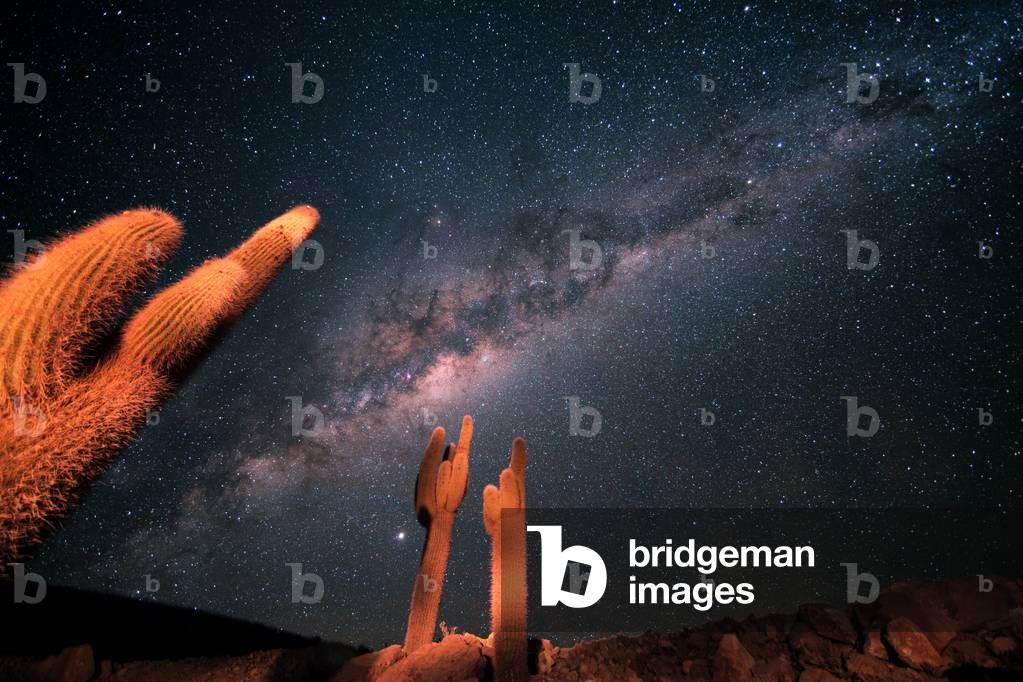
Cactus et voie lactee - Cactus and southern Milky way - Chile Chile Chile
The first light of the dawn on the southern sky of the Reunion - The southern sky, from the nebula of the Carene to the Alpha of the Centaur, from the Observatory of Makes to the Reunion in the early days
Milky Way on the Observatory of La Silla -Chile (photo)
Constellations of Grus and Piscis Austrinus - The Crane is a constellation in the southern hemisphere, located just below the Southern Fish. Grus (the Crane) is meant to represent a water bird, which may be a crane or perhaps a flamingo. This stellar grouping was introduced by Johann Bayer in his star atlas of 1603. Because of its location in the southern sky it is not visible from north latitudes above 40 degrees. Even if it were visible, it would hardly be remarked upon. Piscis Austrinus (the Southern Fish) once included Grus, and nowadays represents the Southern Fish, drinking from the water poured by Aquarius, adjoining it to the north. Piscis Austrinus was one of Ptolemy's 48 constellations and its brightest star is Fomalhaut, a name drived from the English for fish's mouth
Table Constellations and Male Hydra - Mensa and Hydrus contellations - Constellations of the southern hemisphere, seen from New Zealand. On the extreme right, the bright star is Achernar, a star of the constellation Eridan
The southern Milky Way rises above a reel hut on the shore of Lake Titicaca, Bolivia.: The Lactee Way over Lake Titicaca - Milky way seen from Bolivia
Constellations of the Indian, the Crane and Toucan - Constellations of Indus, Grus and Tucana - The southern constellation of the Indian, with to its left the constellations of the Crane (top) and Toucan. Indus (the Indian, widely taken to mean the American Indian) is a constellation devoid of bright stars in a mostly undistinguished part of the southern sky. It was created by Johann Bayer and appeared in his atlas of 1603. The reference to the American Indian comes from the constellation engraving by Bayer, which shows a figure carrying arrows; however, even if it was conspicuous, most of the constellation is invisible from the USA
Constellation of Circinus and southern constellations - Constellation of Circinus and southern constellations - The Southern Triangle constellations, the Fly, and the Southern Cross are also visible. Circinus (the drawing Comppass) is an inconspicuous constellation introduced by the French astronomer Nicolas Louis de Lacaille, who observed the southern sky from the Cape of Good Hope between 1750 and 1754. He named 14 constellations, many of them associated with science or navigation, such as Microscopium and Telescopium, Octans the Octant and Antlia Pneumatica, the air pump. Circinus contains no bright or named stars and covers 93 square degrees, making it the fourth - smallest. Triangulum Australe is the southern hemisphere counterpart of Triangulum. It is a bigger constellation and contains brighter stars than Triangulum and it never sets for most of Australia. Its brightest star is named Atria (for alpha Trianguli Australis), in the manner of Acrux in the Southern Cross. It is easily seen near a and ss Centaurus. Crux and Musca are also visible in this image
Lactee Way - South Hemisphere - Milky Way - Southern Hemisphere - The Lactee Way and the Magellan Clouds. Atacama Desert, Chile. June 2008. Milky way and Magellanic clouds. Atacama desert, Chile, June 2008
Most of the area of the southern Milky Way covered by this picture never sets for those of us who live at southern latitudes south on -30 degrees. The main constellations here are Centaurus, Crux and Carina, containing some of the most interesting, beautiful and bizzare astronomical objects, including the nearest stars. Alpha Centauri is at lower left and with its companion, beta points (more or less) to the Southern Cross, which in turn lies alongside the Coalsack, one of the nearest dust clouds. Further along the Milky Way is the astonishing Carina nebula, which is home to eta Carinae, probably the most massive star known, and a prime candidate for the next Galactic supernova. It is in Carina that the Sagittarius arm of our galaxy curves sharply away from us, so we see deep into a rich star-forming region.: The Lactee Way from Centaur to Carene - Souther Milky Way form Centaurus to Carina
Southern Crown Nebula - The Corona Australis nebula (NGC 6726 - 27 - 29) - R Coronae Australis is one of the closest and most intense star-forming regions; visible in the southern hemisphere, it is located about 500 years from Earth. R Coronae Australis is the star in the center of the image that illuminates a reddish nebula around it. Image obtained in Chile at the observatory of La Silla with the 2.2 meter MPG/ESO telescope. Image of R Coronae Australis region in the southern Milky Way, obtained with the Wide Field Imager (WFI) (camera) at the 2.2 - m MPG/ESO Telescope on La Silla (Chile). The R Coronae Australis complex of young stars and interstellar gas clouds is one of the nearest star - forming regions, at a distance of approx. 500 light - years from the Sun. It is seen in the southern constellation of that name (The “Southern Crown”). R Coronae Australis, the bright star from which the entire complex is named, is located at the center of the field and illuminates the reddish nebula around it. The bright star in the lower part, illuminating a somewhat bluer nebula, is known as TY Coronae Australis. The brightness of these two stars and several others in the same field is variable. They belong to the so - called “” T Tauri””” class, a type that is quite common in star - forming regions. T Tauri stars are in the early stages of stellar evolution and display various observable characteristics of this phase, e.g. emission at visible and infrared wavelengths due to the accretion of matter left over from their formation, as well as X - ray emission. The nebulosity seen in this picture is mostly due to reflection of the stellar light by small dust particles. The stars in the R Coronae Australis complex do not emit sufficient ultraviolet light to ionize a substantial fraction of the surrounding hydrogen, and thus cause this gas to glow. Also visible are so - called Herbig - Haro objects, dense clumps of gas ejected f
Constellations of Burin and Dove - Constellations of Caelum and Columba - Constellations of Burin (right) and Dove (left) in the southern hemisphere. The bright star at the bottom of the picture is Canopus. Caelum (originally Caelum Sculptoris, the sculptor's chisel) is a small, rather obscure constallation hewn from rather thin pickings between Eridanus and Columba by Abbe de Lacaille in the 1750s. It is only 125 degrees square, making it 81st in area out of 88 constellations. Rather more interesting to the eye is Columba (originally Columba Noachi, Noah's dove) easily found between Sirius and Canopus. It is twice the area of Caelum and contans a few brighter stars. Best seen in the early evening in January
Constellation of Carene - Constellation of Carina - The constellation of Carene, the Great Magellan Cloud, the southern Celestial pole, and the star Canopus. This part of the sky is best seen in the early evening between April and June. Carina the Keel, is a remnant of Argo Navis, a giant mythical sailing vessel afloat on the southern Milky Way, described elsewhere. The constellation is a delight for southern hemisphere observers, with many star clusters and nebulae visible in binoculars or modest telescopes. Some of these are quite spectacular in a large telescope. The second brightest star in the sky, Canopus (a Car) is here as is Eta Carinae, one of the most massive and unstable stars in the Galaxy. Eta is hidden in the most conspicuous nebula in Carina, NGC 3372, the Great Carina nebula. This photograph also shows the location of the south celestial pole and the Large Magellanic Cloud as well as several complete or almost complete constellations, including Apus, Chameleon, Crux, Dorado, Mensa, Musca, Octans, Pictor and Volans
Total eclipse of Moon Mars and Milky Way (photo)
Gamsberg Amateur Observatory, Namibia (photo)
Lactee route au raz de l'horizon - Paranal horizon in the milky way plane - Fisheye view of the southern sky. The lactee path blends with the horizon line. In the sky, the three brightest galaxies visible on Earth: the two galaxies of the Magellan Cloud, and opposite it to the top right of the image, the galaxy of Andromede. A laser shot from one of the domes of the VLT is visible as well as the gegenschein, the blade glow consisting of dust reflecting the light of the sun, observable only in a dense sky of any parasite light. A fish-eye view of southern sky in Chile. Milky way is visible along the 360 degrees of the horizon line. Also visible are Gegenschein at zenith, Paranal observatory with Laser Guide Star, and the three brightest galaxies visible on earth (the large Magellanic clouds and Andromeda galaxy)
The Milky Way, looking towards the Galactic Centre - The Milky Way, looking towards the Galactic Centre - The bright point at the bottom left is Jupiter Planet The Milky Way is best seen on winter nights (May to August) from the southern hemisphere. This wide-angle picture shows a broad span of the southern Milky Way and is a photograph made using colour film in a conventional camera. The camera which was pointed towards the centre of our Galaxy, in the direction of the constellation of Sagittarius. The Galactic centre itself is totally hidden at visible wavelengths by the band of dust which divides the Milky Way along much of its length. The dust lane is only visible because it blots out background stars. Embedded in the dust are many star-forming regions, seen as bright red emission nebulae. The brightest, left of the centre of the picture, is Messier 8, the Lagoon Nebula, which is visible to the unaided eye. The bright 'star' at lower left is the planet Jupiter
Lactee Way - La Reunion - Milky Way - Reunion - Lactee Way Observation from the Sands Pas. The Reunion. June 2013. Watching the Milky Way - Reunion, June 201
Panorama of the Milky Way - Panorama of the Milky Way - Photographic mosaic reconstructing the entire lactee path. The shots taken between summer 2008 and summer 2009 were taken from two perfect astronomical sites, the Atacama desert for the southern hemisphere, the Caldera de Taburiente in the Canary Islands for the boreal hemisphere. This magnificent 360-degree panoramic image, covering the entire southern and northern celestial sphere, reveals the cosmic landscape that surrounds our tiny blue planet. The plane of our Milky Way Galaxy, which we see edge-on from our perspective on Earth, cuts a luminous swath across the image. From this vantage point, the general components of our spiral galaxy come clearly into view, including its disc, marbled with both dark and glowing nebulae, which harbours bright, young stars, as well as the Galaxy's central bulge and its satellite galaxies. As filming extended over several months, objects from the Solar System came and went through the star fields, with bright planets such as Venus and Jupiter
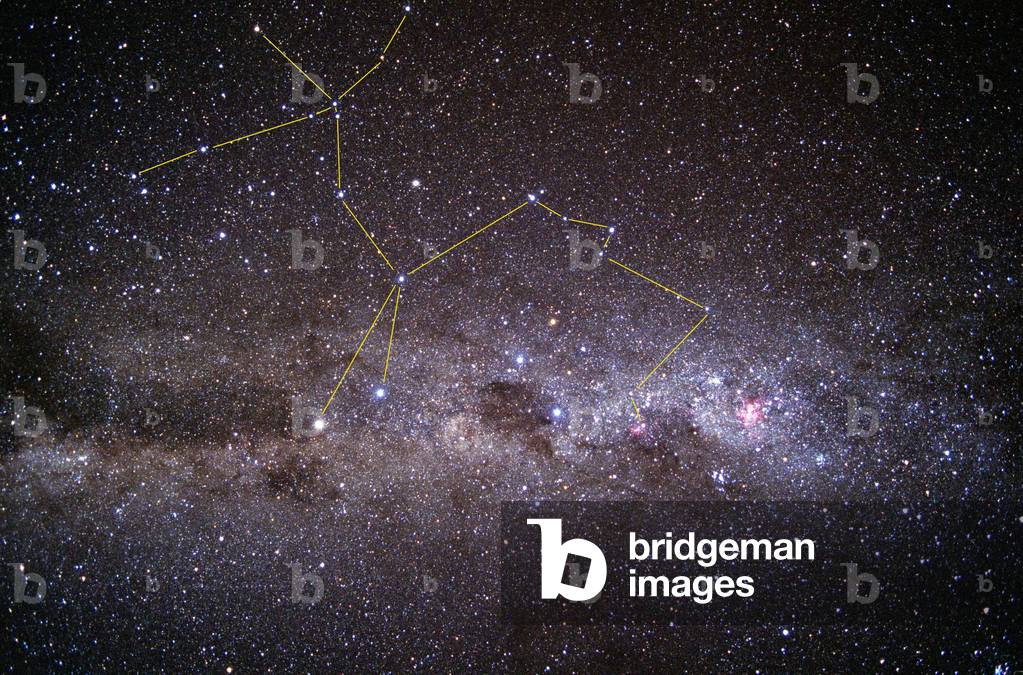
Constellation of the Southern Cross - The Southern Cross - The Southern Cross and the Alpha and Beta stars of Centaurus. Crux, the Southern Cross, is the smallest constellation in the sky yet one of the most distinctive, at least to those of us who live in the southern hemisphere. It was once part of Centaurus, where the bright stars Acrux and Mimosa could easly be imagined as the rear hooves of the rearing mythical centaur. However, when Christian sailors began to explore southwards in the 16th century, this memorable asterism took on a new significance. The cross appears on the national flags of several southern hemisphere countries, including Australia, though it can be seen on the southern horizon from the tropic of Cancer, 23.5 degrees north of the equator. Along with the Southern Cross is a very distinctive dark shape known as the Coalsack, much used by southern hemisphere astronomers as an indicator of a dark sky, especially if the sixth magnitude star embedded in it is visible. The long axis of the southern cross points towards the south celestial pole, so the cross itself acts as a very convenient circumpolar clock, compasset and calendar
Constellations of Telescope, Altar and Southern Crown - Constellations of Telescopium, Ara and Corona Australis - The Telescope is a small constellation of the southern hemisphere located between the Southern Crown (at the top) and the constellation of the Altar (at the bottom of the picture). Telescopium is a faint constellation that was named by Abbe Nicolas Louis de Lacaille during his stay at the Cape of Good Hope between 1751 and 1752. It is utterly undistinguished and is best remembered as that unremarkable piece of sky to the west of Ara and between the distinctive circlet of Corona Australis and Peacock (alpha Pavonis), the brightest star in Pavo. Lacaille's original name was Tubus Telescopium, however, in the way of antique telescopes, it was shortened for convenience
Aquarius Constellation - Constellation of Aquarius - Field around the Aquarius constelllation. The Helix planetary nebula appears as a red dot towards the center of the image. Aquarius (The Water Carrier) is a large but relatively insconspicuous southern zodiacal constellation and has an area of about 980 square degrees, which makes it the 10th largest. Its origins as a constellation can be traced back to Babylonian times and has usually been delineated as a figure pouring water from a jar in the general direction of Capricornus and Piscis Austrinus, themselves quite watery constellations. The Sun is in this part of the sky in February and March, following the Ecliptic. The constellation embraces many objects of telescopic interest, including the Helix nebula and the Mira - like variable star R Aquarii. Also notable are the globular clusters M2 (NGC 7089) and the Saturn planetary nebula NGC 7009. Best seen in the early evening in August
Constellation of the Ship Argo - Constellation of Argo Navis - Constellation of the Ship Argo from the Uranographia of Hevelius. Recolorized image. Vessel Argo is a missing constellation; the astronomer Nicolas - Louis de Lacaille divided it in the 1750s into three smaller constellations: the Carene, the Poupe and the Voiles. Map showing the constellation of Argo Navis with its mythological form from “” Uranographia”” star atlas by Hevelius (1690). Recolored image. Argo Navis (or simply Argo) was a large constellation in the southern sky that has since been divided into three constellations (Carina, Puppis and Vela)
The Gamma ray sky - The Gamma ray sky - Map of the whole sky seen in gamma rays by the Fermi Gamma-Ray Space Telescope (FGST) satellite from August 4 to October 30, 2008. The strongest sources of gamma radiation are legendeed here. All-sky image seen in gamma ray showing the glowing gas of the Milky Way, blinking pulsars, and galaxies billions of light-years away. The all-sky image released today shows us how the cosmos would look if our eyes could detect radiation 150 million times more energetic than visible light. The view merges Large Area Telescope (LAT) on Fermi Gamma-ray Space Telescope (FGST) observations spanning 87 days, from August 4 to October 30, 2008. The top five sources within our galaxy are: The sun. Now near the minimum of its activity cycle, the sun would not be a particularly notable source except for one thing: It's the only one that moves across the sky. The sun's annual motion against the background sky is a reflection of Earth's orbit around the sun. LSI+61 303. This is a high-mass X-ray binary located 6,500 light-years away in Cassiopeia. This unusual system contains a hot B-type star and a neutron star and produces radio outbursts that recur every 26.5 days. Astronomers cannot yet account for the energy that powers these emissions. PSR J1836+5925. This is a pulsar - a type of spinning neutron star that emits beams of radiation - located in the constellation Draco. It's one of the new breed of pulsars discovered by Fermi that pulse only in gamma rays. 47 Tucanae. Also known as NGC 104, this is a sphere of ancient stars called a globular cluster. It lies 15,000 light-years away in the southern constellation Tucana. Unidentified. More than 30 of the brightest gamma-ray sources Fermi sees have no obvious counterparts at other wavelengths. This one, designated 0FGL J1813.5-1248, was not seen by previous missions, and Fermi's LAT sees it as variable. The source lies near the plane of the Milky Way in the constellation Serpens Cauda. A
Paranal Observatory - Chile - Paranal Observatory - Chile - The lactee road above the Paranal Observatory in Chile. 360 degree Panorama of ESO - Paranal Observatory platform. The four 8m (UT) and four 1.8 m (AT) diameter telescopes of the VLT are all observing under the Milky Way arch during this very dark Southern hemisphere spring night. The large (LMC) and small (SMC) Magellanic clouds are visible to the left of the picture while another galaxy, Andromeda Galaxy (M31) is also visible just to the right of UT4. Bright Jupiter is high in the sky. The picture also shows two 'astronomical' lights, the zodiacal light crossing the Milky Way center vertically (just at the left of the middle of the image, above AT3) and the Gegenschein, usually very difficult to observe, below Jupiter on the right hand side of the image
Dark Stars and Nebulae in Sagittarius - The Star Clouds of Sagittarius - Star Field towards the center of our galaxy. The bright star towards the center of the image is Gamma of Sagittarius. Image obtained from the 1.2m Schmidt UK telescope of Siding Spring. Orbiting round the centre of our Galaxy are found huge numbers of stars which are mostly faint, cool and often billions of years old. They are as ancient as the Galaxy itself. These stars are seen with the unaided eye as the hazy star clouds of the southern Milky Way, especially rich in Sagittarius. Our line of sight in this direction is strongly affected by dust, which reveals itself by both dimming the starlight passing through it and by selectively removing the blue light, changing the apparent colour to a deeper yellow. Though the colour change is only seen in photographs such as this, the dustiness of the Milky Way is obvious to the unaided eye. Near the centre of the picture is a region known as Baade's Window after the astronomer who selected this part of the Milky Way for special study
Nebuleuse Barnard 86 & open cluster NGC 6520 - Dark nebula Barnard 86 and open cluster NGC 6520 - NGC 6520, in the center of the image, is a cluster of young stars, aged a few million years. To its right is the dark nebula, Barnard 86, a cloud of molecular gas and dust, very cold, in which stars form. In the background, the billions of years old stars of Sagittarius. NGC 6520 is a young star cluster formed only millions of years ago. Besides, the dark nebula Barnard 86, a molecular cloud, very cold, from which the stars of NGC 6520 surely formed. All around them, oldest stars, which are billions of years old, form the star clouds of Sagittarius in the southern Milky Way and are in orbit around the inner part of the Galaxy. They are cool and yellow
Total Moon Eclipse and Lactee Track, Namibia 2018
The Milky Way from Orion to the Southern Cross - The Milky Way from Orion to the Southern Cross - The Lactee Way from the Southern Hemisphere. At the top is the constellation of Orion, at the bottom of the picture, the Southern Cross. For a legented version of all objects and constellations visible on the image, see image a-vlc01-00061 The milky way from Orion to the Southern Cross. To see all the objects and constellations visible in this field, see annotated image a-vlc01-00061
Constellation of Lupus and Norma - Constellation of Lupus and Norma - Also visible are the constellations of the Compas, the Southern Cross, and much of the Centaur. At the top of the picture, the bright spot is the planet Jupiter. Lupus, (the Wolf), was regarded by the Greeks and Romans as an unspecified wild animal, which the Centaur is carrying as a sacrifice the gods. The identification of Lupus as a wolf seems to have been made in relatively recent times. Both Lupus and Norma are in the rich starfields of the southern Milky Way, easily seen between Antares and alpha and beta Centaurii. The brightest object in this image is Jupiter, on the ecliptic at the top of the frame. Norma, (originally Norma and Regula, the builder's level and set square) is an insignificant scattering of stars compared to Lupus and Centaurus. Like the adjacent Circinus (the Drawing Compasses), it was invented by Nicolas de Lacaille, who charted the southern sky from South Africa in 1751 - 2 and felt obliged to fill vacant spaces in the sky with Enlightenment - inspired instruments of science
Peacock Constellation - Constellation of Pavo - Pavo, the Peacock, lies south of Sagittarius and Corona Australis, and is one of Johann Bayer's twelve constellations, introduced in 1603. It is one of several birds in the southern sky, including Apus, Grus, Phoenix and Tucanae. The legends say that the goddess of the heavens, Juno (the Greek Hera) ordered a hundred - eyed giant, Argos Panoptes, to keep his eyes on her wandering husband, Jupiter. He ordered Argos slain and Juno transformed the 100 eyes into the Peacock's tail. These eyes are also meant to represent the starry sky
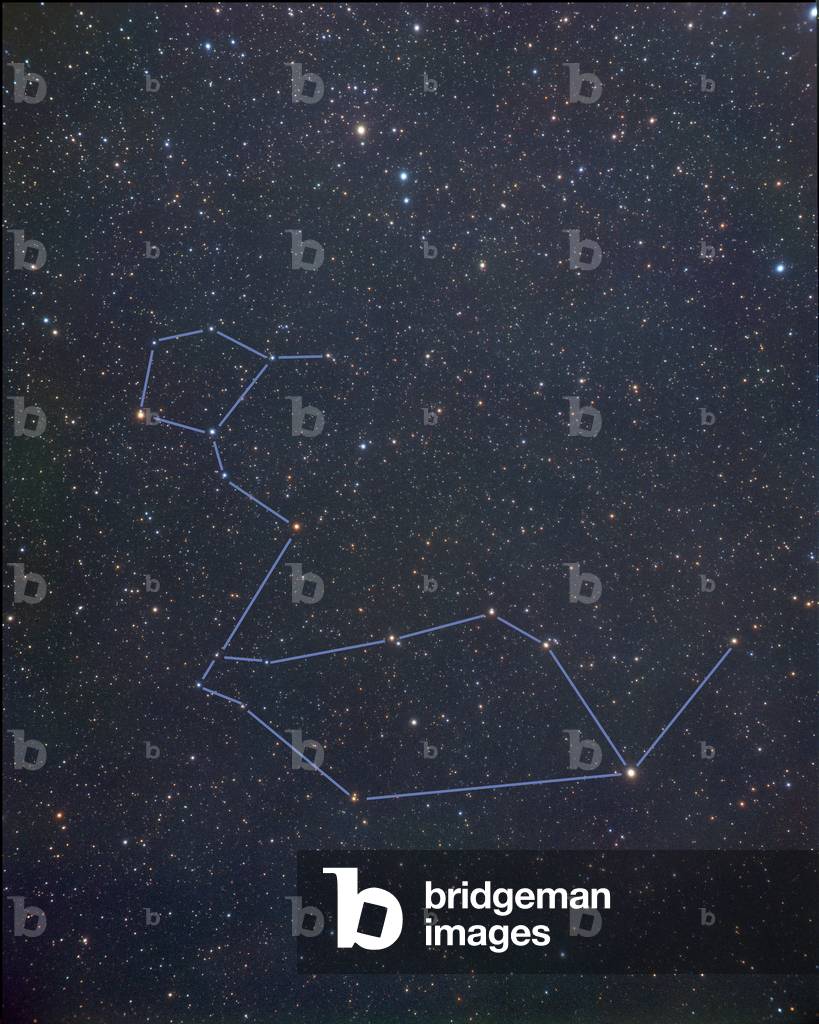
Constellation Ophiuchus - Constellation of Ophiuchus - The constellation Ophiuchus separates the constellation of the Snake into two parts. The constellation of Ophiuchus is located between Serpens Caput and Serpens Cauda, two parts of the constellation of Serpens. The southern part of Ophiuchus contains one of the darkest and most visually distinctive dark clouds of the Miky Way. It is popularly known as the Dark Horse nebula - - the body of the horse runs north - south and its legs point towards the bright star Antares. The hind quarters of the horse make up the (smoker's) Pipe nebula, with the stem pointing to Antares. The dust of forelegs reaches a long way in the direction of Antares, where it is illuminated by stars associated with Rho Ophiuchi to make a distinctive reflection nebula. The dusty clouds of the Dark Horse nebula hide the northern part of the Milky Way's central bulge. The southern part (in Sagittarius) is relatively unobscured. Without this dust the extent of the Milky Way's bulge would be much more apparent to the unaided eye and without it our understanding of the nature of our galaxy as a flattened disk might have come sooner
Constellations of the Altar, the Rule and the Telescope - Constellations of Ara, Norma and Telescopium - The Altar, in the center of the image, is a constellation of the southern hemisphere located between the Centaur and the Wolf. Also visible are the constellations of the Rule (right) and the Telescope. Ara (the Altar) is an inconspicuous constellation in the southern sky. It was once considered part of Centaurus and Lupus but became separated when the 'modern' constellation Norma was created by Lacaille in the 1750s. It was recognised by the Greeks and Romans and was visualised as the altar on which the Centaur, Centaurus, was to sacrifice Lupus, the Wolf. This is reflected in its Latin name, Ara Centauri. The constellation is the 63rd largest in the sky and covers about 237 square degrees. The best - known objects in this field are some diffuse dusty nebulae and star clusters. The only named star in Ara is Karnot Mizbeach (ss Ara). Best seen in the early evening in July
The Large Magellanic Cloud - The Large Magellanic Cloud - The Great Magellan Cloud galaxy is about 160,000 light years away from Earth in the southern constellation of Bream. Visible with the naked eye in the southern hemishere it is one of the closest galaxies to ours. The Large Magellanic Cloud is an irregular galaxy located about 160,000 light years distance from Earth in the constellation Dorado. Visible naked - eye in the night sky of the southern hemisphere, it is one of the closest galaxy from us
Whale Constellation - Constellation of Cetus - Also visible, the constellation Belier at the top of the picture. Cetus (the Whale or Sea Monster) is an ancient constellation in the northern sky depicting a whale - like creature basking on the shores of the fabled stream Eridanus, which flows from the celestial equator far into the southern sky. Cetus is extensive but not very distinctive, containing few bright stars. However, some of the stars are exceptionally interesting, particlarly Mira the wonderful, the prototype variable star, whose variability was first noted 400 years ago. The constellation of Aries is visible at the top of the image
Constellations of the Compsole, Stern, Sails, and Carene - Constellations Pyxis, Puppis, Vela and Carina - These constellations of the southern hemisphere once formed the ancient constellation of Ship Argo. Also visible is the constellation of Flying Fish. This large constellation was one of the 48 constellations described by the ancient astronomer Ptolemy in his Almagest. It is the ship which Argus built for Jason and his crew, the Argonauts, to carry them on their quest for the Golden Fleece. In the 18th century the French astronomer Lacaille divided it into three smaller constellations, Carina the Keel, Puppis the Stern or Poop, and Vela the Sail
Constellations of the Cup and the Raven - Constellations of Crater and Corvus - On the left, the bright star is Spica, in the Virgin. Corvus (the Raven or Crow) is a southern constellation of rather faint stars. It occupies about 184 square degrees, which makes it the 70th largest constellation (out of 88 recognised today). However, it is ancient, and is associated with Crater (the Cup) and Hydrus, the water snake, on whose back Corvus sits. The grouping was recognised by Ptolemy almost 2000 years ago. Crater (Latin for cup) was also recognised by Ptolemy and covering 282 square degrees is larger than Corvus but is no more distinguished
Constellations of Reticulum and Dorado - Constellations of Reticulum and Dorado - Constellations of Reticulum and Bream (top) near the galaxy of the Great Magellan Cloud. Reticulum is another small and insignificant southern constellation introduced by Lacaille in the 1750s. It commemorates a reticle, the cross hairs in an eyepiece used for measuring star positions, from the Latin for 'net' (hence reticulation, network). It is best found by looking for the Large Magellanic Cloud in the adjoining constellation of Dorado. Dorado, the Goldfish or Swordfish (Xiphias), is a constellation introduced by Johann Bayer, best known for his 1603 star atlas Uranometria, which was the first to cover the entire sky. It is notable mainly for containing most of the Large Magellanic Cloud (LMC), the nearest galaxy to the Milky Way
Cometary Globule CG4 dans la Puppe - Grand Champ - CG4 a cometary globule in Puppis - Wide field - Cometary cells are small clouds of isolated gases. This one, called CG4 (left middle of the image), is located about 1300 light years away in the constellation Pupus. Its head is 1.5 years light and its tail extends for 8 years. This cloud is a star-forming region. A spiral galaxy seen by the slice (ESO 257 - 19) is visible to the left of the blood cell. It is located 100 million years later. At the bottom left of the image, another galaxy is visible, NGC 2427. This region of the southern sky has numerous colorful faint gaseous nebulae that are very difficult to image due to thier very low surface brightness. CG4 is a ruptured cometary globule that appears to be ready to “” eat””” the distant galaxy ESO257 - 019. In fact, these two objects are very far apart; ESO257 - 019 being more than 100 million light years further away than CG4. Cometary blood cells are isolated, relatively small clouds of gas and dust within the Milky Way. CG4, is about 1,300 light years from Earth. Its head is some 1.5 light - years in diameter, and its tail is about eight light - years long. The dusty cloud contains enough material to make several Sun - sized stars. Bottom left is the galaxy NGC 2427
Nebula NGC 6726 - 27 - 29 in the Southern Crown - The Corona Australis nebula (NGC 6726 - 27 - 29) Image of R Coronae Australis region in the southern Milky Way, obtained with the Wide Field Imager (WFI) (camera) at the 2.2 - m MPG/ESO Telescope on La Silla (Chile). The sky field shown measures approx. 33.7 x 31.9 arcmin2 (about the diameter of the full moon). The R Coronae Australis complex of young stars and interstellar gas clouds is one of the nearest star - forming regions, at a distance of approx. 500 light - years from the Sun. It is seen in the southern constellation of that name (The “Southern Crown”). R Coronae Australis, the bright star from which the entire complex is named, is located at the center of the field and illuminates the reddish nebula around it. The bright star in the lower part, illuminating a somewhat bluer nebula, is known as TY Coronae Australis. The brightness of these two stars and several others in the same field is variable. They belong to the so - called “” T Tauri””” class, a type that is quite common in star - forming regions. T Tauri stars are in the early stages of stellar evolution and display various observable characteristics of this phase, e.g. emission at visible and infrared wavelengths due to the accretion of matter left over from their formation, as well as X - ray emission. The nebulosity seen in this picture is mostly due to reflection of the stellar light by small dust particles. The stars in the R Coronae Australis complex do not emit sufficient ultraviolet light to ionize a substantial fraction of the surrounding hydrogen, and thus cause this gas to glow. Also visible are so - called Herbig - Haro objects, i.e., dense clumps of gas ejected from the immediate vicinity of newly formed stars with velocities of about 200 km/sec. The observations were obtained on the night of 30 August 2000
Flying Fish Constellation - Constellation of Volans - Flying Fish is a small constellation in the southern hemisphere. The bright star on its left is Miaplacidus, in Carene. Volans was introduced by Johann Bayer in 1603 as Piscis Volans, the Flying Fish and in old star atlases is seen flying alongside the ancient sailing ship Argo Navis. However, the fish has flown and only the adjective Volans (flying) remains. The stars form a distinctive pattern but at magnitudes between 3.7 and 4.0 they are not bright. On the other hand the constellation is easily found between the bright stars Avior (epsilon Carinae) and Miaplacidus (beta Carinae) with the fish apparently flying towards the LM
Constellations of Dove and Lievre - Constellations of Columba and Lepus - Constellations of Dove (near the horizon) and Lievre (above). The bright star on the left is Sirius. Columba (originally Columba Noachi, Noah's dove) is seen here low on the horizon and easily found between Sirius and Canopus - - if you live in the southern hemisphere. It is one of the smaller and less obvious constellations, with an area of 270 square degrees. Lepus (the Hare) is about the same size as Columba and rather more obvious to the eye, lying to the south of Orion. It is one of Ptolemy's 48 constellations preserved to this day
Constellation Scorpio - Milky way and constellation of Scorpius - Scorpius is one of the few constellations whose star pattern resembles its name. The curved stinging tail is marked by the star Shahula, probably from the Arabic 'Al Shaulah' meaning 'raised tail', as seen in a scorpion. In the body of the scorpion lies Antares, meaning 'rival of Mars' for its reddish colour. The head of the scorpion is echoed in the star name Dschubba, meaning 'forehead'. However, the scorpion shape looks trucated in our photograph and it is. In ancient times it extended into what is now Libra, where the brightest stars (not seen here) still carry the resonant names Zeubenelgenubi (a1,2 Lib, the southern claw) and Zeubeneschamali (ss Lib, the northern claw). This celestial scorpion was sent by a jealous Artemis to kill Orion, who still fees the venomous insect: as Scorpius rises Orion sets, and vice - versa. However, he could not be saved even by Asclepius, the god of healing, who was later sent into the heavens as Ophiuchus, the serpent wrestler, a symbol still used by the medical profession. The constellation bestrides one of the richest parts of the southern Milky Way and is adorned by many beautiful stars. It is rich in young stars clusters and the nebulae from which they spring. Some examples are listed below. This image was a long exposure made to show the Milky Way
Star formation in the Sails - Star formation in Vela - Infrared view of the nebulae Gum 22 (top right), Gum 23, IRAS 09002 - 4732 (orange cloud near center), Bran 226 (bottom left), and Gum 25 (bottom left). These star-forming regions are located between 4000 and 10,000 light years of the Earth. The bright green star, down to the right of the image, is a carbon star, IRAS 08535 - 4724. Image obtained by the WISE telescope (Wide - field Infrared Explorer). This image from Nasa's Wide - field Infrared Survey Explorer, or WISE, highlights several star - forming regions. There are five distinct centers of star birth in this one image alone. Star - forming nebulae (called HII regions by astronomers) are clouds of gas and dust that have been heated up by nearby stars recently formed from the same cloud. The largest, brightest cloud, in the upper right is known as Gum 22. It's named after Colin Gum, an Australian astronomer who surveyed the southern hemisphere sky in the early 1950's looking for star - forming regions like these. He catalogued 85 new such regions, named Gum 1 to85 (Gum Crater on the moon was also named in his honor). Going counter - clockwise from Gum 22, the other catalogued nebulae in the image are Gum 23 (part of same cloud as 22), IRAS 09002 - 4732 (orange cloud near center), Bran 226 (upper cloud of the two at lower left), and finally Gum 25 at far lower left. There are also several smaller and/or more distant regions scattered throughout the image that have yet to be catalogued. Most of the regions are thought to be part of our local Orion spiral arm spur in the Milky Way galaxy. Their distances range from about 4,000 to 10,000 light - years away. Notice the very bright green star near the lower right portion of the image. You can tell it's a star because it appears to have 'spikes' sticking out of it (diffraction spikes like these are an optical effect caused by the structure of the te
Constellation of the Berenice Hair - Constellation of Coma Berenices - The constellation of the Berenice Hair contains a cluster of stars, Melotte 111. Coma Berenice's (Berenices Hair) would be as insignificant as many of Lacaille's southern sky inventions if it were not for the subtle but distinctive Coma Star Cluster (Melotte 111), 270 light years away. The constellation's name alludes to the flowing hair of Queen Berenices of Egypt, allegedly cut off in gratitude for the safe return of her husband from some military escapade. This constellation was once considered to be part of Leo, where the hairy smudge of the open cluster was regarded as the tuft of the lion's tail. Melotte 111 is a large, open cluster of stars ranging between 5th magnitude (barely visible) to 10th magnitude, 100 times fainter. It extends over 5 degrees and despite the faintness of its constituent stars is clearly visible as a hazy patch in an otherwise undistinguished part of the sky. Coma is the direction of the north galactic pole, where we look beyond our galaxy through relatively few foreground stars. Had Melotte 111 been in the Milky Way it would be hard to see
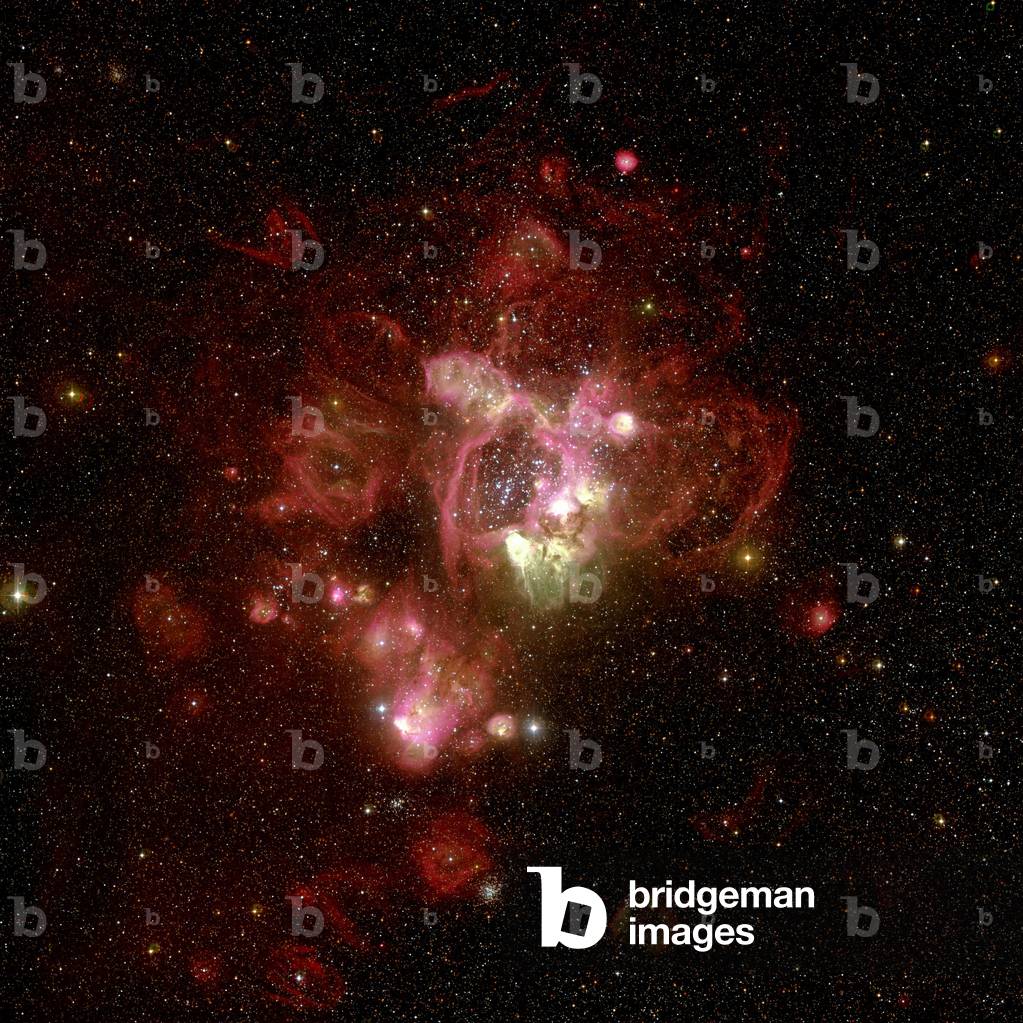
Nebuleuse N44 in the Great Magellan Cloud - This photo shows the southern part of the spectacular N44 region in the Large Magellanic Cloud. The green colour indicates areas that are particularly hot. The field measures 27.5 x 26.5 arcmin2., North is up and East is left. The two best known satellite galaxies of the Milky Way, the Magellanic Clouds, are located in the southern sky at a distance of about 170,000 light - years. They host many giant nebular complexes with very hot and luminous stars whose intense ultraviolet radiation causes the surrounding interstellar gas to glow. The intricate and colourful nebulae are produced by ionised gas that shines as electrons and positively charged atomic nuclei recombine, emitting a cascade of photons at well defined wavelengths. Such nebulae are called “” H II regions””, signifying ionised hydrogen, i.e. hydrogen atoms that have lost one electron (protons). Their spectra are characterized by emission lines whose relative intensities carry useful information about the composition of the emitting gas, its temperature, as well as the mechanisms that cause the ionization. Since the wavelengths of these spectral lines correspond to different colours, these alone are already very informative about the physical conditions of the gas. N44 in the Large Magellanic Cloud is a spectacular example of such a giant H II region. Having observed it in 1999 a team of European astronomers again used the Wide - Field - Imager (WFI) at the MPG/ESO 2.2 - m telescope of the La Silla Observatory, pointing this 67 - million pixel digital camera to the same sky region in order to provide another striking - and scientifically extremely rich - image of this complex of nebulae. With a size of roughly 1,000 light - years, the peculiar shape of N44 clearly outlines a ring that includes a bright stellar association of about 40 very luminous and bluish stars. These stars are the origin of powerful “” stellar winds””” that blow away the surrounding gas, pilin
Milky way all around the horizon and Gegenschein - Fisheye view of the southern sky. The lactee path blends with the horizon line. In the sky, the three brightest galaxies visible on Earth: the two galaxies of the Magellan Cloud, and opposite it towards the right middle of the image, the galaxy of Andromede. Crossing the image on the right, the gegenschein, the blade glow made up of dust reflecting the light of the sun, observable only in a dense sky of any parasite light. The bright spot near the center of the image is Jupiter Planet. The following image was taken at new Moon (No Moon light), middle of the night (minimum zodiacal light effect), in the Atacama desert close to Paranal observatory (no light pollution). The chosen place for this picture has the particularity to be located at a latitude which value is close to the declination of the galactic southern pole. The picture was therefore also taken when the galactic pole passes at zenith, ensuring that there is no Milky Way up in the sky. When all these conditions are met, being very close to what the “” darkest””” sky could be, the very faint Gegenschein becomes visible. Like the zodiacal light, the gegenschein is sunlight reflected by interplanetary dust. Most of this dust is orbiting the sun in about the ecliptic plane. The Gegenschein is clearly visible covering most of the right side of the picture. The Large (LMC) and Small (SMC) Magellanic clouds are visible to the left, Orion constellation with Barnard loop to the top, California Nebula and 'tiny' Andromeda galaxy to the right while the Milky Way is visible all around the image on the horizon line. Bright jupiter is visible near the center of the image and bright red Eta Carina Nebula is rising on the horizon line at the very left
The Southern Milky Way and south celestial pole - The Southern Milky Way and south celestial pole - The Octant constellation houses the south celeste pole (mark of a cross) This part of the sky was mostly uncharted by Europeans until the 17th and 18th centuries, so many of the constellations in the southern (lower) half of the image are relatively modern constructions without mythlogical connotations. Octans, the Octant (a forerunner of the sextant) is an Enlightenment - period instrument whose outline was constructed on the sky by the vivid imagination of the Abbe Lacaille. The constellation is quite large but totally undistinguished. Its only notable feature is the South Celestial Pole, with is marked (within a degree or so) by the faint star s Octantis. Apus, the Bird of Paradise, first appeared in the star charts of the German astronomer Johann Bayer in 1603. It contains no named stars. Chameleon, a type of lizard. The stars here are even fainter than those in Apus. Mensa, the constellation was invented by de Lacaille to commemorate his sojourn at the Cape of Good Hope in the 1750s. The original name was Mons Mensa, Latin for Table Mountain. Its northern border crosses part of the Large Magellanic Cloud, possibly reminding Lacaille of the recurrent cloud over the mountain as seen from Cape Town. Musca, the Fly, is another undistinguished constellation that first appeared on Bayer's star charts in 1603
Milky Way and Echinopsis Atacamensis - These cacti are Echinopsis Atacamensis between 6 and 8 metres high. In the background, the lactee track. San Pedro de Atacama Region, Chile. Single installation of 2 minutes. June 2008. The 3 cacti on the image are Echinopsis Atacamensis. They are between 6m and 8m in height for a diameter of around 70 cm and live at an altitude between 2600 and 3800m in the San Pedro de Atacama region, north of Chile. It is a protected specie that was used for too long as construction 'wood' and (still!) for handycraft. This image also shows, in the background, the Southern Hemisphere Milky Way, with the Southern Cross and Coal bag in the far top right corner, and the rich region of our Galactic Center, Scorpius and Sagittarius constellations just in the middle. It is a 2 minute one-shot image taken with a digital camera
Balance Constellation - Constellation of Libra - At the bottom of the picture, the brilliant star is Antares, in the Scorpio. Libra, The Scales is an ambivalent constellation in that it was created by the Romans during the reign of Julius Caesar from the rather empty patch of sky westward of neighboring Scorpius. The ancient Greeks knew the stars of what is now Libra as the Claws of the Scorpion and the star names preserve their ancient origins. The names Zeuben Eschamali, Zeuben Elgenubi and Zeuben Elakrab are besed on the English words for northern claw, southern claw, and the scorpion's claw respectively. The Roman interpretation reflects that of ancient Egypt, where the main stars are known as the northern and southern scales, as in a balance - beam weighting device. Ptolemy and other classical writers refer to the group as both the Scales and as the Claws, and there is a link in this idea to the adjoining constellation of Virgo, where the female figure is sometimes shown as holding the Scales of Justice. Libra is a constellation of the Zodiac, the only one that does not represent some kind of real or imaginary creature. The Sun was in Libra during the (northern) autumnal equinox in Roman times, again adding to the idea of balance between day and night. However, precession has now shifted the point where the Sun moves south of the ecliptic into Virgo
Aquarius Constellation - Constellation of Aquarius - Field around the Aquarius constelllation. The Helix planetary nebula appears as a red dot towards the center of the image. Aquarius (The Water Carrier) is a large but relatively insconspicuous southern zodiacal constellation and has an area of about 980 square degrees, which makes it the 10th largest. Its origins as a constellation can be traced back to Babylonian times and has usually been delineated as a figure pouring water from a jar in the general direction of Capricornus and Piscis Austrinus, themselves quite watery constellations. The Sun is in this part of the sky in February and March, following the Ecliptic. The constellation embraces many objects of telescopic interest, including the Helix nebula and the Mira - like variable star R Aquarii. Also notable are the globular clusters M2 (NGC 7089) and the Saturn planetary nebula NGC 7009. Best seen in the early evening in August
Pisces Constellation - Constellation of Pisces - Pisces (the Fishes) is a large constellation of mostly quite faint stars at the edge of an ancient and huge part of the sky known as 'the Sea'. Pisces is said to resemble two fish, which are tied to a (alpha) Piscium by long lines. Alpha Piscium is known as Al Rischa in English, where it means 'the cord'. Some Greek mythologies have two men tethered to this star, though some of the other stars have fishy names. The Sun is in Pisces from March 13 to April 19, and it crosses the ecliptic on March 21, which marks the vernal Equinox, the first day of autumn in the southern hemisphere. This used to be called the first point in Aries, but precession has now moved it into Pisces. However, this point in the sky is the origin of right ascension (RA) in the astronomical equatorial coordinate sytem, and because it moves with precession, RA and Dec are defined at a certain date
Around the Tarantula Nebula - Around the Tarantula nebula in the Large Magellanic Cloud - The Tarantula Nebula, NGC 2070, is a vast star-forming region located north of the Great Magellan Cloud galaxy in the southern hemisphere about 170,000 years - light from Earth. Image obtained with Siding Spring's 3.9m telescope. Known as the Tarantula Nebula for its spidery appearance, the 30 Doradus complex is a monstrous stellar factory. It is the largest emission nebula in the sky, and can be seen far down in the southern sky at a distance of about 170,000 light - years, in the southern constellation Dorado. It is part of one of the Milky Way's neighbouring galaxies, the Large Magellanic Cloud. The Tarantula Nebula contains some of the most massive stars known
Constellations of Sagittarius and the Southern Crown - Constellations of Sagittarius and Corona Australis - From ancient times the constellation of Sagittarius (the Archer) was represented as a Centaur, half man, half horse, ready to fire his/its bow and arrow at the heart of Scorpius, the Scorpion. The constellation is the 15th largest in the sky and covers about 867 square degrees, including the brightest part of the Milky Way. It contains no fewer than 15 Messier objects. Sagittarius is a zodiacal constellation, so the ecliptic, the apparent path of the Sun, among the stars, pases through it, between M8 and M20. The much smaller constellation of Corona Australis (the Southern Crown) is quite distinctive to the eye though its stars are fainter than those in neighbouring Sagittarius. It is quite ancient having be recognised by Ptolemy, and one legend has it that it represents the coronet worn by Sagittarius. Who knows. It is 80th in size among the 88 constellations and covers 128 square degrees
Constellation of Centaurus - Constellation of Centaurus - Also visible are the constellations of the Compas, the Southern Cross, the Rulle and the Wolf. Centaurus (the Centaur), is in one of the richest parts of the southern sky. At over 1000 square degrees it is the ninth largest constellation. It represents a centaur in Greek mythology, a half - man half - horse creature (Sagittarius is another). The learned centaur is the legendary inventor of the main constellations. Apart from a sparkling scattering of stars, the constellation also embraces one of the finest globular clusters, Omega Centauri and a few degrees north of it NGC 5128, the radio galaxy Centaurus A. Close to a Centaurus, the brightest star in the picture and, with ss Centaurus, one of the Pointers to the Southern Cross, is Proxima Cen. This faint star is not seen in this image, but at 4 light years distant is the closest star to the Sun. Norma, (originally Norma and Regula, the builder's level and set square) is an insignificant construction compared to the grandeur of Centaurus. Like the adjacent Circinus (the Drawing Compasses), it was invented by Nicolas de Lacaille, who charted the southern sky from South Africa in 1751 - 2 and felt obliged to fill vacant spaces in the sky with Enlightenment - inspired instruments of science. Circinus, Crux, and Lupus are also visible
Lactee route - Pointe du Raz - Milky Way - Pointe du Raz - The Great Bear is almost entirely masked by the semaphore tower at Pointe du Raz. The “Two Guards” located on the right of the tower point towards the Polar Star, vertical of the antenna. Higher, our eye cuts the lactee path near the zenith. As we descend towards the southern horizon, we can see the Great Galaxy of Andromede and that of the Triangle. Brittany, 27 September 2008. The Big Dipper is almost completely masked by the tower of the semaphore. Its two stars on the right are pointing towards the star Polaris, at the vertical of the antenna. Higher, our eye cross the Milky Way near the zenith. Then, descending towards the South, we can see the Great Andromeda Galaxy and the Triangulum Galaxy. Pointe du Raz, Brittany, 27 September 2008
Around the Tarantula Nebula - Around the Tarantula nebula in the Large Magellanic Cloud - The Tarantula Nebula, NGC 2070, is a vast star-forming region located north of the Great Magellan Cloud galaxy in the southern hemisphere about 170,000 years - light from Earth. Image obtained with the 1.2m Schmidt UK Telescope from Siding Spring. Known as the Tarantula Nebula for its spidery appearance, the 30 Doradus complex is a monstrous stellar factory. It is the largest emission nebula in the sky, and can be seen far down in the southern sky at a distance of about 170,000 light - years, in the southern constellation Dorado. It is part of one of the Milky Way's neighbouring galaxies, the Large Magellanic Cloud. The Tarantula Nebula contains some of the most massive stars known
Constellations of the Unicorn and the Little Dog - Constellations of Monoceros and Canis Minor - Constellation of the Unicorn, at its right Orion, at the top left the Little Dog with the star Procyon, at the bottom of Sirius. The stars Sirius, Procyon and Betelgeuse form the asterism of the winter triangle. Monoceros constellation, at right: Orion, top left Canis Minor with Procyon, bottom Sirius in Canis Major. Monoceros (the Unicorn) represents mythical creature set among the stars. This one has the forelegs and (horned) head of a horse, the hindquarters of a stag and the tail of a lion. Such creatures are sometimes seen in Assyrian (~ 2500 - 600 BCE) carvings, and have been interpreted as originating in traveller's tales of the Indian or African rhinoceros. The modern constellation sits astride both the Milky Way and the celestial equator. It is also enclosed on three sides by the bright stars of the Winter Triangle (Sirius, Procyon and Betelgeuse). Of course this refers to the northern hemisphere winter; these stars are equally visible in the southern summer and make Monoceros easy to find. However, the stars within the constellation itself are rather faint, though they can be joined tp produce a figure resembling a unicorn. The famous Rosette nebula is just visible in the only closed triangle of the constellation figure. Canis Minor (the Lesser Dog) is sometimes regarded as the smaller of the two dogs of Orion the hunter. It is minor indeed, just 185 degrees square, and 71st in size of the 88 modern constellations. The most obvious and interesting object Canis Minor is its main star, the pale yellow Procyon. Its name is from the Greek, meaning 'before the dog', since it rises before the Sirius, the Dog Star
Planesphaeri Coelestis Hemisphaerium Meridionale, 1700 (coloured print)
Il Content Partner applica le seguenti restrizioni
  • Not available to clients invoiced in the UK
Lactee route - Pointe du Raz - Milky Way - Pointe du Raz - The Great Bear is almost entirely masked by the semaphore tower at Pointe du Raz. The “Two Guards” located on the right of the tower point towards the Polar Star, vertical of the antenna. Higher, our eye cuts the lactee path near the zenith. As we descend towards the southern horizon, we can see the Great Galaxy of Andromede and that of the Triangle. Brittany, 27 September 2008. The Big Dipper is almost completely masked by the tower of the semaphore. Its two stars on the right are pointing towards the star Polaris, at the vertical of the antenna. Higher, our eye cross the Milky Way near the zenith. Then, descending towards the South, we can see the Great Andromeda Galaxy and the Triangulum Galaxy. Pointe du Raz, Brittany, 27 September 2008
Constellation of the Southern Cross - Constellation Crux. The Southern Cross - With the lack of a significant pole star in the southern sky (Sigma Octantis is closest to the pole, but is so faint as to be useless for the purpose), two of the stars of Crux (Alpha and Gamma, Acrux and Gacrux respectively) are commonly used to mark south. Following the line defined by the two stars for approximately 4.5 times the distance between them leads to a point close to the Southern Celestial Pole