[]
La tua selezione corrente
asset(s) Asset
Il tuo preventivo 0

La tua selezione

Cancella la selezione
Articolo aggiunto al carrello
{"event":"pageview","page_type1":"undetected","page_type2":"_assets_search_override","language":"it","user_logged":"false","user_type":"ecommerce","nl_subscriber":"false"}
{"event":"ecommerce_event","event_name":"view_item","event_category":"browse_catalog","ecommerce":{"items":[{"item_id":"WGI7310557","item_category":"illustration","item_category2":"in_copyright","item_category3":"premium","item_category4":"gillies_william_george_1898_1973","item_category5":"not_balown","item_list_name":"search_results","item_name":"landscape_with_small_dark_cloud_pencil_on_paper","item_variant":"undefined"},{"item_id":"STC3100484","item_category":"illustration","item_category2":"out_of_copyright","item_category3":"standard","item_category4":"rackham_arthur_1867_1939","item_category5":"not_balown","item_list_name":"search_results","item_name":"if_displeased_she_would_brew_up_clouds_black_as_ink_sitting_in_the_midsdt_of_them_like_a_bottle_bell","item_variant":"undefined"},{"item_id":"JAA174913","item_category":"illustration","item_category2":"in_copyright","item_category3":"standard","item_category4":"nicholson_ben_1894_1982","item_category5":"not_balown","item_list_name":"search_results","item_name":"1981_storm_over_ascona","item_variant":"undefined"},{"item_id":"PIX4671105","item_category":"photo","item_category2":"no_copyright","item_category3":"standard","item_category4":"laurent_laveder","item_category5":"not_balown","item_list_name":"search_results","item_name":"rainbow_rainbow_rainbow_with_alexander_s_band_a_darker_region_of_the_sky_above_the_primary_arc_and_b","item_variant":"undefined"},{"item_id":"PFH2562361","item_category":"illustration","item_category2":"out_of_copyright","item_category3":"standard","item_category4":"japanese_school_18th_19th_century","item_category5":"not_balown","item_list_name":"search_results","item_name":"japan_the_akashita_or_red_tongue_is_a_hairy_faced_creature_that_hides_in_a_dark_cloud_from_the_bakem","item_variant":"undefined"},{"item_id":"PIX4621785","item_category":"photo","item_category2":"no_copyright","item_category3":"standard","item_category4":"adam_block","item_category5":"not_balown","item_list_name":"search_results","item_name":"dark_nebula_and_t_star_tauri_in_the_swan_dark_nebula_and_t_tauri_star_in_cygnus_dark_nebula_ldn_981_","item_variant":"undefined"},{"item_id":"DPS3254692","item_category":"photo","item_category2":"no_copyright","item_category3":"standard","item_category4":"peter_zoeller","item_category5":"not_balown","item_list_name":"search_results","item_name":"muckross_house_killarney_county_kerry_ireland_photo","item_variant":"undefined"},{"item_id":"DPS3503946","item_category":"photo","item_category2":"no_copyright","item_category3":"standard","item_category5":"not_balown","item_list_name":"search_results","item_name":"graveyard_clonmacnoise_county_offaly_ireland_photo","item_variant":"undefined"},{"item_id":"UIG867230","item_category2":"no_copyright","item_category3":"standard","item_category5":"not_balown","item_list_name":"search_results","item_name":"the_cocoon_nebula_is_featured_in_this_image_from_nasa_s_wise_this_cloud_of_dust_and_gas_cataloged_as","item_variant":"undefined"},{"item_id":"DPS3503187","item_category":"photo","item_category2":"no_copyright","item_category3":"standard","item_category5":"not_balown","item_list_name":"search_results","item_name":"exterior_of_fanad_lighthouse_fanad_head_county_donegal_ireland_photo","item_variant":"undefined"},{"item_id":"UDK843866","item_category":"photo","item_category2":"no_copyright","item_category3":"standard","item_category5":"not_balown","item_list_name":"search_results","item_name":"stratocumulus_orographic_clouds_large_dark_rounded_mass_looming_over_hilltop_bottom_of_clouds_very_l","item_variant":"undefined"},{"item_id":"UIG867227","item_category2":"no_copyright","item_category3":"standard","item_category5":"not_balown","item_list_name":"search_results","item_name":"the_cocoon_nebula_is_featured_in_this_image_from_nasa_s_wise_this_cloud_of_dust_and_gas_cataloged_as","item_variant":"undefined"},{"item_id":"UIG867229","item_category":"photo","item_category2":"no_copyright","item_category3":"standard","item_category5":"not_balown","item_list_name":"search_results","item_name":"the_cocoon_nebula_is_featured_in_this_image_from_nasa_s_wise_this_cloud_of_dust_and_gas_cataloged_as","item_variant":"undefined"},{"item_id":"XOS3247820","item_category":"illustration","item_category2":"out_of_copyright","item_category3":"standard","item_category4":"berruguete_pedro_c_1450_1504","item_category5":"balown","item_list_name":"search_results","item_name":"the_miracle_of_the_cloud_c_1495_oil_on_panel","item_variant":"undefined"},{"item_id":"DPS3254514","item_category":"photo","item_category2":"no_copyright","item_category3":"standard","item_category5":"not_balown","item_list_name":"search_results","item_name":"dublin_the_customs_house_photo","item_variant":"undefined"},{"item_id":"PIX4624079","item_category":"photo","item_category2":"no_copyright","item_category3":"standard","item_category4":"walter_b_myers","item_category5":"not_balown","item_list_name":"search_results","item_name":"neptune_illustration_artist_s_view_of_neptune_with_its_ring_system_and_large_dark_spot_observed_by_t","item_variant":"undefined"},{"item_id":"PIX4622787","item_category":"photo","item_category2":"no_copyright","item_category3":"standard","item_category5":"not_balown","item_list_name":"search_results","item_name":"neptune_voyager_2_neptune_has_an_equatorial_diameter_of_about_49_000_kilometres_its_blue_color_is_du","item_variant":"undefined"},{"item_id":"PIX4624042","item_category":"photo","item_category2":"no_copyright","item_category3":"standard","item_category4":"walter_b_myers","item_category5":"not_balown","item_list_name":"search_results","item_name":"neptune_illustration_neptune_s_great_dark_spot_illustration_artist_s_view_of_neptune_with_its_ring_s","item_variant":"undefined"},{"item_id":"BL3288996","item_category":"illustration","item_category2":"out_of_copyright","item_category3":"standard","item_category5":"not_balown","item_list_name":"search_results","item_name":"nursery_rhymes_no_1_hush_a_by_baby_three_faces_in_a_dark_cloud_1_lord_melbourne_2_lord_mulgrave_3_lo","item_variant":"undefined"},{"item_id":"BST193844","item_category":"illustration","item_category2":"out_of_copyright","item_category3":"standard","item_category4":"cole_thomas_1801_1848","item_category5":"not_balown","item_list_name":"search_results","item_name":"expulsion_from_the_garden_of_eden_1828_oil_on_canvas","item_variant":"undefined"},{"item_id":"PIX4621590","item_category":"photo","item_category2":"no_copyright","item_category3":"standard","item_category5":"not_balown","item_list_name":"search_results","item_name":"dark_nebula_in_scorpio_a_dark_cloud_in_scorpius_this_dark_nebula_is_located_about_5000_years_from_ea","item_variant":"undefined"},{"item_id":"PIX4621354","item_category":"photo","item_category2":"no_copyright","item_category3":"standard","item_category4":"r_gendler","item_category5":"not_balown","item_list_name":"search_results","item_name":"nebuleuse_barnard_86_open_cluster_ngc_6520_dark_nebula_barnard_86_and_open_cluster_ngc_6520_ngc_6520","item_variant":"undefined"},{"item_id":"DPS3499130","item_category":"photo","item_category2":"no_copyright","item_category3":"standard","item_category5":"not_balown","item_list_name":"search_results","item_name":"elevated_view_of_the_bathhouse_and_public_shelter_at_serpentine_hot_springs_and_fall_color_on_the_tu","item_variant":"undefined"},{"item_id":"PIX4621577","item_category":"photo","item_category2":"no_copyright","item_category3":"standard","item_category5":"not_balown","item_list_name":"search_results","item_name":"dark_nebula_in_scorpio_a_dark_cloud_in_scorpius_wide_field_this_dark_nebula_is_located_about_5000_ye","item_variant":"undefined"},{"item_id":"PIX4621326","item_category":"photo","item_category2":"no_copyright","item_category3":"standard","item_category5":"not_balown","item_list_name":"search_results","item_name":"nebuleuse_barnard_86_open_cluster_ngc_6520_dark_nebula_barnard_86_and_open_cluster_ngc_6520_ngc_6520","item_variant":"undefined"},{"item_id":"JLJ4680345","item_category":"illustration","item_category2":"out_of_copyright","item_category3":"standard","item_category4":"regnault_jean_baptiste_1754_1829","item_category5":"not_balown","item_list_name":"search_results","item_name":"liberty_or_death_1795_oil_on_canvas","item_variant":"undefined"},{"item_id":"DPS3253884","item_category":"photo","item_category2":"no_copyright","item_category3":"standard","item_category4":"peter_zoeller","item_category5":"not_balown","item_list_name":"search_results","item_name":"belfast_county_antrim_ireland_tower_at_riverside_photo","item_variant":"undefined"},{"item_id":"PIX4622776","item_category":"photo","item_category2":"no_copyright","item_category3":"standard","item_category5":"not_balown","item_list_name":"search_results","item_name":"neptune_voyager_2_image_of_neptune_obtained_by_the_voyager_2_probe_on_august_14_1989_at_14_8_million","item_variant":"undefined"},{"item_id":"PIX4621162","item_category":"photo","item_category2":"no_copyright","item_category3":"standard","item_category4":"tom_davis","item_category5":"not_balown","item_list_name":"search_results","item_name":"dark_nebula_and_globular_cluster_ngc_4372_dark_nebula_and_globular_cluster_ngc_4372_hmstg_436_is_a_m","item_variant":"undefined"},{"item_id":"PIX4590270","item_category":"photo","item_category2":"no_copyright","item_category3":"standard","item_category4":"stephane_guisard","item_category5":"not_balown","item_list_name":"search_results","item_name":"southern_cross_and_coal_sack_nebula_the_coal_bag_located_near_the_southern_cross_is_a_molecular_clou","item_variant":"undefined"},{"item_id":"DPS3499128","item_category":"photo","item_category2":"no_copyright","item_category3":"standard","item_category5":"not_balown","item_list_name":"search_results","item_name":"bathhouse_and_public_shelter_at_serpentine_hot_springs_and_fall_color_on_the_tundra_with_a_unique_ge","item_variant":"undefined"},{"item_id":"NCO190181","item_category":"illustration","item_category2":"out_of_copyright","item_category3":"standard","item_category4":"gillray_james_1757_1815","item_category5":"not_balown","item_list_name":"search_results","item_name":"physical_aid_or_britannia_recovered_from_a_trance_also_the_patriotic_courage_of_sherry_andrews_a_pee","item_variant":"undefined"},{"item_id":"DPS3499129","item_category":"photo","item_category2":"no_copyright","item_category3":"standard","item_category5":"not_balown","item_list_name":"search_results","item_name":"bathhouse_and_public_shelter_at_serpentine_hot_springs_and_fall_color_on_the_tundra_with_a_unique_ge","item_variant":"undefined"},{"item_id":"BSJ12022033","item_category":"photo","item_category2":"in_copyright","item_category3":"premium","item_category4":"bilous_jon","item_category5":"not_balown","item_list_name":"search_results","item_name":"dark_clouds_newport_beach_newport_beach_california_united_states_2025_photo","item_variant":"undefined"},{"item_id":"PIX4617588","item_category":"photo","item_category2":"no_copyright","item_category3":"standard","item_category4":"adam_block","item_category5":"not_balown","item_list_name":"search_results","item_name":"nebula_ngc_1788_in_orion_nebula_ngc_1788_in_orion_this_nebula_is_approximately_1500_years_old_light_","item_variant":"undefined"},{"item_id":"PIX4617590","item_category":"photo","item_category2":"no_copyright","item_category3":"standard","item_category4":"r_jay_gabany","item_category5":"not_balown","item_list_name":"search_results","item_name":"nebula_ngc_1788_in_orion_nebula_ngc_1788_in_orion_this_nebula_is_about_1500_years_old_light_in_the_c","item_variant":"undefined"},{"item_id":"PCT4265699","item_category":"illustration","item_category2":"out_of_copyright","item_category3":"standard","item_category4":"cartier_patrice","item_category5":"not_balown","item_list_name":"search_results","item_name":"paris_threatens_paris_saves_the_shadow_of_germany_represented_in_the_form_of_a_dark_cloud_covered_by","item_variant":"undefined"},{"item_id":"PIX4617912","item_category":"photo","item_category2":"no_copyright","item_category3":"standard","item_category5":"not_balown","item_list_name":"search_results","item_name":"nebulae_of_the_horse_s_head_and_m42_in_orion_horsehead_and_orion_nebulae_dark_nebula_of_the_horse_s_","item_variant":"undefined"},{"item_id":"MEP2646453","item_category":"illustration","item_category2":"out_of_copyright","item_category3":"standard","item_category4":"fragiacomo_pietro_1856_1922","item_category5":"not_balown","item_list_name":"search_results","item_name":"survivors_1914_oil_on_panel","item_variant":"undefined"},{"item_id":"BWS3667216","item_category":"photo","item_category2":"in_copyright","item_category3":"premium_plus","item_category4":"weston_brett_1911_93","item_category5":"not_balown","item_list_name":"search_results","item_name":"reeds_france_1960_silver_gelatin_print","item_variant":"undefined"},{"item_id":"PIX4619274","item_category":"photo","item_category2":"no_copyright","item_category3":"standard","item_category5":"not_balown","item_list_name":"search_results","item_name":"nebula_ngc_6188_in_the_altar_the_ngc_6188_nebula_and_ngc_6193_in_ara_nebula_ngc_6188_is_located_abou","item_variant":"undefined"},{"item_id":"EPL6791817","item_category":"illustration","item_category2":"out_of_copyright","item_category3":"standard","item_category5":"not_balown","item_list_name":"search_results","item_name":"myth_boreas","item_variant":"undefined"},{"item_id":"EPL6791765","item_category":"illustration","item_category2":"out_of_copyright","item_category3":"standard","item_category5":"not_balown","item_list_name":"search_results","item_name":"four_winds_north","item_variant":"undefined"},{"item_id":"BWS3672702","item_category":"photo","item_category2":"in_copyright","item_category3":"premium_plus","item_category4":"weston_brett_1911_93","item_category5":"not_balown","item_list_name":"search_results","item_name":"dunes_and_clouds_shoshone_1969_silver_gelatin_print","item_variant":"undefined"},{"item_id":"PIX4622095","item_category":"photo","item_category2":"no_copyright","item_category3":"standard","item_category5":"not_balown","item_list_name":"search_results","item_name":"horsehead_nebula_b33_in_orion_horsehead_nebula_in_orion_the_horse_head_nebula_barnard_33_is_a_dark_n","item_variant":"undefined"},{"item_id":"PIX4619305","item_category":"photo","item_category2":"no_copyright","item_category3":"standard","item_category5":"not_balown","item_list_name":"search_results","item_name":"nebula_ngc_6188_in_the_altar_the_ngc_6188_nebula_and_ngc_6193_in_ara_nebula_ngc_6188_is_located_abou","item_variant":"undefined"},{"item_id":"PIX4622023","item_category":"photo","item_category2":"no_copyright","item_category3":"standard","item_category5":"not_balown","item_list_name":"search_results","item_name":"horsehead_nebula_b33_in_orion_horsehead_nebula_in_orion_the_horse_head_nebula_barnard_33_is_a_dark_n","item_variant":"undefined"},{"item_id":"PIX4618913","item_category":"photo","item_category2":"no_copyright","item_category3":"standard","item_category5":"not_balown","item_list_name":"search_results","item_name":"heart_of_the_nebula_ngc_3372_in_the_carene_eta_carinae_and_the_keyhole_nebula_the_nebula_of_the_care","item_variant":"undefined"},{"item_id":"REU7739911","item_category":"photo","item_category2":"no_copyright","item_category3":"standard","item_category4":"daniel_aguilar","item_category5":"not_balown","item_list_name":"search_results","item_name":"a_man_rides_a_bicycle_past_ash_covered_police_car_2003_07_19_photo","item_variant":"undefined"},{"item_id":"MEP2627330","item_category":"illustration","item_category2":"in_copyright","item_category3":"standard","item_category4":"chirico_giorgio_de_1888_1978","item_category5":"not_balown","item_list_name":"search_results","item_name":"white_horse_in_the_woods_arione_1948_oil_on_canvas","item_variant":"undefined"},{"item_id":"PIX4622088","item_category":"photo","item_category2":"no_copyright","item_category3":"standard","item_category4":"stephane_guisard","item_category5":"not_balown","item_list_name":"search_results","item_name":"horsehead_nebula_ic_434_in_orion_horsehead_nebula_b33_in_orion_the_horse_s_head_nebula_barnard_33_is","item_variant":"undefined"},{"item_id":"PIX4620244","item_category":"photo","item_category2":"no_copyright","item_category3":"standard","item_category5":"not_balown","item_list_name":"search_results","item_name":"region_near_the_omega_nebula_m17_in_sagittarius_area_near_omega_nebula_m17_in_sagittarius_region_aro","item_variant":"undefined"},{"item_id":"PIX4621601","item_category":"photo","item_category2":"no_copyright","item_category3":"standard","item_category4":"r_gendler","item_category5":"not_balown","item_list_name":"search_results","item_name":"dark_nebula_in_scorpio_a_dark_cloud_in_scorpius_unnamed_nebula_in_scorpius_bright_rimmed_globules_an","item_variant":"undefined"},{"item_id":"PIX4622594","item_category":"photo","item_category2":"no_copyright","item_category3":"standard","item_category5":"not_balown","item_list_name":"search_results","item_name":"nebulae_ic_2948_and_2944_in_centaur_the_running_chicken_nebula_nebula_ic_2948_is_a_vast_nebula_locat","item_variant":"undefined"},{"item_id":"PIX4621983","item_category":"photo","item_category2":"no_copyright","item_category3":"standard","item_category5":"not_balown","item_list_name":"search_results","item_name":"horse_s_head_nebula_ic_434_in_orion_horsehead_nebula_in_orion_the_horse_s_head_nebula_barnard_33_is_","item_variant":"undefined"},{"item_id":"PIX4622070","item_category":"photo","item_category2":"no_copyright","item_category3":"standard","item_category5":"not_balown","item_list_name":"search_results","item_name":"horsehead_nebula_ic_434_in_orion_horsehead_nebula_b33_in_orion_the_horse_s_head_nebula_barnard_33_is","item_variant":"undefined"},{"item_id":"PIX4622085","item_category":"photo","item_category2":"no_copyright","item_category3":"standard","item_category5":"not_balown","item_list_name":"search_results","item_name":"horsehead_nebula_ic_434_in_orion_horsehead_nebula_b33_in_orion_the_horse_s_head_nebula_barnard_33_is","item_variant":"undefined"},{"item_id":"PIX4619146","item_category":"photo","item_category2":"no_copyright","item_category3":"standard","item_category5":"not_balown","item_list_name":"search_results","item_name":"detail_of_the_nebula_ngc_3603_in_the_carene_star_life_cycle_in_ngc_3603_in_the_center_of_the_picture","item_variant":"undefined"},{"item_id":"PIX4622130","item_category":"photo","item_category2":"no_copyright","item_category3":"standard","item_category4":"r_jay_gabany","item_category5":"not_balown","item_list_name":"search_results","item_name":"horse_s_head_nebula_and_ic_434_in_orion_the_horsehead_nebula_in_orion_the_horse_s_head_nebula_barnar","item_variant":"undefined"},{"item_id":"IWM3737544","item_category":"illustration","item_category2":"out_of_copyright","item_category3":"standard","item_category4":"orpen_william_1878_1931","item_category5":"not_balown","item_list_name":"search_results","item_name":"the_return_of_a_patrol_1917_w_c_on_paper","item_variant":"undefined"},{"item_id":"PIX4621537","item_category":"photo","item_category2":"no_copyright","item_category3":"standard","item_category5":"not_balown","item_list_name":"search_results","item_name":"young_stars_in_rho_ophiuchi_young_stars_in_rho_ophiuchi_image_of_the_central_part_of_rho_ophiuchi_ob","item_variant":"undefined"},{"item_id":"UIG2599071","item_category":"illustration","item_category2":"out_of_copyright","item_category3":"standard","item_category4":"currier_n_1813_88_and_ives_j_m_1824_95","item_category5":"not_balown","item_list_name":"search_results","item_name":"grand_banner_of_the_radical_democracy_for_1864_print_by_currier_ives_c1864","item_variant":"undefined"},{"item_id":"PIX4620798","item_category":"photo","item_category2":"no_copyright","item_category3":"standard","item_category5":"not_balown","item_list_name":"search_results","item_name":"nebula_n159_in_the_great_magellan_cloud_n159_star_forming_region_in_large_magellanic_cloud_lmc_n159_","item_variant":"undefined"},{"item_id":"UIS5089863","item_category":"illustration","item_category2":"no_copyright","item_category3":"standard","item_category5":"not_balown","item_list_name":"search_results","item_name":"water_spouts_1849","item_variant":"undefined"},{"item_id":"TW1213370","item_category":"illustration","item_category2":"out_of_copyright","item_category3":"standard","item_category4":"watson_robert_f_1815_85","item_category5":"not_balown","item_list_name":"search_results","item_name":"ships_and_fishing_boats_in_rough_seas_oil_on_panel","item_variant":"undefined"},{"item_id":"UIS5085388","item_category":"photo","item_category2":"no_copyright","item_category3":"standard","item_category5":"not_balown","item_list_name":"search_results","item_name":"the_horsehead_nebula_late_20th_century","item_variant":"undefined"},{"item_id":"PIX4620159","item_category":"photo","item_category2":"no_copyright","item_category3":"standard","item_category5":"not_balown","item_list_name":"search_results","item_name":"centre_de_la_nebula_omega_m17_by_hst_center_of_the_omega_nebula_a_hotbed_of_newly_born_stars_wrapped","item_variant":"undefined"},{"item_id":"PIX4620193","item_category":"photo","item_category2":"no_copyright","item_category3":"standard","item_category5":"not_balown","item_list_name":"search_results","item_name":"center_of_the_omega_nebula_m17_in_the_sagittarius_seen_by_hst_center_of_the_omega_nebula_a_hotbed_of","item_variant":"undefined"},{"item_id":"PIX4623752","item_category":"photo","item_category2":"no_copyright","item_category3":"standard","item_category5":"not_balown","item_list_name":"search_results","item_name":"planetary_nebula_crl_2688_dans_le_swan_hst_this_image_of_the_egg_nebula_also_known_as_crl2688_and_lo","item_variant":"undefined"},{"item_id":"PIX4622599","item_category":"photo","item_category2":"no_copyright","item_category3":"standard","item_category4":"tom_davis","item_category5":"not_balown","item_list_name":"search_results","item_name":"nebula_ic_2948_in_centaurus_nebula_ic_2948_and_ic_2944_in_centaurus_nebula_ic_2948_is_a_vast_nebula_","item_variant":"undefined"},{"item_id":"PIX4622580","item_category":"photo","item_category2":"no_copyright","item_category3":"standard","item_category4":"w_promper","item_category5":"not_balown","item_list_name":"search_results","item_name":"nebula_ic_2948_in_centaurus_nebula_ic_2948_and_ic_2944_in_centaurus_ic2944_sho_70_70_70_bin_2_nebula","item_variant":"undefined"},{"item_id":"PIX4612278","item_category":"photo","item_category2":"no_copyright","item_category3":"standard","item_category5":"not_balown","item_list_name":"search_results","item_name":"centaurus_a_elliptical_galaxy_ngc_5128_in_centaurus_galaxy_centaurus_a_ngc_5128_the_galaxy_ngc_5128_","item_variant":"undefined"},{"item_id":"PIX4620033","item_category":"photo","item_category2":"no_copyright","item_category3":"standard","item_category5":"not_balown","item_list_name":"search_results","item_name":"detail_of_the_eagle_nebula_m16_dans_le_serpent_hst_this_eerie_dark_structure_resembling_an_imaginary","item_variant":"undefined"},{"item_id":"UIS5093566","item_category":"photo","item_category2":"no_copyright","item_category3":"standard","item_category5":"not_balown","item_list_name":"search_results","item_name":"stellar_1995","item_variant":"undefined"},{"item_id":"UIS5093384","item_category":"photo","item_category2":"no_copyright","item_category3":"standard","item_category5":"not_balown","item_list_name":"search_results","item_name":"the_eagle_nebula_1995","item_variant":"undefined"},{"item_id":"BDL9030943","item_category":"illustration","item_category2":"out_of_copyright","item_category3":"standard","item_category4":"pre_columbian","item_category5":"not_balown","item_list_name":"search_results","item_name":"codex_bodley_c_1501_1550_drawing","item_variant":"undefined"},{"item_id":"BDL9030944","item_category":"illustration","item_category2":"out_of_copyright","item_category3":"standard","item_category4":"pre_columbian","item_category5":"not_balown","item_list_name":"search_results","item_name":"codex_bodley_c_1501_1550_drawing","item_variant":"undefined"}]}}
{"event":"custom_event","event_name":"view_search_result","event_category":"browse_catalog","keyword":"nuvola scura","search_type":"standard","search_bridgeman_artists":"false","search_mode":"automatic","search_zero_result":"false","search_results":77,"search_results_page_number":1}

'Nuvola Scura' immagini e video risultati page 1 of 1

Filtri Principali
Opzioni per Acquisto Stampa
Opzione royalty free
Ecommerce option
Risultati per Reuters
Tipo di media
Orientation
Colori
Categoria
Diritti
Altri filtri
Artisti Bridgeman
Fotografi Bridgeman
Secolo
Filtri video
Video Original Format
Video Resolution
Video Category
Filter group
Filter colors
Ordina per:
per pagina
Filter group
Categoria
Tipo di media
No copyright
Filter colors

Mostra opzioni

View
Image Size

Immagini di 'Nuvola Scura' trovate, 77

Landscape, With Small Dark Cloud (pencil on paper)
Copyright/Diritti d'Autore
  • In Copyright
premium
1981 (storm over Ascona)
Copyright/Diritti d'Autore
  • In Copyright
Muckross House; Killarney, County Kerry, Ireland (photo)
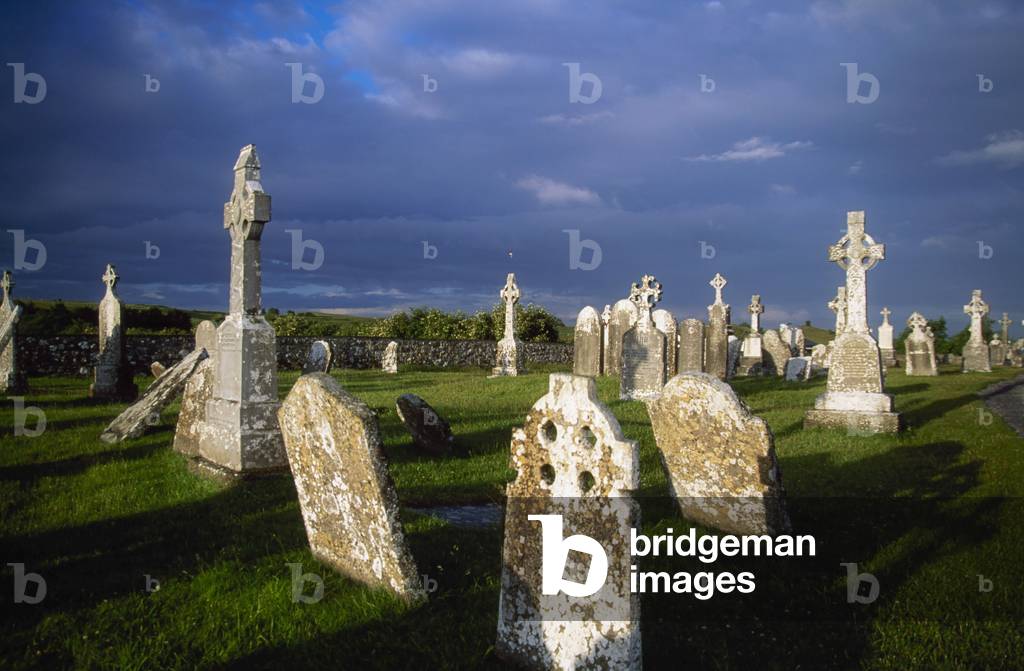
Graveyard, Clonmacnoise, County Offaly, Ireland (photo)
Exterior Of Fanad Lighthouse; Fanad Head, County Donegal, Ireland (photo)
Stratocumulus, orographic clouds, large dark rounded mass, looming over hilltop, bottom of clouds very low in sky, neat green fields below bathed in sunlight and shade.
Il Content Partner applica le seguenti restrizioni
  • Not available to clients invoiced in China
Dublin, The Customs House (photo)
Neptune - Illustration - Artist's view of Neptune with its ring system and large dark spot observed by the Voyager 2 probe in 1989. This image suggests how Neptune might look from a position in space above the plane of its rings. Like Uranus, Neptune is a Gas Giant, composed primarily of hydrogen and helium gases surrounding a relatively small, dense core of molten rock and metal. Also like Uranus, Neptune has charcoal - colored rings, although they appear to be fewer in number than Uranus's. While Neptune's diameter is slightly less than Uranus ', it has more mass. Neptune's blue color is due to the presence of methane in its upper atmosphere. The dark spot in the southern hemisphere beneath the rings, dubbed “” The Great Dark Spot,””” is believed to be a giant storm which was active in 1989 when Voyager 2 photographed Neptune. Just beyond the rings at Neptune's 7 o'clock position, barely discernable from the background stars, is the tiny satellite Proteus. With an average diameter of 260 miles, Proteus is the second - largest of Neptune's eight known satellites (a distant second compared to Neptune's largest satellite Triton which has a diameter of 1,677 miles)
Neptune - Voyager 2 - Neptune has an equatorial diameter of about 49,000 kilometres. Its blue color is due to the abundance of methane in its atmosphere. On this photo, on the left, the Great Dark Spot, which is the size of the Earth where winds are blowing at 300 m/s. This spot has now disappeared but other dark spots have been detected since then. Image of Neptune obtained by the Voyager 2 probe on August 16, 1989. During August 16 and 17, 1989, the Voyager 2 narrow - angle camera was used to photograph Neptune almost continuously, recording approximately two and one - half rotations of the planet. These images represent the most complete set of full disk Neptune images that the spacecraft will acquire. This picture from the sequence shows two of the four cloud features which have been tracked by the Voyager cameras during the past two months. The large dark oval near the western limb (the left edge) is at a latitude of 22 degrees south and circuits Neptune every 18.3 hours. The bright clouds immediately to the south and east of this oval are seen to substantially change their appearances in periods as short as four hours. The second dark spot, at 54 degrees south latitude near the terminator (lower right edge), Neptune circuits every 16.1 hours. This image has been processed to enchance the visibility of small features, at some sacrifice of color fidelity
Neptune - Illustration - Neptune's Great Dark Spot - Illustration - Artist's view of Neptune with its ring system and large dark spot observed by the Voyager 2 probe in 1989. This is how Neptune's Great Dark Spot and rings may have looked in 1989 from a position just beneath Neptune's ring plane. The outermost Adams ring is near the top of the frame, and beneath that is the much broader and diffuse Lassell ring. Further in toward Neptune and abutting the Lassell ring is the thin Le Verrier ring, and beyond that is the diffuse Galle ring. The Great Dark Spot is believed to be a storm similar to, but only half the size of, Jupiter's Great Red Spot. While Jupiter's Great Red Spot has been raging for at least 400 years, subsequent observations of Neptune's Great Dark Spot in 1994 by the Hubble Space Telescope revealed that this storm has since disappeared. The Great Dark Spot was a very dynamic weather system, generating massive, white clouds similar to high - altitude cirrus clouds on Earth. Unlike cirrus clouds on Earth however, which are composed of crystals of water ice, Neptune's cirrus clouds are made up of crystals of frozen methane. Neptune's clouds are driven by winds of 1,200 mph, the fastest winds of any planet in the Solar System
Nursery rhymes no.1. 'Hush-a-by baby' ... Three faces in a dark cloud: 1. Lord Melbourne. 2. Lord Mulgrave. 3. Lord Morpeth. 4. The King, portrayed as a baby, in a tree.
Permessi
  • Permission required for non-editorial use (inc book and magazine covers). Please contact us
Expulsion from the Garden of Eden, 1828 (oil on canvas)
Permessi
  • Permission required for all uses - Please contact us
Il Content Partner applica le seguenti restrizioni
  • Not available to clients invoiced in Japan;Not available to clients invoiced in Korea;Not to be used for cards, calendars, prints or posters
Istruzioni particolari
  • Web download not available - Please contact your account manager for access
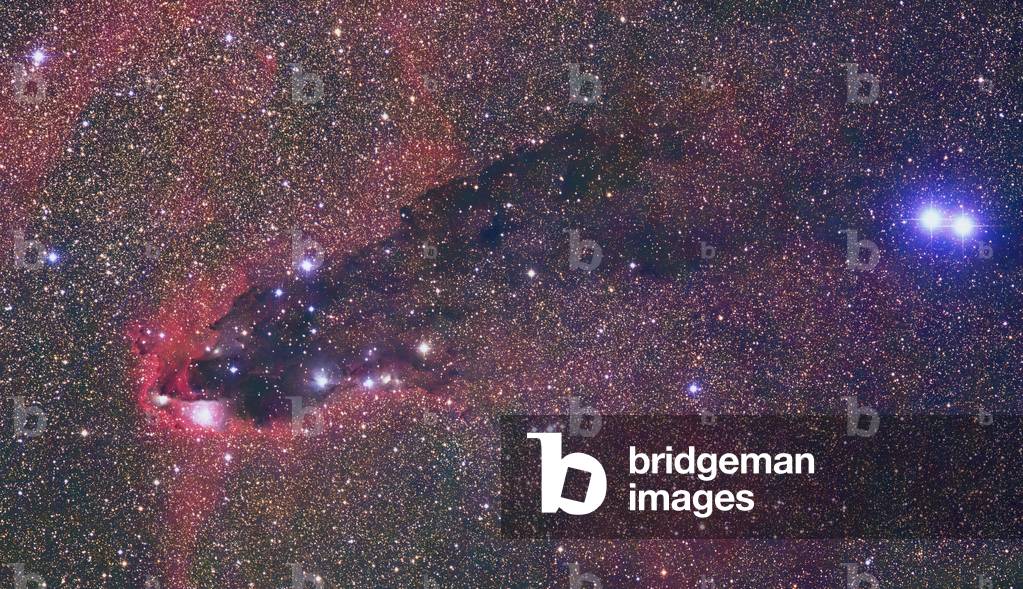
Dark Nebula in Scorpio - A dark cloud in Scorpius - This dark nebula is located about 5000 years from Earth. Image obtained by Siding Spring's 3.9m telescope. This curious un - named nebula is governed by radiation from very luminous stars some distance from the nebula. The direction of the radiation source can be seen from the flow pattern in the dark cloud and the extensive bright red rims at the end of the nebula that is exposed to radiation from the hot stars. This part of the nebula is reminiscent of the famous Horsehead nebula in Orion, which is also the consequence of starlight destroying a dark cloud. The source of the energy here is the Scorpius OB association, a group of brilliant, very hot stars, about 5000 light years away from us
Nebuleuse Barnard 86 & open cluster NGC 6520 - Dark nebula Barnard 86 and open cluster NGC 6520 - NGC 6520, is a cluster of young stars aged a few million years. To its right is the dark nebula, Barnard 86, a cloud of molecular gas and dust, very cold, in which these stars have become formed. In the background, the billions of years old stars of Sagittarius. NGC 6520 is a small cluster of young blue stars. In the same region is a dark cloud, Barnard 86. The cluster and cloud are probably associated and the dust is visible only because it blocks out light from the myriads of stars beyond. On the distant background, old yellowish stars in Sagittarius are visible in vast numbers
Dark Nebula in Scorpio - A dark cloud in Scorpius, wide field - This dark nebula is located about 5000 years from Earth. Image obtained by Siding Spring's 3.9m telescope. This curious un - named nebula is governed by radiation from very luminous stars some distance from the nebula. The direction of the radiation source can be seen from the flow pattern in the dark cloud and the extensive bright red rims at the end of the nebula that is exposed to radiation from the hot stars. This part of the nebula is reminiscent of the famous Horsehead nebula in Orion, which is also the consequence of starlight destroying a dark cloud. The source of the energy here is the Scorpius OB association, a group of brilliant, very hot stars, about 5000 light years away from us
Nebuleuse Barnard 86 & open cluster NGC 6520 - Dark nebula Barnard 86 and open cluster NGC 6520 - NGC 6520, is a cluster of young stars, aged a few million years. To its right is the dark nebula, Barnard 86, a cloud of molecular gas and dust, very cold, in which these stars have become formed. In the background, the billions of years old stars of Sagittarius. NGC 6520 is a small cluster of young blue stars. In the same region is a dark cloud, Barnard 86. The cluster and cloud are probably associated and the dust is visible only because it blocks out light from the myriads of stars beyond. On the distant background, old yellowish stars in Sagittarius are visible in vast numbers
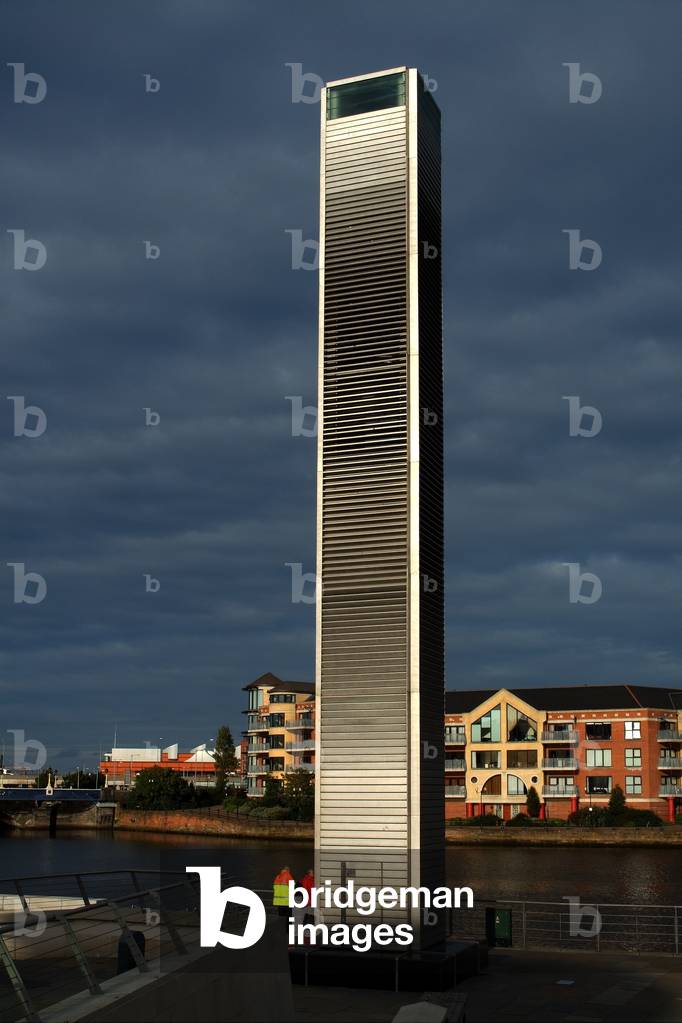
Belfast, County Antrim, Ireland; Tower At Riverside (photo)
Neptune - Voyager 2 - Image of Neptune obtained by the Voyager 2 probe on August 14, 1989 at 14.8 million km from the planet. Neptune has an equatorial diameter of about 49,000 kilometres. Its blue color is due to the abundance of methane in its atmosphere. On this photo, on the right, the Great Dark Spot, which is the size of the Earth where winds are blowing at 300 m/s. This spot has now disappeared but other dark spots have been detected since then. This contrast enhanced color photograph of Neptune was produced from images taken through the orange, green, and violet filters of the narrow angle camera. As Voyager 2 approaches Neptune, rapidly increasing image resolution is revealing striking new details in the planet's atmosphere, and this picture shows features as small as a few hundred kilometers in extent. Bright, wispy “” cirrus - type”” clouds are seen overlying the Great Dark Spot (GDS) at its southern (lower) margin and over its northwest (upper left) boundary. This is the first evidence that the GDS lies lower in the atmosphere than these bright clouds, which have remained in its vicinity for several months. Increasing detail in global banding, and the south polar can also be seen. A smaller dark spot at high southern latitudes is dimly visible near the limb at lower left
Dark Clouds, Newport Beach, Newport Beach, California, United States, 2025 (photo)
Il Content Partner applica le seguenti restrizioni
  • Bridgeman Photographer - A Premium Fee will be applied to the final quote/invoice
Copyright/Diritti d'Autore
  • In Copyright
premium
Paris threatens, Paris saves: the shadow of Germany, represented in the form of a dark cloud covered by a helmet with pointed and clumped hands hovers over Paris, under the gaze of General Gallieni, military governor who victoriously defended the French capital in September 1914. Gallieni (Joseph Simon, 1849-1916) was minister of war in 1915-16 and promoted posthumously to marechal in 1921. Cover of a booklet (n°77, 1918) of the collection “” Patrie””” published during the war 1914-1918 and until 1920 by F. Rouff.
Nebulae of the horse's head and M42 in Orion - Horsehead and Orion nebulae - Dark Nebula of the horse's head (IC434 - B33). Further down, the large Orion nebula (M42) vast star-forming region. These nebulae are located 1500 years of light from Earth. Image obtained from the 1.2m Schmidt telescope of Siding Spring. This wide - angle picture of the Orion region has been made to reveal the extensive network of very faint filaments which are traceable over most of the constellation. These faint features are optical evidence of a substantial dark cloud of molecular gas and dust which dominate at radio wavelengths. Where hot stars are closely associated with the molecular cloud, a bright nebula appears. By far the most conspicuous of these is the Orion Nebula, M42. This spectacular object is so bright that its light is reflected from filaments of the dark cloud some distance away. In contrast, the wisps of the Horsehead Nebula are much fainter but even here faint tendrils of nebulosity show that the nebula is much more extensive than is generally realised. All these objects are about 1500 light years distant
Survivors, 1914 (oil on panel)
Permessi
  • Permission required for non-editorial use (inc book and magazine covers). Please contact us
Restrizioni immagine
  • Bridgeman Images only provides access to this image. Consent to license this image for any usage that includes Italy as a territory may be required according to the Italian Cultural Heritage Code. In such cases, an additional fee may apply, with the Ministry of Culture charging a potential minimum of €100. Any such clearance must be obtained in advance from the institution where the work is kept. Please contact us for further assistance.
Il Content Partner applica le seguenti restrizioni
  • Not available to clients invoiced in Italy
Reeds, France, 1960 (silver gelatin print)
Copyright/Diritti d'Autore
  • In Copyright
premium
Nebula NGC 6188 in the Altar - The NGC 6188 nebula and NGC 6193 in Ara - Nebula NGC 6188 is located about 4000 years from Earth. It is home to a cluster of young stars NGC 6193, formed three million years ago. Image obtained by Siding Spring's 3.9m telescope. Here we see two bright stars whose radiant energy is beating down on to the surface of a dark cloud, very similar to the Horsehead in Orion. The cloud itself is opaque and because of that, very cold inside. These conditions are ideal for the formation of organic molecules on the surfaces of the chilled dust particles. The opacity of the cloud protects the fragile molecules within from the energetic radiation of nearby stars, but as its surface is gradually warmed and eroded, the delicate organic molecules are destroyed and the hydrogen released glows as a distinctive red emission nebula
Myth - Boreas
Permessi
  • Permission required for non-editorial use (inc book and magazine covers). Please contact us
Il Content Partner applica le seguenti restrizioni
  • Only available to clients invoiced in France and North, Central and South America
FOUR WINDS - NORTH
Permessi
  • Permission required for non-editorial use (inc book and magazine covers). Please contact us
Il Content Partner applica le seguenti restrizioni
  • Only available to clients invoiced in France and North, Central and South America
Dunes and Clouds, Shoshone, 1969 (silver gelatin print)
Copyright/Diritti d'Autore
  • In Copyright
premium
Horsehead Nebula (B33) in Orion - Horsehead nebula in Orion - The horse head nebula, Barnard 33, is a dark nebula located in front of the IC 434 emission nebula about 1500 years - light of the Earth in the constellation Orion. Lower left is the reflexion nebula, NGC 2023. This curious dark nebula is one of the best - known images in astronomy, probably because of its chance likeness to a recognisable form. The horse - head shape is an extension of a large cloud of dust which fills the lower part (east) of the picture and hides the light of stars beyond. The outer surface of the dusty gas (IC 434) runs roughly north - south and is illuminated by sigma Orionis (off the top of the picture) which causes the hydrogen there to fluoresce, outlining the horse - head shape. The diffuse haze to the left of the image (north) is scattered light from the bright star zeta Orionis. Though conspicuous here, the Horsehead is very difficult to see visually, even with a large telescope. A bright star is partially enveloped in the dust cloud and its scattered light is seen as the large, irregular blue reflection nebula, NGC 2023. All these objects are about 1500 light years distant
Nebula NGC 6188 in the Altar - The NGC 6188 nebula and NGC 6193 in Ara - Nebula NGC 6188 is located about 4000 years from Earth. It is home to a cluster of young stars NGC 6193, formed three million years ago. Image obtained by Siding Spring's 3.9m telescope. Here we see two bright stars whose radiant energy is beating down on to the surface of a dark cloud, very similar to the Horsehead in Orion. The cloud itself is opaque and because of that, very cold inside. These conditions are ideal for the formation of organic molecules on the surfaces of the chilled dust particles. The opacity of the cloud protects the fragile molecules within from the energetic radiation of nearby stars, but as its surface is gradually warmed and eroded, the delicate organic molecules are destroyed and the hydrogen released glows as a distinctive red emission nebula
Horsehead Nebula (B33) in Orion - Horsehead nebula in Orion - The horse head nebula, Barnard 33, is a dark nebula located in front of the IC 434 emission nebula about 1500 years - light of the Earth in the constellation Orion. Lower left is the reflexion nebula, NGC 2023. This curious dark nebula is one of the best - known images in astronomy, probably because of its chance likeness to a recognisable form. The horse - head shape is an extension of a large cloud of dust which fills the lower part (east) of the picture and hides the light of stars beyond. The outer surface of the dusty gas (IC 434) runs roughly north - south and is illuminated by sigma Orionis (off the top of the picture) which causes the hydrogen there to fluoresce, outlining the horse - head shape. The diffuse haze to the left of the image (north) is scattered light from the bright star zeta Orionis. Though conspicuous here, the Horsehead is very difficult to see visually, even with a large telescope. A bright star is partially enveloped in the dust cloud and its scattered light is seen as the large, irregular blue reflection nebula, NGC 2023. All these objects are about 1500 light years distant
Heart of the nebula NGC 3372 in the Carene - Eta Carinae and the Keyhole Nebula - The nebula of the Carene is located about 7000 years - light from the Earth. It is home to many hot stars, including the star Eta Carinae visible in the centre left of the image. Eta Carinae is a supermassive star (100 to 150 times the mass of the Sun). Image obtained by Siding Spring's 3.9m telescope. This wonderfully complex region at the heart of the NGC 3372 nebula was first described in detail by Sir John Herschel in 1838. He saw the bright circular shell visible in the upper part of the picture extending to the south to form a keyhole - shaped nebula. This luminous outline is no longer seen and the southern extension appears only as a dark dust cloud. It seems that the curious, explosively variable star Eta Carinae has enveloped itself in a cocoon of obscuring matter in the years since Herschel's observations and light from the star is no longer able to illuminate the rim of the dust cloud. The nebula thrown off by eta Car in Herschel's time has grown to the tiny orange nebula seen to the left of the dust cloud and is known as the Homunculus nebula
A MAN RIDES A BICYCLE PAST ASH COVERED POLICE CAR, 2003-07-19 (photo)
Permessi
  • Permission required for non-editorial use (inc book covers and in-context promotional use in documentaries). Please contact us
Restrizioni immagine
  • Content within this photograph may require additional clearances (eg: trademark and personality rights) depending on Licensee's specific use of material, which may include book and magazine cover use.
Il Content Partner applica le seguenti restrizioni
  • Minimum fee applies to this image;Only available to clients invoiced in Australia, Belgium, Brazil, Bulgaria, Canada, China, Cyprus, Czech Republic, Estonia, Finland, France, French Southern Territories, Greece, Hong Kong, Hungary, India, Ireland, Israel, Italy, Lebanon, Luxembourg, Mexico, the Netherlands, New Zealand, Portugal, Qatar, Republic of Korea, Romania, Russian Federation, Singapore, South Africa, Spain, Sweden, Switzerland, Taiwan, Turkey, United Arab Emirates, United Kingdom and United States
White Horse in the Woods. Arione, 1948 (oil on canvas)
Permessi
  • Permission required for non-editorial use (inc book and magazine covers). Please contact us
Restrizioni immagine
  • Bridgeman Images only provides access to this image. Consent to license this image for any usage that includes Italy as a territory may be required according to the Italian Cultural Heritage Code. In such cases, an additional fee may apply, with the Ministry of Culture charging a potential minimum of €100. Any such clearance must be obtained in advance from the institution where the work is kept. Please contact us for further assistance.
Il Content Partner applica le seguenti restrizioni
  • Not available to clients invoiced in Italy
Copyright/Diritti d'Autore
  • In Copyright
Horsehead Nebula (IC 434) in Orion - Horsehead Nebula (B33) in Orion - The horse's head nebula, Barnard 33, is a dark nebula located in front of the IC 434 emitting nebula about 1500 years - light from Earth in the constellation Orion. At the bottom left, the nebula NGC 2024 with just above the star Alnitak, a supergiant star belonging to the Baudrier of Orion. Towards the center of the image, a reflexion nebula, NGC 2023. This distinctive red emission nebula (IC 434) is the result of radiation from sigma Orionis interacting with the surface of a dusty cloud of gas from which projects the dark shape of the head of a horse. Sigma is the second brightest star in the picture and is at about the same distance from the Sun as the nebula. The brightest star here is zeta Orionis, easily visible to the unaided eye as the easternmost star in the line of three which form Orion's Belt. Alnitak (Zeta Orionis) is a supergiant star with a brightness 35,000 times greater than the Sun. Its mass is 20 times the solar mass. Partly obscured by the glare of zeta is the curious yellowish nebula NGC 2024, whose energy comes from stars hidden in the dark lane, while other nebulae simply reflect the light of embedded hot stars and appear blue. All these objects are about 1500 light years distant
Region near the Omega nebula (M17) in Sagittarius - Area near Omega nebula (M17) in Sagittarius - Region around the Omega nebula. Under the nebula, the cluster of stars M18, towards the middle, the group of stars M24, at the bottom of the picture the nebulae NGC 6589 - 90 and IC 1283 - 4. A little below the bright red emission nebula M17 is M18, a group of stars which is only conspicuous because, like M17, it is set in a relatively dark region of the Milky Way. The rich cloud of stars more or less in the middle of the photograph was listed by Messier as number 24 in his catalogue and it contains the open cluster NGC 6603, while towards the bottom of this field is a small group of nebulosities, the two blue reflection nebulae NGC 6589 - 90 and the emission nebulae IC 1283 - 4
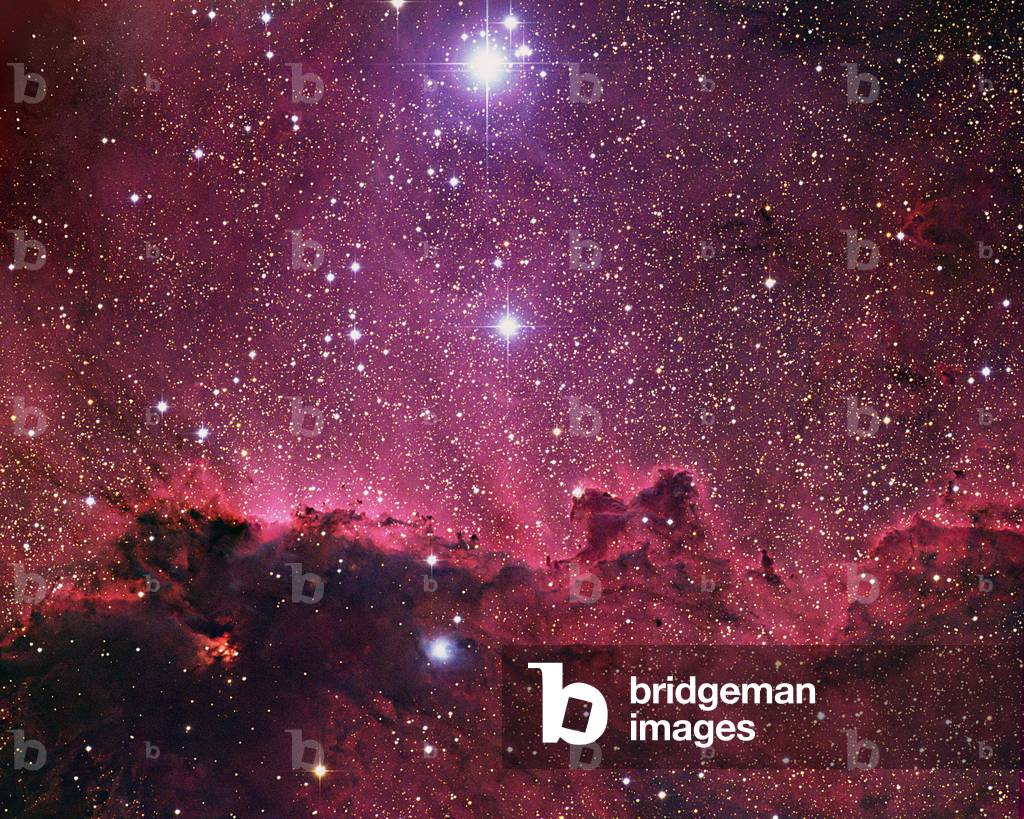
Dark Nebula in Scorpio - A dark cloud in Scorpius - Unnamed nebula in Scorpius. Bright rimmed globules and their more evolved cousin the cometary globule represent fascinating dynamic structures formed by the interplay of cold molecular clouds and hot ionizing stars. Typically the head of the globule faces a hot O - type star. Intense radiation from the star boils away lower density gas from the head. The evaporated rim of gas becomes ionized by the stars ultraviolet flux forming a bright glowing rim we associate with many of these globules including CG4. Intense stellar winds from the ionizing star evaporate gas and dust away from the head forming the “” tail”” and completing the cometary shape. The blood cells are known to be the birthplace of low mass stars. Stars form within the blood cells by the mechanism known as “” radiation driven implosion”. This process occurs when ultraviolet flux from a hot star compresses surviving clumps of cold molecular gas eventually causing collapse and core formation within the dense compact clouds. Lower and intermediate mass stars ultimately form from the compact gas and dust within the blood cells
Nebulae IC 2948 and 2944 in Centaur - The Running Chicken Nebula - Nebula IC 2948 is a vast nebula located about 6000 light years from Earth in the southern constellation of Centaur. It is associated with the cluster of stars IC 2944 near which Bok's blood cells are visible. A Bok's blood cell is a dark interstellar cloud of gases and dust that absorb light. If it condenses enough, it gives birth to new stars. This image from the Wide Field Imager on the MPG/ESO 2.2 - metre telescope shows the Running Chicken Nebula, a cloud of gas and newborn stars that lies around 6500 light - years away from us in the constellation of Centaurus (The Centaur). Officially called IC 2944, or the Lambda Centauri Nebula, its strange nickname comes from the bird - like shape of its brightest region. The star Lambda Centauri itself lies just outside the field of view
Horse's Head Nebula (IC 434) in Orion - Horsehead nebula in Orion - The horse's head nebula, Barnard 33, is a dark nebula located in front of the IC 434 emitting nebula about 1500 years - light of the Earth in the constellation Orion. At the bottom left, the nebula NGC 2024 with just above the star Alnitak, a supergiant star belonging to the Baudrier of Orion. Towards the center of the image, a reflexion nebula, NGC 2023. Image obtained with the 1.2m Schmidt UK Telescope from Siding Spring. This distinctive red emission nebula (IC 434) is the result of radiation from sigma Orionis interacting with the surface of a dusty cloud of gas from which projects the dark shape of the head of a horse. Sigma is the second brightest star in the picture and is at about the same distance from the Sun as the nebula. The brightest star here is zeta Orionis, easily visible to the unaided eye as the easternmost star in the line of three which form Orion's Belt. Alnitak (Zeta Orionis) is a supergiant star with a brightness 35,000 times greater than the Sun. Its mass is 20 times the solar mass. Partly obscured by the glare of zeta is the curious yellowish nebula NGC 2024, whose energy comes from stars hidden in the dark lane, while other nebulae simply reflect the light of embedded hot stars and appear blue. All these objects are about 1500 light years distant. This photograph was produced by combining three separate photographs taken with the 1.2m UK Schmidt Telescope through different coloured filters
Horsehead Nebula (IC 434) in Orion - Horsehead Nebula (B33) in Orion - The horse's head nebula, Barnard 33, is a dark nebula located in front of the IC 434 emitting nebula about 1500 years - light from Earth in the constellation Orion. At the bottom left, the nebula NGC 2024 with just above the star Alnitak, a supergiant star belonging to the Baudrier of Orion. Towards the center of the image, a reflexion nebula, NGC 2023. Image obtained with the 1.2m Schmidt UK Telescope from Siding Spring. This distinctive red emission nebula (IC 434) is the result of radiation from sigma Orionis interacting with the surface of a dusty cloud of gas from which projects the dark shape of the head of a horse. Sigma is the second brightest star in the picture and is at about the same distance from the Sun as the nebula. The brightest star here is zeta Orionis, easily visible to the unaided eye as the easternmost star in the line of three which form Orion's Belt. Alnitak (Zeta Orionis) is a supergiant star with a brightness 35,000 times greater than the Sun. Its mass is 20 times the solar mass. Partly obscured by the glare of zeta is the curious yellowish nebula NGC 2024, whose energy comes from stars hidden in the dark lane, while other nebulae simply reflect the light of embedded hot stars and appear blue. All these objects are about 1500 light years distant. This photograph was produced by combining three separate photographs taken with the 1.2m UK Schmidt Telescope through different coloured filters
Detail of the nebula NGC 3603 in the Carene - Star life cycle in NGC 3603 - In the center of the picture is a cluster of massive young stars formed from the gas surrounding them. Two pillars of gas and dust visible on the right at the top and bottom will one day form other stars, as probably the dark cloud at the top right of the image called Bok's globule. Above the left of the star cluster, an old blue supergiant star, Sher 25, arrives at the end of life. The nebula NGC 3603 is located approximately 20,000 light years from Earth in the southern constellation of Carene. Image obtained by the Hubble Space Telescope. This image made by the Hubble space telescope nicely illustrates the entire stellar life cycle of stars, starting with the Bok globules (dark clouds at the upper right) and giant gaseous pillars, followed by circumstellar disks and progressing to evolved massive stars in the young starburst cluster (center). The blue supergiant star Sher 25 with its ring and bipolar outflow (upper left of center) marks the end of the life cycle. NGC 3603 is located 20 000 light years away in Carina constellation
Horse's Head Nebula and IC 434 in Orion - The Horsehead nebula in Orion - The Horse's Head Nebula, Barnard 33, is a dark nebula located in front of the IC 434 emitting nebula about 1500 years - Earth light in the constellation Orion. Lower left is the reflexion nebula, NGC 2023. The Horsehead nebula is located in the constellation of Orion, slightly below the left - most star of the three that form the Hunter's belt. It is part of a vast molecular cloud of dust and gas that includes the Great Orion Nebula and extends throughout the entire constellation as well. Here, we see the Horsehead as it appeared 1,500 years ago, due to distance and the time it takes light to travel. The bright complex of dust and gas below the Horsehead reflects the light given off by the bright star near it's center and is one of the brightest examples of reflection nebulae in the northern sky. The central star is surrounded with a thin shell of hydrogen that glows red by emitting it's own light in a rare example of a unique process called vibrational fluorescence
The Return of a Patrol, 1917 (w/c on paper )
Permessi
  • Permission required for non-editorial use (inc book and magazine covers). Please contact us
Young stars in Rho Ophiuchi - Young stars in Rho Ophiuchi - Image of the central part of Rho Ophiuchi obtained in infrared by the Spitzer space telescope. Rho Ophiuchi is a vast dark cloud of molecular hydrogen located 407 years - light from Earth in the constellations of Ophiuchus and Scorpio. More than 300 young stars aged only 300,000 years have been observed. On this picture in false colors highlighting the temperature differences present in this cloud, the younger stars appear in red, the more evolute stars in blue. Newborn stars peek out from beneath their natal blanket of dust in this dynamic image of the Rho Ophiuchi dark cloud from Nasa's Spitzer Space Telescope. Called “” Rho Oph””” by astronomers, it's one of the closest star - forming regions to our own solar system. Located near the constellations Scorpius and Ophiuchus, the nebula is about 407 light years away from Earth. Rho Oph is a complex made up of a large main cloud of molecular hydrogen, a key molecule allowing new stars to form from cold cosmic gas, with two long streamers trailing off in different directions. Recent studies using the latest X - ray and infrared observations reveal more than 300 young stellar objects within the large central cloud. Their median age is only 300,000 years, very young compared to some of the university's oldest stars, which are more than 12 billion years old. This false - color image of Rho Oph's main cloud, Lynds 1688, was created with data from Spitzer's infrared array camera, and its multiband imaging photometer, best for detecting cooler materials. Blue represents 3.6 - micron light; green shows light of 8 microns; and red is 24 - micron light. The multiple wavelengths reveal different aspects of the dust surrounding and between the embedded stars, yielding information about the stars and their birthplace. The colors in this image reflect the relative temperatures and evolutionary states of the
Nebula N159 in the Great Magellan Cloud - N159 star forming region in Large Magellanic Cloud (LMC): N159 is a star-forming region located in the galaxy of the Great Magellan Cloud. Image obtained by the Hubble Space Telescope (HST) - This shot from the NASA/ESA Hubble Space Telescope shows a maelstrom of glowing gas and dark dust within one of the Milky Way's satellite galaxies, the Large Magellanic Cloud (LMC). This stormy scene shows a stellar nursery known as N159, an HII region over 150 light-years across. N159 contains many hot young stars. These stars are emitting intense ultraviolet light, which causes nearby hydrogen gas to glow, and torrential stellar winds, which are carving out ridges, arcs, and filaments from the surrounding material. At the heart of this cosmic cloud lies the Papillon Nebula, a butterfly-shaped region of nebulosity. This small, dense object is classified as a High-Excitation Blob, and is thought to be tightly linked to the early stages of massive star formation. N159 is located over 160 000 light-years away. It resides just south of the Tarantula Nebula, another massive star-forming complex within the LMC
Water Spouts', 1849
Il Content Partner applica le seguenti restrizioni
  • Not available to clients invoiced in the UK
The Horsehead Nebula, late 20th century
Il Content Partner applica le seguenti restrizioni
  • Not available to clients invoiced in the UK
Centre de la nebula Omega (M17) by HST - Center of the Omega Nebula, a hotbed of newly born stars wrapped in colorful blankets of glowing gas and cradled in an enormous cold, dark hydrogen cloud. This picture was taken by the Advanced Camera for Surveys (ACS) aboard Nasa's Hubble Space Telescope. The region of the nebula shown in this photograph is about 3,500 times wider than our solar system. The area represents about 60 percent of the total view captured by ACS. The nebula, also called M17 and the Swan Nebula, resides 5,500 light - years away in the constellation Sagittarius. Like its famous cousin in Orion, the Swan Nebula is illuminated by ultraviolet radiation from young, massive stars, located just beyond the upper right corner of the image. Each star is about six times hotter and 30 times more massive than the Sun. The powerful radiation from these stars evaporates and erodes the dense cloud of cold gas within which the stars formed. The blistered walls of the hollow cloud shine primarily in the blue, green, and red light emitted by excited atoms of hydrogen, nitrogen, oxygen, and sulfur. Particularly striking is the rose - like feature, seen to the right of center, which glows in the red light emitted by hydrogen and sulfur. ACS made this observation on April 1 and 2, 2002. The color image is constructed from four separate images taken in these filters: blue, near infrared, hydrogen alpha, and doubly ionized oxygen
Center of the Omega Nebula (M17) in the sagittarius seen by HST - Center of the Omega Nebula, a hotbed of newly born stars wrapped in colorful blankets of glowing gas and cradled in an enormous cold, dark hydrogen cloud. This picture was taken by the Advanced Camera for Surveys (ACS) aboard Nasa's Hubble Space Telescope. The region of the nebula shown in this photograph is about 3,500 times wider than our solar system. The area represents about 60 percent of the total view captured by ACS. The nebula, also called M17 and the Swan Nebula, resides 5,500 light - years away in the constellation Sagittarius. Like its famous cousin in Orion, the Swan Nebula is illuminated by ultraviolet radiation from young, massive stars, located just beyond the upper right corner of the image. Each star is about six times hotter and 30 times more massive than the Sun. The powerful radiation from these stars evaporates and erodes the dense cloud of cold gas within which the stars formed. The blistered walls of the hollow cloud shine primarily in the blue, green, and red light emitted by excited atoms of hydrogen, nitrogen, oxygen, and sulfur. Particularly striking is the rose - like feature, seen to the right of center, which glows in the red light emitted by hydrogen and sulfur. ACS made this observation on April 1 and 2, 2002. The color image is constructed from four separate images taken in these filters: blue, near infrared, hydrogen alpha, and doubly ionized oxygen
Planetary nebula CRL 2688 dans le Swan/HST - This image of the Egg Nebula, also known as CRL2688 and located roughly 3,000 light - years from us, was taken in red light with the Wide Field and Planetary Camera 2 (WFPC2) aboard Nasa's Hubble Space Telescope.The image shows a pair of mysterious “” searchlight” beams emerging from a hidden star, criss - Yeah. crossed by numerous bright arcs. This image sheds new light on the poorly understood ejection of stellar matter which accompanies the slow death of Sun - like stars. The image is shown in false color. The central star in CRL2688 was a red giant a few hundred years ago. The nebula is really a large cloud of dust and gas ejected by the star, expanding at a speed of 20 km/s (115,000 mph). A dense cocoon of dust (the dark band in the image center) enshrouds the star and hides it from our view. Starlight escapes more easily in directions where the cocoon is thinner, and is reflected towards us by dust particles in the cloud, giving it its overall appearance. Objects like CRL2688 are rare because they are in an evolutionary phase which lasts for a very short time (~ 1,000 to 2,000 years). However, they may hold the key to our understanding of how red giant stars transform themselves into planetary nebulae. For the first time, we can see a 10,000 year - old history of mass - ejection in a red giant star in such exquisite detail. The arcs in CRL2688 represent dense shells of matter within a smooth cloud, and show that the rate of mass ejection from the central star has varied on time scales of ~ 100 to 500 years throughout its mass - loss history. With Hubble we have detected matter in this nebula to a radius of 0.6 light - years - - much further out than has been possible before, giving a better estimate of the amount of matter in the nebula. Other unexpected results seen in this image are the very sharply defined edges of the beams and fine spoke - like features which suggest that, contrary to previous models, the searchli
Nebula IC 2948 in Centaurus - Nebula IC 2948 and IC 2944 in Centaurus - Nebula IC 2948 is a vast nebula located about 6000 years from Earth in the southern constellation of Centaurus. It is associated with the cluster of stars IC 2944 near which Bok's blood cells are visible. A Bok's blood cell is a dark interstellar cloud of gases and dust that absorb light. If it condenses enough, it gives birth to new stars. Image obtained through 3 different filters that highlight oxygen (blue), hydrogen (green), and sulfur (red). Between the Southern Cross and the rich Carina region, on the southern border of Centaurus, is a large, almost featureless emission nebula, IC 2948, with a sprinkling of bright stars, Collinder 249. It is against this uniform, backdrop that we see a brighter region (IC 2944) which hosts small group of dark clouds of the kind known as 'Bok globules'. They are named for the Dutch - American astronomer who first drew attention to them as the possible sites of star formation. There are young stars scattered through the nebula and these stars are responsible for its existence. The stars only 10 million years old and the hydrogen they illuminate seems to be unusually thinly spread and very uniform, so the nebula is both faint and extensive. It is also quite distant, about 6000 light years and is only two degrees from the Galactic plane, so there are many foreground stars. This image is in the classic “” Hubble palette”” where SII is assigned to red, H - alpha to green, and OIII to blue. RGB frames were taken for star colors
Nebula IC 2948 in Centaurus - Nebula IC 2948 and IC 2944 in Centaurus: IC2944 - SHO 70 70 70 Bin 2 - Nebula IC 2948 is a vast nebula located about 6000 light years from Earth in the southern constellation of Centaurus. It is associated with the cluster of stars IC 2944 near which Bok's blood cells are visible. A Bok's blood cell is a dark interstellar cloud of gases and dust that absorb light. If it condenses enough, it gives birth to new stars - Image obtained through 3 different filters that highlight oxygen (in blue), hydrogen (in green), and sulfur (in red) - Between the Southern Cross and the rich Carina region, on the southern border of Centaurus, is a large, almost featureless emission nebula, IC 2948, with a sprinkling of bright stars, Collinder 249. It is against this uniform, backdrop that we see a brighter region (IC 2944) which hosts small group of dark clouds of the kind known as 'Bok globules'. They are named for the Dutch-American astronomer who first drew attention to them as the possible sites of star formation. There are young stars scattered through the nebula and these stars are responsible for its existence. The stars only 10 million years old and the hydrogen they illuminate seems to be unusually thinly spread and very uniform, so the nebula is both faint and extensive. It is also quite distant, about 6000 light years and is only two degrees from the Galactic plane, so there are many foreground stars. This image is in the classic “” Hubble palette”” where SII is assigned to red, H-alpha to green, and OIII to blue. RGB frames were taken for star colors
Centaurus A elliptical galaxy (NGC 5128) in Centaurus - Galaxy Centaurus A (NGC 5128) - The galaxy NGC 5128 is located about 13 million light years away from Earth in the southern constellation of Centaurus. A broad dark band crosses it in the middle, a probable vestige of a collision with a spiral galaxy. This Giant Galaxy is a powerful radio source known as Centaurus A. It is an active galaxy whose energy comes from a supermassive black hole. The green dot visible in the dust strip is a supernova, the supernova 1986g. It appears green because the red filter image that made this trichromy image was only taken a year after the event and the supernova had weakened. Image obtained from the 3.9m telescope of Siding Spring, Australia. Centaurus A is a most unusual galaxy. The circular, uniformly bright portion is composed of several thousand million stars, most of them old and yellowish. The galaxy is girded by a dense dust lane which obscures and reddens the light of stars behind it. Some younger, blue stars can be seen at the edges of the dust cloud. One of the nearer galaxies, 13 million light years away, Centaurus A is the most powerful nearby radio source and is also a copious source of X - and gamma rays as well as visible and infrared radiation. The curious green star in the dust lane is because the blue and green - light plates were taken when supernova 1986g had just appeared, while the red - light plate was taken a year later when the supernova had faded
Detail of the Eagle Nebula (M16) dans le serpent/HST - This eerie, dark structure, resembling an imaginary sea serpent's head, is a column of cool molecular hydrogen gas (two atoms of hydrogen in each molecule) and dust that is an incubator for new stars. The stars are embedded inside finger - like protrusions extending from the top of the nebula. Each “” fingertip”” is somewhat larger than our own solar system. The pillar is slowly eroding away by the ultraviolet light from nearby hot stars, a process called “” photoevaporation””. As it does, small globules of especially dense gas buried within the cloud is uncovered. These globules have been dubbed “” Eggs”” - - an acronym for “” Evaporating Gaseous Globules””. The shadows of the Eggs protect gas behind them, resulting in the finger - like structures at the top of the cloud. Forming inside at least some of the Eggs are embryonic stars - - stars that abruptly stop growing when the Eggs are uncovered and they are separated from the larger reservoir of gas from which they were drawing mass. Eventually the stars emerge, as the Eggs themselves succumb to photoevaporation. The stellar EGGS are found, appropriately enough, in the “” Eagle Nebula”” (also called M16 - - the 16th object in Charles Messier's 18th century catalog of “” fuzzy”” permanent objects in the sky), a nearby star - forming region 6,500 light - years away in the constellation Serpens. The picture was taken on April 1, 1995 with the Hubble Space Telescope Wide Field and Planetary Camera 2. The color image is constructed from three separate images taken in the light of emission from different types of atoms. Red shows emission from singly - ionized sulfur atoms. Green shows emission from hydrogen. Blue shows light emitted by doubly - ionized oxygen atoms
Stellar, 1995
Il Content Partner applica le seguenti restrizioni
  • Not available to clients invoiced in the UK
The Eagle Nebula, 1995
Il Content Partner applica le seguenti restrizioni
  • Not available to clients invoiced in the UK
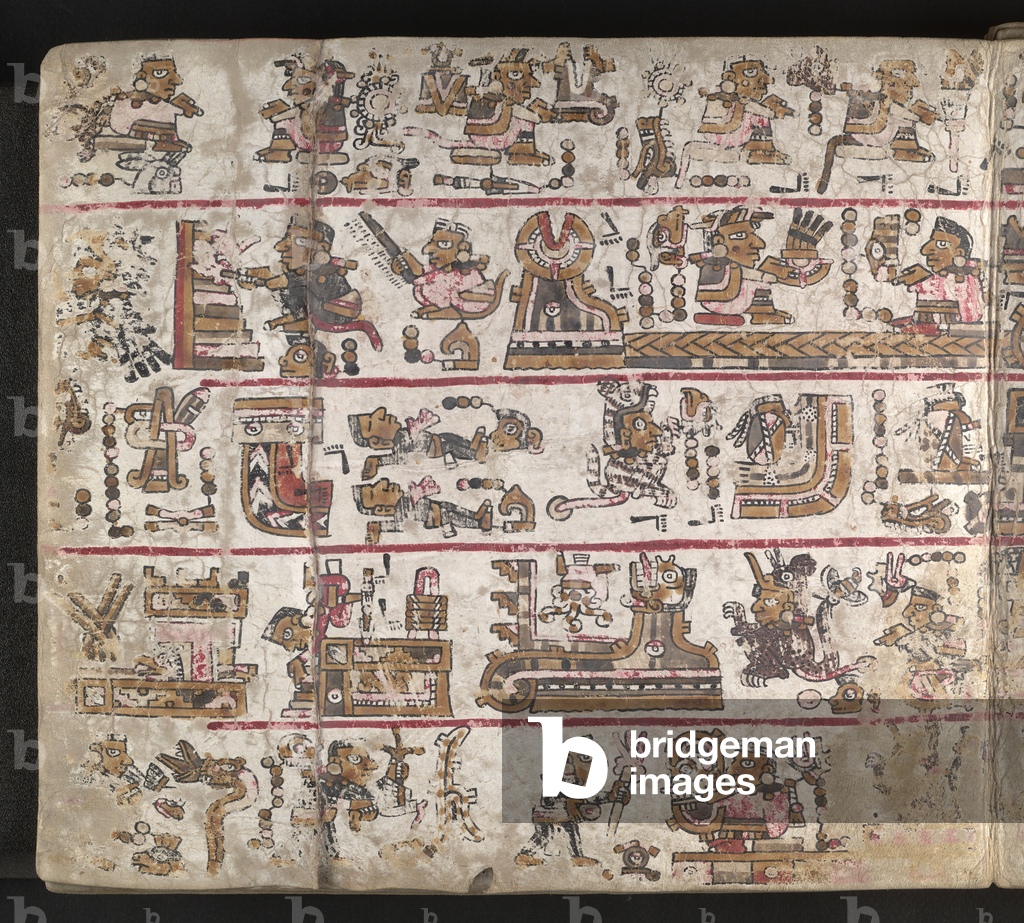
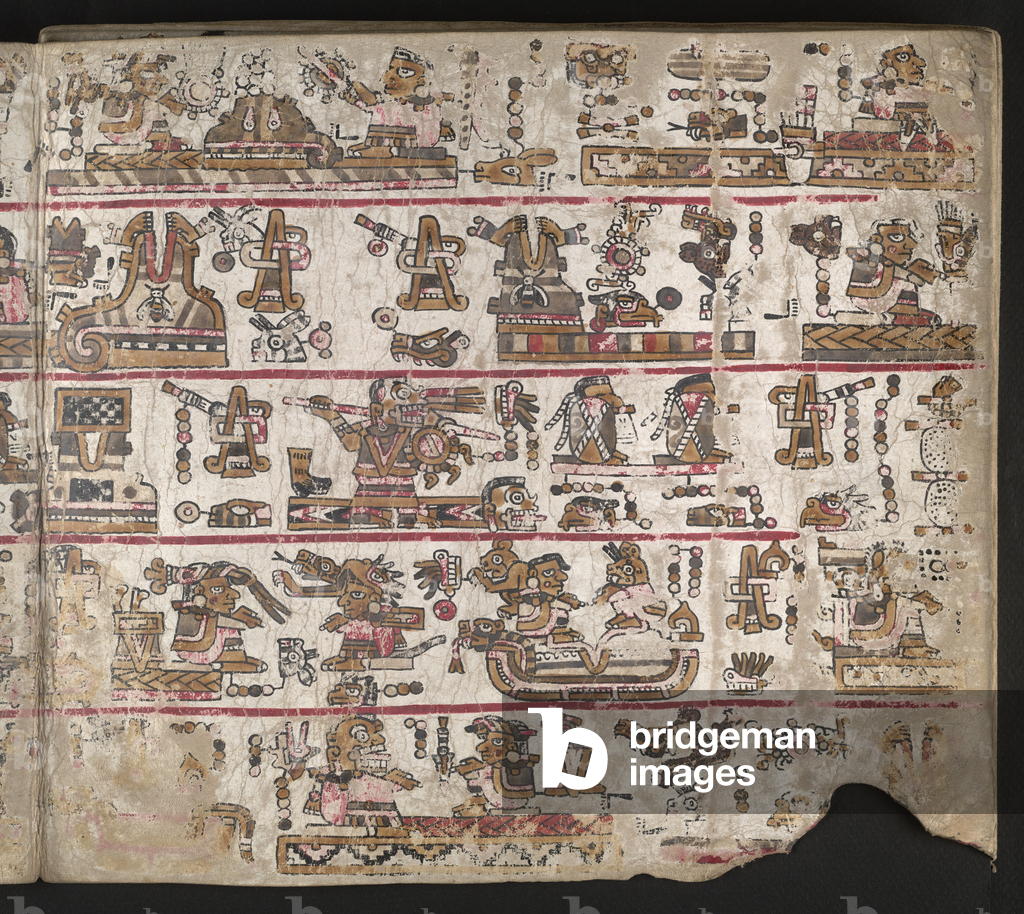
Codex Bodley, c. 1501-1550 (drawing)